Ministry of Trade, Industry and Energy Approves Business Restructuring for 15 Companies
Samsung Display and 5 Partner Companies
Escaping the Deficit Trap of LCD, Transitioning to Profitable QD
First Approval of Large Corporation Business Restructuring in 3 Years
6 Auto Parts Companies Also Approved
Supporting Transition from Gasoline to Electric Vehicles
15 Companies, 8 Years of Business Restructuring
2,500 New Jobs and 1.5 Trillion KRW New Investment
[Asia Economy Reporter Moon Chae-seok] The government has decided to support Samsung Display and its partner companies in transitioning their business to quantum dot (QD) display panels. This is the first time in 3 years and 2 months since July 2017 that the government has approved business restructuring for large corporations. The aim is to help companies restructure their businesses into profitable future industries to prepare for the increased uncertainty caused by the COVID-19 pandemic.
◆Samsung Escapes the Deficit Trap of LCD... Full-Scale Transition to Profitable QD OLED
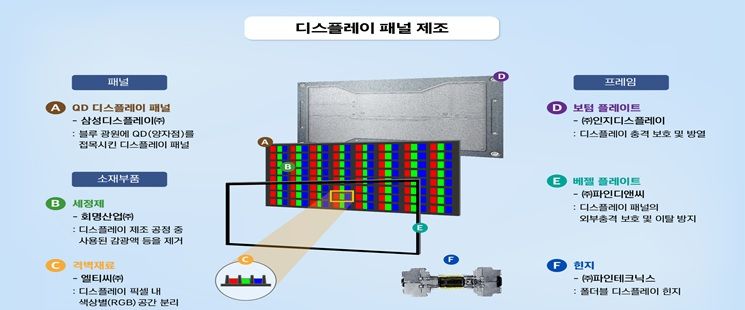
On the 23rd, the Ministry of Trade, Industry and Energy held the 27th Business Restructuring Plan Deliberation Committee and announced the approval of business restructuring for 15 companies including Samsung Display. Once approved as a business restructuring company, they can receive government support from planning to execution of business transition under the Corporate Vitalization Promotion Act.
Through this approval, Samsung Display and five partner companies?Inzi Display, Fine D&C, Fine Technics, LTC, and Hwamyung Industry?will officially begin transitioning from liquid crystal display (LCD) to QD OLED.
Specifically, Inzi Display plans to shift its main product from TV frames to QD OLED bottom plates, and LTC will change its focus from LCD materials to materials for QD OLED. Transitioning to QD OLED is expected to require enormous costs, but this approval is expected to ease the burden on Samsung Display’s partner companies.
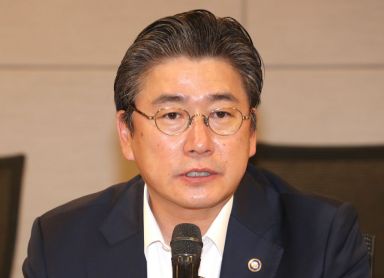
Jung Seung-il, Vice Minister of Trade, Industry and Energy, stated, "The display business restructuring jointly pursued by large, medium, and small enterprises is expected to be a momentum for our companies to secure unrivaled competitiveness in the next-generation display market."
◆Auto Parts Companies Supported in Transition from Gasoline to Electric Vehicles

On the same day, the committee also approved business restructuring plans for six auto parts companies. Approved companies include Woosoo AMS, Dongseo Gikong, Infac, Seojin Automotive, Seojin Industry, and Infac EPM. They will transition their business from gasoline engine-related parts to electric vehicle parts.
Since the introduction of the Corporate Vitalization Promotion Act in 2016, 143 companies have been approved. Since the law was amended last November, the number of companies entering new industries has increased to 29. The 15 companies approved this time plan to create about 2,500 new jobs and invest approximately 1.5 trillion KRW during the business restructuring period (5 years for new industry entry, 3 years for oversupply adjustment).
Since the 26th committee meeting on June 24, the Ministry has started introducing 'Industrial Ecosystem Co-Restructuring,' selecting innovative themes of high industrial policy importance and discovering demand among related companies. In June, the business restructuring plans of six parts companies related to 'internal combustion engine vehicles → eco-friendly vehicles' were approved. This marks the beginning of policy support to prevent companies from falling behind by remaining in existing industrial groups in the era of the 4th Industrial Revolution.
◆Ministry of Trade, Industry and Energy Announces Business Restructuring 2.0: "Continuously Discovering Themes Like Eco-Friendly Vehicles and QD OLED"
Meanwhile, the Ministry announced the 'Proactive Business Restructuring Activation Measures (Business Restructuring 2.0)' on the same day and decided to increase support. Instead of individual company applications, business restructuring applications will be grouped by business clusters such as large corporations and partner companies to lead more systematic business transitions. Specific support plans will be prepared for each stage, including planning, research and development, and execution of business restructuring.
To encourage active participation from companies, incentives will also be strengthened. The ministry will actively recommend companies for the 'Innovative Companies 1000' support program, which invests 40 trillion KRW over three years. Interest rates on loans from the Korea Development Bank will be reduced by 0.7 percentage points. The Korea Credit Guarantee Fund’s rates will be lowered by 0.2 percentage points. Policy funds from the Small and Medium Business Corporation will be provided. Additionally, starting next year, a new 'Business Resource Support Fund' of over 20 billion KRW will be established, utilizing the Digital Industry Innovation Fund and the Korean New Deal Fund.
Vice Minister Jung said, "Business restructuring challenges come with many risks, but it is the only way for companies and industries to survive. We hope this business restructuring activation measure will spread a wave of change throughout the industrial ecosystem."
The Ministry plans to continuously discover business restructuring themes at the industrial ecosystem level, focusing on industries of high policy importance (such as digital and green new deals in core industries) and regions. It will actively listen to difficulties faced by companies during the restructuring process and continuously improve support systems.
© The Asia Business Daily(www.asiae.co.kr). All rights reserved.



















