"To Achieve V-Shaped Recovery, Double-Digit Growth Needed Next Year"... Double-Dip Possible in 2022
Fiscal Policy Expansion Must Continue for Now... Emphasis on Global Joint Response
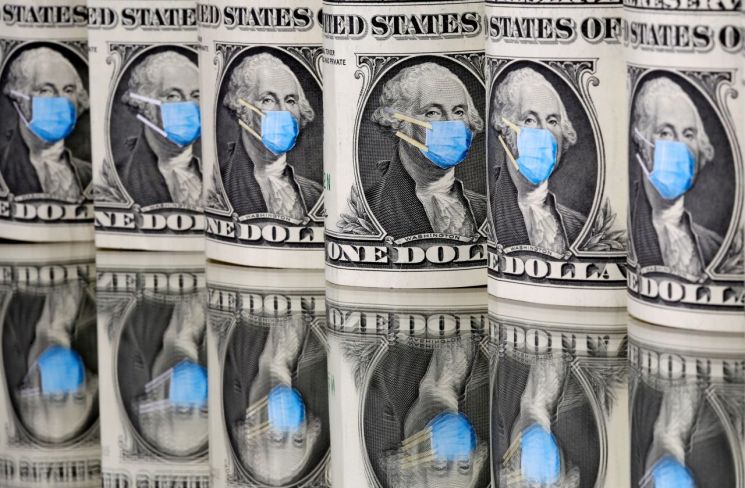
[Asia Economy Reporter Jeong Hyunjin] Governments around the world, which had been responding to the economic recession caused by the novel coronavirus infection (COVID-19), are facing concerns that they might hastily shift to austerity due to the burden of public debt, potentially leading to a decade-long stagnation. Considering that economic activities are expected to gradually revive next year, if austerity measures are implemented, a double-dip recession could occur in 2022, so it is believed that fiscal policy expansion should be maintained for the time being.
On the 22nd (local time), the United Nations Conference on Trade and Development (UNCTAD) forecasted in its '2020 Trade and Development Report' released the day before that the global economic growth rate will decrease by 4% this year, and 90 million to 120 million people in developing countries will fall into absolute poverty. UNCTAD stated, "Since the outbreak of the COVID-19 pandemic, the world has been suffering from disease and death, and income inequality has widened, causing tremendous hardship," and evaluated that the temporary economic stimulus measures introduced mainly by developed countries have somewhat mitigated the economic downturn and may allow for the lifting of lockdowns.
UNCTAD also predicted that even if economic activities recover next year and developed country governments maintain current fiscal and monetary policies, full employment recovery will be difficult, and wage disparities will widen. Richard Kozul-Wright, Director of UNCTAD, pointed out that for a V-shaped recovery, "the global economy must grow by double digits next year." Currently, it is forecasted that if no significant shocks or austerity phases occur next year, the economic growth rate will be around 4%.
The biggest concern UNCTAD expressed regarding future economic prospects is the early adoption of austerity policies. If governments choose early fiscal tightening to reduce public debt and companies adopt cost-cutting strategies, many countries could experience a double-dip recession in 2022, with effects lasting for the next decade.
UNCTAD's concerns are based on the pattern observed immediately after the 2008-2009 global financial crisis. In April 2009, leaders of the Group of Twenty (G20) met to agree on joint responses, economic and job recovery, strengthening financial regulations through trust restoration, and rejecting protectionism, but countries did not adhere to these agreements and instead pursued austerity policies to return to normalcy. UNCTAD predicted that if the world returns to pre-pandemic levels of austerity, the annual economic growth rate will decrease by 1 percentage point until 2030, and the global unemployment rate will rise by 2 percentage points. It also forecasted that geopolitical issues such as trade disputes, migration pressures, and environmental problems, which were problems of the global economy before COVID-19, will resurface.
UNCTAD emphasized, "'The lost decade' is not inevitable. It is a matter of policy choice," adding, "An inclusive and sustainable recovery is possible only when developed country governments maintain spending until private sector consumption sentiment revives and when financial support to developing countries under debt pressure is expanded." It also urged countries worldwide to engage in joint responses for economic recovery.
© The Asia Business Daily(www.asiae.co.kr). All rights reserved.

















