Increase in Food Delivery and Parcel Use Due to COVID-19... Single-Use Waste Surges
Household Waste 5,349 Tons in First Half of Year, Up 11.2% from Last Year
Environmental Groups Urge Government, Local Authorities, Companies, and Consumers to Raise Awareness and Change Perceptions
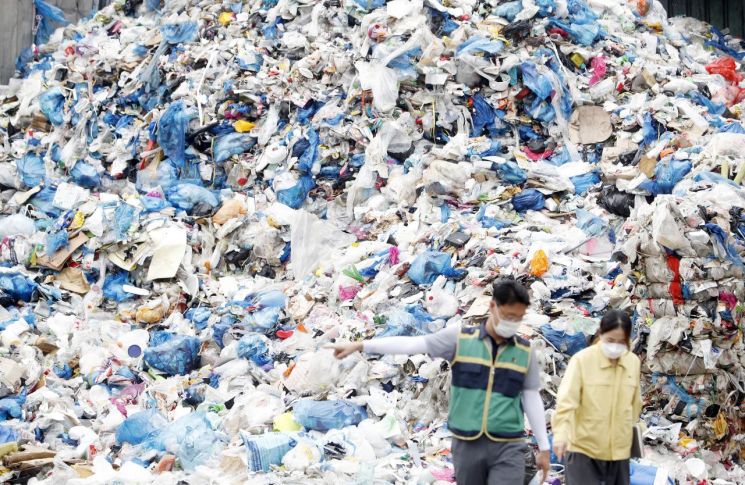 On the morning of the 21st, employees of the Resource Circulation Team from the Cleaning Administration Division of Buk-gu Office are conducting safety inspections on waste disposal conditions as the amount of disposable waste has increased due to the prolonged COVID-19 pandemic at the recycling sorting center in Buk-gu, Gwangju. Photo by Yonhap News
[Asia Economy Reporter Kim Ga-yeon] "I feel guilty because there are too many disposable products," "I'm trying to reduce delivery food as well."
The outbreak of the novel coronavirus infection (COVID-19) has caused a sharp increase in the amount of disposable waste. As non-face-to-face consumption has become a daily routine, the use of delivery food, online shopping, and parcel services has increased. While citizens recognize the seriousness of environmental pollution, they unanimously agree that the use of disposable products is inevitable due to the ongoing impact of COVID-19.
Environmental organizations emphasized the need for government-level reusable systems and public awareness improvement. The Ministry of Environment plans to establish waste disposal measures for waste vinyl and waste plastic.
With the spread of COVID-19, citizens are refraining from going out and non-face-to-face consumption is increasing, leading to a significant rise in the use of plastic packaging materials. The number of citizens ordering delivery food or purchasing food for takeout continues to grow.
The problem lies in the disposable products and household waste inevitably generated in the process. Most restaurants provide plastic packaging containers and disposable utensils, making waste generation unavoidable.
Also, cafes provide disposable cups due to concerns about COVID-19 transmission through the reuse of mugs, and citizens use masks and disposable gloves daily, causing a surge in waste output.
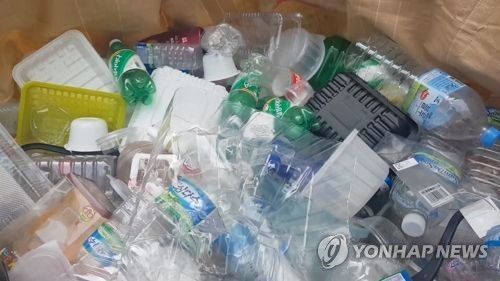
Household waste in the first half of this year increased by more than 11% compared to last year. According to the Ministry of Environment on the 9th of last month, household waste in the first half of this year was 5,349 tons, an 11.2% increase compared to the previous year. Paper waste increased by 23.9% to 889 tons, plastic waste rose by 15.6% to 848 tons, and vinyl waste also grew by 11.1% to 951 tons.
In particular, single-person households showed a high amount of disposable product waste. On the 20th, a survey of 41 residents in Seoul over one week found that the average daily disposable product waste per person in single-person households was 30 items. This is 2.3 times higher than the 13 items per person in multi-person households.
The problem is that recycling food containers and waste vinyl is difficult. Plastic contaminated with substances like sauces is hard to recycle, and even if clean, costs arise from washing and other processes. The same applies to parcel packaging materials. If companies use reusable packaging, cushioning materials, or cooling bags, additional costs will be incurred.
As a result, voices are emerging among citizens calling for government-level countermeasures. Since the COVID-19 situation is prolonged, there is a need for separate measures to control disposable product waste.
Kang, a 29-year-old office worker living alone in Seoul, said, "Since I work from home, I mostly solve my meals with delivery food like lunch boxes or meal kits." He added, "Even though sushi or mala soup produce less plastic compared to other menus, a large amount of waste is generated. I sometimes feel guilty when cleaning up the trash."
Kang said, "Even alone, I want to use less plastic, so I am now trying to reduce my order volume. But since it is the COVID-19 era, not everyone can think like me. The number of citizens using delivery food or parcel services will inevitably increase. Therefore, I think some national-level measures are necessary, not just individual efforts."
Kang and many other citizens are contemplating measures to address the increase in disposable product use such as plastics.
A survey conducted by the Seoul Digital Foundation on 1,000 Seoul citizens found that 91.3% of respondents said "incentives are needed to reduce disposable plastics." They cited appropriate reward methods such as "cash" (42.4%), "eco mileage" (25.6%), "local currency" (18.3%), and "traditional market gift certificates" (12.4%).
Kang Min-wook, a senior researcher at the Seoul Digital Foundation, suggested, "To improve the disposable waste problem, it is necessary to improve the current collection methods. Improving the disposal environment and reward system centered on non-face-to-face methods is key."
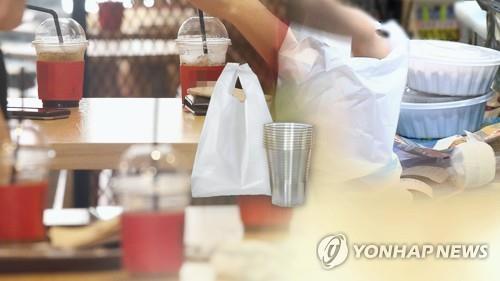
Environmental organizations urged the establishment of fundamental solutions such as reusable systems.
The Resource Circulation Society Solidarity issued a statement on the 16th titled "Stop Making Excuses About Increased Packaging Waste in the Untact Era and Create Reduction Measures," condemning "the act of turning the entire country into an illegal waste disposal site due to annually increasing packaging waste. We strongly urge prioritizing reduction and recycling measures over excuses."
The solidarity group said, "If disposable products continue to be used recklessly like now, the entire country might be covered with plastic waste. Urgent action is needed. The government, local governments, companies, and consumers must change consumption, production, and sales behaviors suitable for the untact era to have a livable tomorrow."
They also called for measures including ▲ discovering and fostering reusable container rental companies and establishing a separate joint collection system ▲ developing recyclable containers ▲ online shopping companies using reusable boxes ▲ dawn delivery companies using recyclable cooling bags and establishing systems for reusable delivery boxes.
Meanwhile, the Ministry of Environment announced it will conduct special inspections during the Chuseok holiday period from the 30th of this month to the 4th of next month.
Lee Young-gi, Director of Resource Circulation Policy at the Ministry of Environment, said on the 17th, "We plan to strictly punish inappropriate disposal companies to prevent illegal waste dumping, but considering the worsening conditions for residue disposal, we will support appropriate disposal companies. Please properly separate and dispose of waste vinyl, waste plastic contaminated with foreign substances, and non-recyclable items."
© The Asia Business Daily(www.asiae.co.kr). All rights reserved.
![Clutching a Stolen Dior Bag, Saying "I Hate Being Poor but Real"... The Grotesque Con of a "Human Knockoff" [Slate]](https://cwcontent.asiae.co.kr/asiaresize/183/2026021902243444107_1771435474.jpg)


















