'Consumer Discount Restrictions' Criticized... Formation of Consultative Body with Industry
Detailed Guidelines to be Prepared through Consultative Discussions... Administrative Notice by End of This Month
Additional 3-Month Grace Period Granted... SMEs to Apply from July
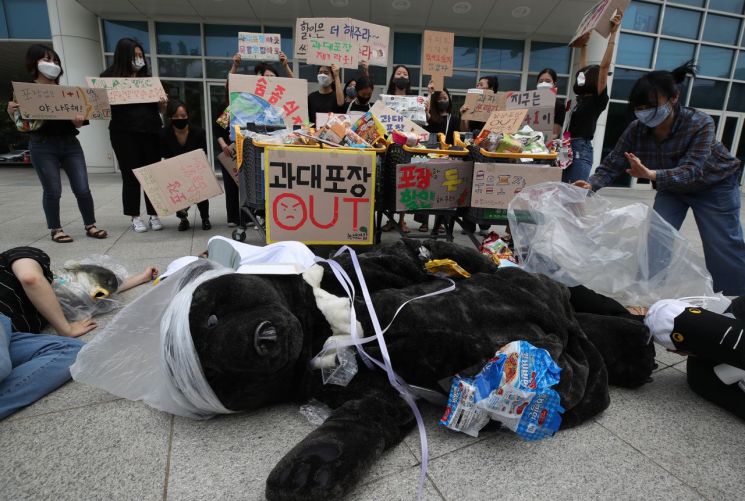
[Asia Economy Reporter Kim Bo-kyung] The Ministry of Environment will officially ban the act of repackaging products with vinyl for 1+1 discounts and gift promotions starting January next year. However, a three-month grace period will be granted, and the enforcement for small and medium-sized enterprises will begin in July next year.
On the 21st, the Ministry of Environment announced that a consultative body composed of industry representatives, experts, and consumer groups has established the scope of application and exemption criteria to reduce repackaging using synthetic resin materials. After collecting public opinions on this consultative body's proposal, detailed standards will be finalized and administratively announced by the end of this month.
The repackaging prohibition regulation (Standards on packaging materials and packaging methods of products) sparked controversy once in June. Critics argued that this system restricts bundled packaging of products, thereby reducing consumers' discount benefits. In response, the Ministry of Environment decided to have a six-month grace period and form a private consultative body to redefine the scope of application and exemption criteria for repackaging.
Since July, the Ministry of Environment has operated sector-specific consultative bodies (two meetings per sector) and an expanded consultative body (four meetings). The sector-specific consultative bodies included 92 institutions across four sectors: food manufacturing, other product manufacturing, distribution, and consumer groups. The expanded consultative body consisted of 17 institutions, including 10 from industry, 5 specialized organizations, and 2 consumer groups.
The detailed repackaging standards were prepared through proposals from each sector in the sector-specific consultative bodies and further discussions in the expanded consultative body. The main points are as follows.
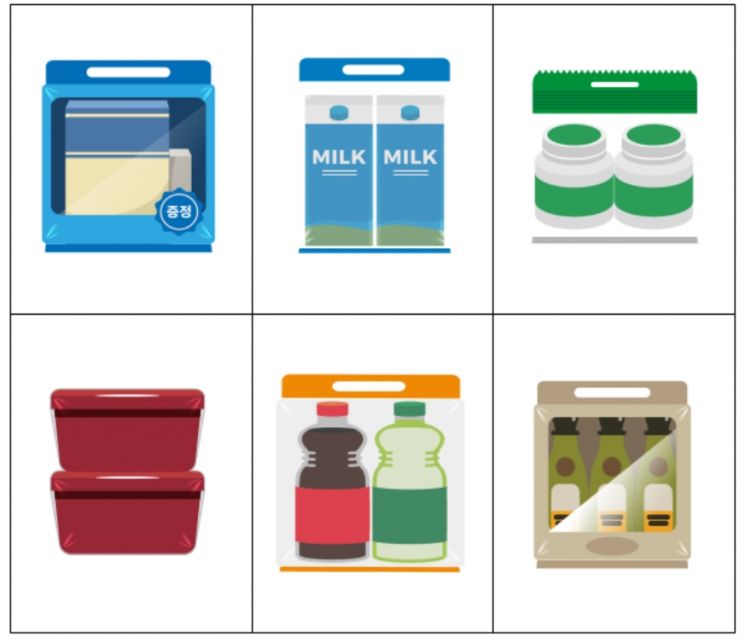
First, the scope of repackaging reduction applies to cases where products are additionally packaged during sales, or packaged in an N+1 form for temporary or specific distribution channels, or packaged for promotional events such as gifts or giveaways, or when three or fewer individually sold products are packaged together, and the final packaging is made of synthetic resin film or sheet (vinyl).
However, exceptions include cases where the product is a primary food, products that are not sold individually but bundled as a unit product, when the purchaser requests gift wrapping, or when unavoidable for transportation, hygiene, or safety reasons. Bundling with bands or rings is also not subject to repackaging reduction.
The enforcement date is set for January next year. However, considering packaging equipment changes and depletion of existing packaging materials, a three-month grace period will be granted. During the grace period, enforcement will occur but no fines will be imposed. Considering the economic situation, flexible application will be made, with enforcement for small and medium-sized enterprises starting in July next year.
The Ministry of Environment expects that this system will reduce about 8.0% (approximately 27,000 tons) of the total annual waste vinyl generated last year (341,000 tons). This year, due to the impact of the novel coronavirus disease (COVID-19) and the expansion of online distribution, packaging waste has been continuously increasing. During the first half of this year, vinyl waste increased by 11.1%, plastic by 15.6%, and paper by 29.3% compared to the same period last year.
The consultative body anticipates that unclear cases regarding whether repackaging applies may arise in the future, and thus a review procedure involving industry, experts, and consumer groups will be operated to make judgments.
Additionally, to respond to industry inquiries related to repackaging, professional consultations will be provided through packaging inspection specialized institutions such as the Korea Environment Corporation.
Furthermore, before the system is implemented, the Ministry of Environment and the industry have consecutively signed voluntary agreements to proactively reduce repackaging.
On the 4th, three distribution companies including Emart, Homeplus, and Lotte Mart, and seven manufacturing and importing companies including Amorepacific and LG Household & Health Care signed voluntary agreements to refrain from excessive packaging for promotional purposes. They plan to reduce 298 tons of packaging waste from 156 products between October and December this year.
On this day, agreements were signed with 23 food companies including Nongshim, Lotte Confectionery, and Orion to refrain from repackaging for 1+1, 2+1, and gift promotions. They will promote packaging reduction using bands and rings and actively seek methods to improve packaging materials.
The participating companies in this agreement plan to improve packaging and containers for a total of 147 products, reducing vinyl usage by about 29.6% (222 tons) compared to the quarterly average of 749 tons used last year for these products between October and December this year, and also reduce 745 tons of other materials such as plastic and paper.
Lee Young-gi, Director of the Resource Circulation Policy Division at the Ministry of Environment, stated, "Since the repackaging detailed standards were created with the cooperation of industry and consumer groups, we will faithfully reflect these standards and enact the notification."
He added, "In a situation where waste such as packaging materials is increasing due to the activation of non-face-to-face transactions, active participation from both industry and the public is necessary for the transition to a sustainable resource circulation society."
© The Asia Business Daily(www.asiae.co.kr). All rights reserved.


















