Appropriate 308 Beds for General Hospitals and 36 Beds for Infectious Disease Specialized Hospitals
Incentives Suggested for Attracting Private General Hospitals
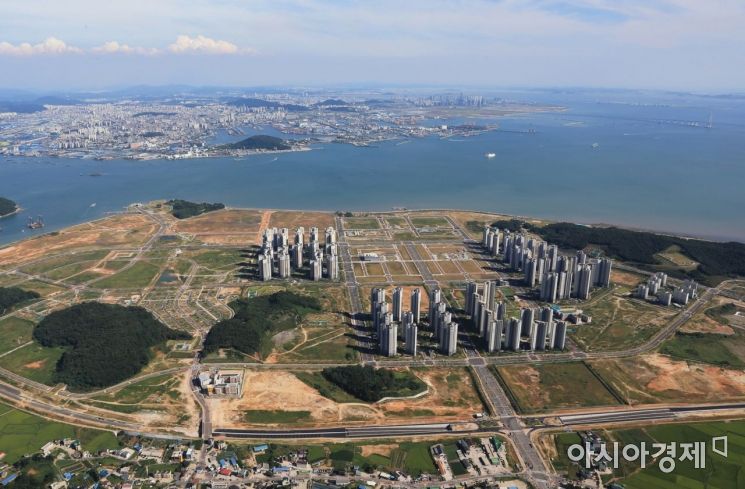
[Asia Economy Reporter Park Hyesook] A study has revealed the urgent need to establish a national general hospital on Yeongjongdo Island in Jung-gu, Incheon, where Incheon International Airport is located, to meet the medical demands of residents and airport transient populations and to prepare for large aircraft accidents.
On the 19th, the Incheon Free Economic Zone Authority announced that it held the final report meeting and an online briefing session for residents on the 18th regarding the "Study on Optimization Measures for the Construction of a General Hospital in Yeongjong International City."
According to the study, the absence of a general hospital on Yeongjongdo, the gateway to South Korea, threatens the healthcare safety net. Due to weak infection control at the overseas arrival area, it was pointed out that strengthening the initial response system to preemptively block so-called pandemics is desirable in the form of a national general hospital.
As a policy implementation measure, it was suggested that the central government take the lead in establishing the general hospital, and a large, credible hospital reflecting the unique characteristics of Incheon International Airport should manage and operate it. Additionally, it was proposed that extraordinary policy incentives are necessary to attract private general hospitals.
The study determined that the appropriate scale for expanding medical institutions in Yeongjong International City includes a general hospital with 308 beds and a regional infectious disease specialized hospital with 36 beds for initial infection response for overseas arrivals.
It was also analyzed that 350 rooms for a residential treatment center, which would normally operate as a training center and guesthouse but be used as isolation facilities during infectious disease outbreaks such as COVID-19, are necessary.
The estimated construction costs for medical institutions of this scale, including land compensation, are 231.6 billion KRW for the general hospital, 76.9 billion KRW for the regional infectious disease specialized hospital, and 177 billion KRW for the residential treatment center.
If built as a private general hospital with 200 beds instead of a national general hospital, it is estimated that a total of 88 billion KRW would be required, including 54 billion KRW for construction costs excluding land acquisition costs.
The Incheon Free Economic Zone Authority plans to finalize the study by the end of this month, reflecting opinions from the report meeting, and prepare measures to attract a general hospital.
Lee Won-jae, head of the Incheon Free Economic Zone Authority, stated, "Cooperation with government ministries and related organizations will be urgently needed to attract a general hospital," and added, "We will also broadly review incentive measures requested by private medical institutions."
© The Asia Business Daily(www.asiae.co.kr). All rights reserved.

















