Minister of Industry Visits Dujung... Indicates Targeting 200 Trillion Won Gas Turbine Market
"Plan to Strengthen Gas Turbine Industry Competitiveness to Be Prepared Soon"
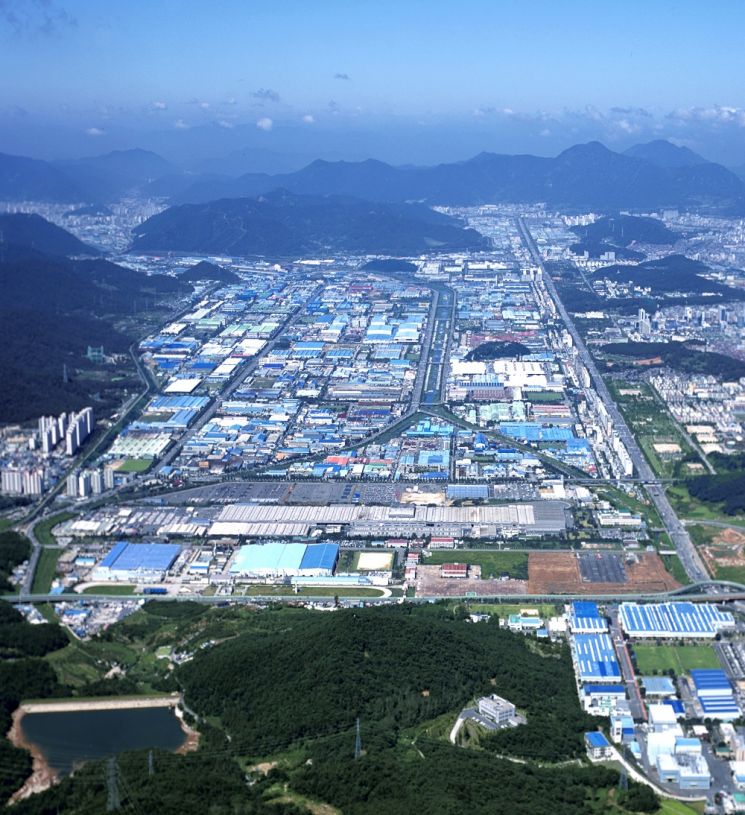
[Asia Economy Reporter Moon Chaeseok] The government is accelerating the construction of smart green industrial complexes, one of the projects under the Korean New Deal comprehensive plan. Seven smart industrial complexes, including Changwon, will be transformed into 'Smart Green Industrial Complexes' by integrating digital and green New Deal projects.
Seong Yun-mo, Minister of Trade, Industry and Energy, visited the Changwon National Industrial Complex on the 17th and announced the 'Smart Green Industrial Complex Execution Strategy.'
The Smart Green Industrial Complex is an industrial complex that digitalizes all stages of the global value chain (GVC) and implements low-carbon, high-efficiency energy innovation.
The government expects that successfully 'greening' smart industrial complexes will enhance corporate productivity, improve workers' quality of life, and revitalize startups and new industries.
◆ Designation of 15 Smart Green Industrial Complexes by 2025... "Nationwide Performance Expansion"
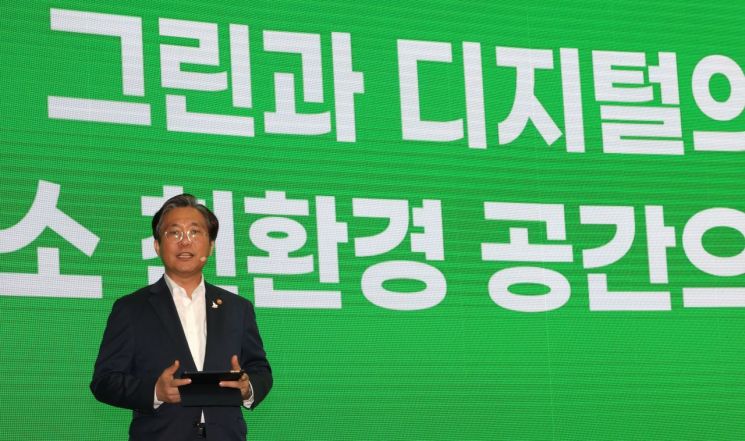 Minister Sung Yun-mo of the Ministry of Trade, Industry and Energy presenting the implementation strategy at the Smart Green Industrial Complex Reporting Conference held at Taerim Industry in Changwon, Gyeongnam on the afternoon of the 17th. (Image source=Yonhap News)
Minister Seong announced plans to transform seven industrial complexes?Changwon, Banwol-Sihwa, Gumi, Incheon Namdong, Gwangju, Yeosu, and Daegu Seongseo?into smart green industrial complexes to establish a global eco-friendly advanced industrial base.
Among these, the Changwon Industrial Complex is considered the fastest to transition into a smart green industrial complex among the seven existing smart industrial complexes, as it houses Doosan Heavy Industries & Construction, which manufactures power generation liquefied natural gas (LNG) gas turbines.
The government plans to build 15 smart green industrial complexes by 2025 and then expand the results nationwide. Through this, it aims to create 33,000 jobs by 2025, increase new and renewable energy production from 0.6% to 10%, and improve energy efficiency by 16%.
Execution plans for each industrial complex will be established within this month, and the Act on Industrial Cluster Activation and Factory Establishment (Industrial Cluster Act) will be revised in the second half of the year to provide a legal basis for the promotion and support of smart green industrial complexes.
Minister Seong stated, "Smart Green Industrial Complexes are the forefront for the global leap of Korea's manufacturing industry," and added, "The government will do its best to transform industrial complexes into eco-friendly advanced industrial hubs."
◆ Localization of 200 trillion KRW Power Generation Gas Turbines... Minister of Industry: "Plan to Strengthen Measures Soon"
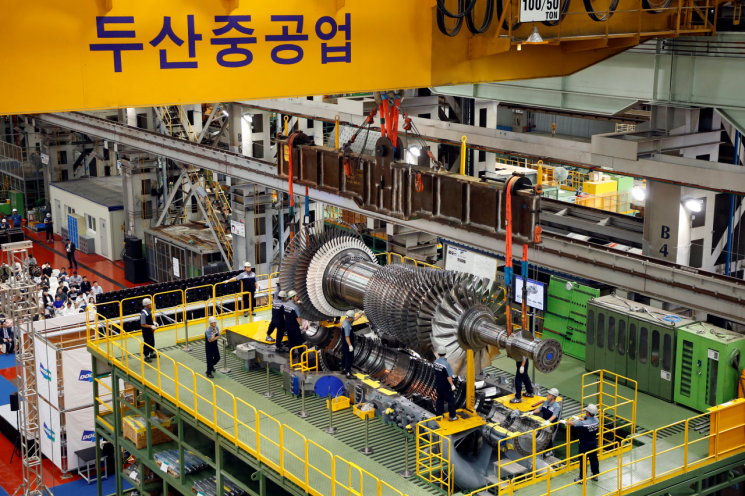 A power generation liquefied natural gas (LNG) gas turbine installed at the Doosan Heavy Industries & Construction factory in Seongsan-gu, Changwon. (Photo by Doosan Heavy Industries & Construction)
On the same day, Minister Seong visited Doosan Heavy Industries & Construction's gas turbine factory in Seongsan-gu, Changwon, and encouraged the achievements after seeing the power generation turbine developed by Doosan, the first in Korea and the fifth worldwide.
The H-class gas turbine developed by Doosan has a power generation capacity of 270 MW and a generation efficiency of 60%. Only four countries?the United States, Germany, Japan, and Italy?have succeeded in developing such products.
LNG power generation using gas turbines is an essential facility for stable power supply management during the government's energy transition process (reducing coal and nuclear power and enhancing self-sufficiency in new and renewable energy).
Earlier in February, the government announced that the global power generation gas turbine market is expected to grow from 97 trillion KRW in 2018 to about 200 trillion KRW by 2035. If Doosan's H-class gas turbine project succeeds, it will strengthen the growth momentum of about 340 domestic small and medium-sized enterprises participating in the materials and components supply chain.
In particular, Busan, Ulsan, and Gyeongnam have a concentration of small and medium-sized enterprises related to LNG power generation, forming an early-stage industrial ecosystem. It is analyzed to have the potential to grow into a representative domestic gas turbine industrial cluster.
Minister Seong said, "We expect companies like Doosan, which actively utilize the Green New Deal as an opportunity to discover new growth engines, to actively participate in the creation of smart green industrial complexes."
He added, "LNG power generation will become an even more important power source for maintaining stable power supply during the energy transition process. Securing competitiveness in the gas turbine industry is an urgent task that cannot be delayed, so we plan to prepare a 'Gas Turbine Industry Competitiveness Enhancement Plan' as soon as possible."
◆ Digitalization of All Stages of the Value Chain... Amendment of Advanced Investment Zone Support Act Planned
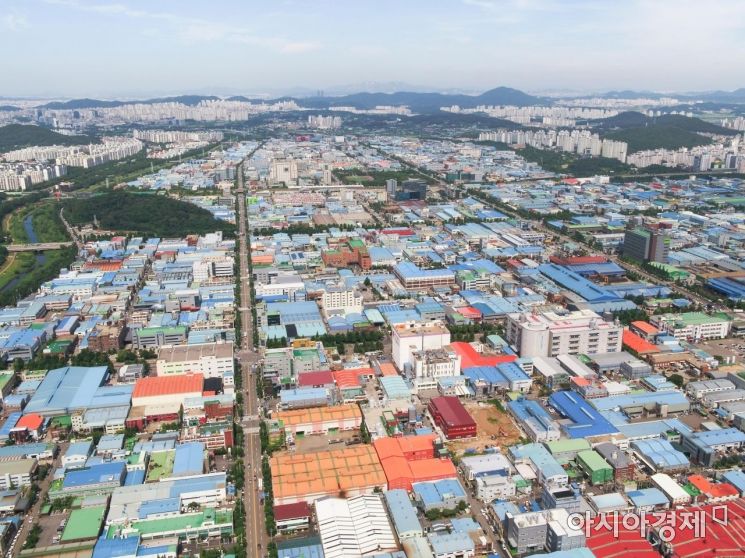
The government judged that promoting digitalization throughout the entire industrial value chain?from design and engineering to production, distribution, and logistics?is crucial to activate smart green industrial complexes.
Going forward, digital support infrastructure will be established for each value chain stage, including design manufacturing innovation centers, process innovation simulation centers, innovation data centers, and shared logistics platforms.
Regulatory free zones, regulatory sandboxes, and negative zones will be actively utilized to increase digital and green New Deal demonstrations and promote leading projects.
Demonstrations of 'unmanned low-speed special vehicles' are already underway at the Gwangju Industrial Complex, 'unmanned ships' at the Changwon Industrial Complex, and 'mobile collaborative robots' at the Daegu Seongseo Industrial Complex. Within the negative zones, up to 30% of the industrial facility area in the complexes will be allowed for e-commerce and manufacturing-related service businesses.
By the end of the year, the Industrial Cluster Act will be amended to establish advanced investment zones. Designation of specialized complexes for materials, parts, and equipment will support the advancement of core industries.
◆ 1,750 Clean Factories and 81 Waste Recycling-Linked Industrial Complexes Established by 2025
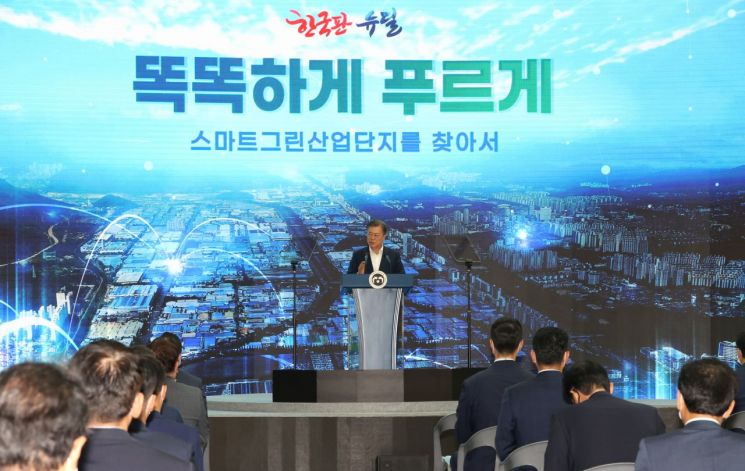 President Moon Jae-in speaking at the Smart Green Industrial Complex Report Conference held at Taerim Industry in Changwon, Gyeongnam, on the afternoon of the 17th. (Image source=Yonhap News)
The Clean Factory project (reducing pollutants from the production stage) and Ecological Industry Development project (supporting waste and by-product exchange and recycling among companies within industrial complexes), specified in the Korean New Deal comprehensive plan, will be fully implemented.
Led by the Ministry of Trade, Industry and Energy, the Clean Factory project will be implemented at 1,750 sites nationwide (700 sites in 7 industrial complexes) by 2025. It aims to reduce pollutants through process improvements and equipment replacement at the production stage.
The Ecological Industry Development project will be expanded from the current 27 industrial complexes to 81 complexes by 2025. It will promote resource circulation by facilitating the exchange and recycling of waste heat and waste liquids among companies.
◆ Enhancing RE100 Compliance through Self-Generation and Third-Party PPA... Recognition of Greenhouse Gas Reduction Performance
Investment in new and renewable energy facilities will be activated. Specifically, ▲financial support for solar power in industrial complexes will increase from 100 billion KRW this year to 200 billion KRW next year, ▲the 'Industrial Complex Environmental Improvement Fund' will be expanded, and ▲an integrated investment tax credit will be provided starting January next year.
To enable industrial complexes to produce new and renewable energy independently, mid- to long-term support for renewable energy certificates (REC) for self-use new and renewable energy within complexes will be considered.
Energy-saving facility loans totaling 300 billion KRW annually will be provided to tenant companies, prioritizing promising efficiency improvement projects within smart green industrial complexes. The use of energy service companies (ESCOs) to reduce fixed interest rates for companies will also be reviewed.
Distributed energy special zones will be designated to allow new and renewable power generation projects and direct transactions.
To increase the RE100 (100% renewable energy power usage) compliance rate of tenant companies, implementation methods such as self-generation and third-party power purchase agreements (PPA) will be introduced. A system will be established to recognize greenhouse gas reduction performance for companies implementing RE100.
© The Asia Business Daily(www.asiae.co.kr). All rights reserved.
![Clutching a Stolen Dior Bag, Saying "I Hate Being Poor but Real"... The Grotesque Con of a "Human Knockoff" [Slate]](https://cwcontent.asiae.co.kr/asiaresize/183/2026021902243444107_1771435474.jpg)












