Investigation Guidelines by Police and Prosecutors, but Solely Led by Ministry of Justice
Expansion of Prosecutors' Direct Investigation Scope Violates 'Prosecution Reform' Intent
Despite Ongoing Opposition... Government Pushes Forward
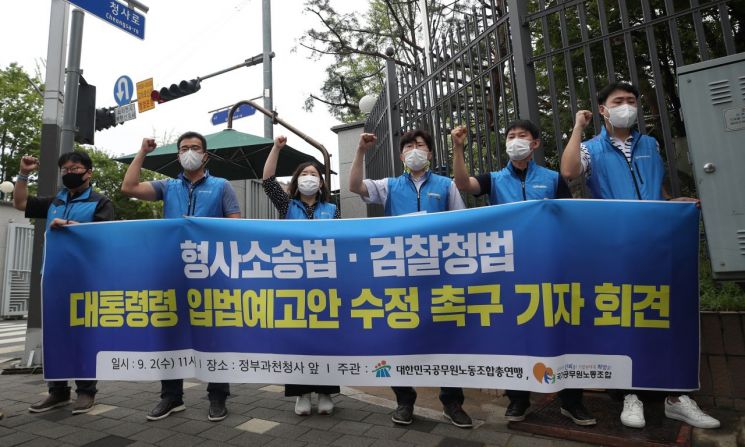 Members of the Korea Public Officials Labor Union Federation (Gongnochoeng) and the National Public Officials Labor Union held a press conference on the 2nd in front of the Government Gwacheon Complex, urging the revision of the presidential decree legislative notice on the Criminal Procedure Act and the Prosecutor's Office Act.
 [Image source=Yonhap News]
[Asia Economy Reporter Lee Gwan-joo] Last month, the Ministry of Justice's legislative notice on the enforcement decree for the adjustment of investigative authority has sparked strong opposition both inside and outside the police. The criticism stems from the view that it not only undermines the purpose of prosecutorial reform but also violates the legislative principle of 'checks and balances' between the police and prosecution. As the legislative notice period continues until the 16th of this month, voices of criticism have been raised from various sectors including the National Police Agency chief, the Police Commission, public servants' unions, and academia.
Police Commission, Academia Submit Opinions... "Prosecutorial Reform Fades"
On the 4th, the Police Commission sent an opinion letter to related agencies including the Blue House, Ministry of Justice, Ministry of the Interior and Safety, Ministry of Government Legislation, and the National Assembly, highlighting issues with the legislative notice drafts of the Enforcement Decree of the Criminal Procedure Act titled 'Regulations on Mutual Cooperation between Prosecutors and Judicial Police Officers and General Investigation Rules' and the Enforcement Decree of the Prosecutors' Office Act titled 'Regulations on the Scope of Crimes for Prosecutors' Investigation Initiation' and requesting revisions.
The Police Commission is a collegial administrative body under the Ministry of the Interior and Safety that deliberates and resolves major policies related to the police, playing a role in democratic control over police administration. It comprises seven members including the chairperson, representing various sectors such as academia, legal circles, media, and civic groups. Given that the Police Commission is responsible for the final decision on police policies, it has rarely issued direct external messages on police-related matters. This opinion letter is therefore considered highly unusual.
The Korean Police Science Association, Police Education Council, and Korean Police Research Association also submitted opinion letters on the same day to the National Participation Legislation Center and the Ministry of Justice, urging revisions to the enforcement decree. Even academic societies researching related policies see problems with the legislative notice draft.
Earlier, on the 2nd, the Korean Government Employees' Union Federation (Gongnochoeng) and members of the National Government Employees' Union held a press conference in front of the Government Complex Gwacheon, demanding revisions to the legislative notice drafts of the Enforcement Decrees of the Criminal Procedure Act and Prosecutors' Office Act. The police community 'Polnetian,' where active police officers participate, also issued a statement supporting the same claims. Notably, within the police internal network, officers on the front lines staged relay placard protests. In other words, opposition to the enforcement decree related to the adjustment of investigative authority is intensifying both inside and outside the police.
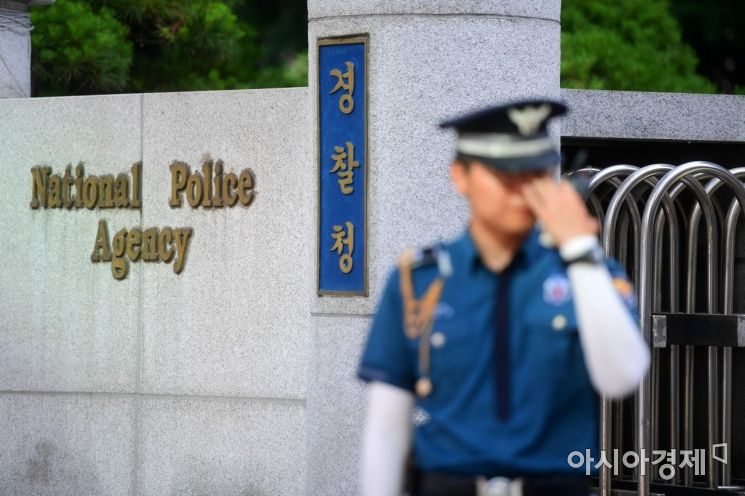 The government announced on the 21st a plan to adjust investigative authority between the prosecution and the police, focusing on transferring primary investigative rights and the authority to conclude investigations to the police. The relationship between the prosecution and the police will change from a vertical hierarchy to a cooperative partnership, and the prosecution's direct investigations will be limited to essential areas only. On the same day, police officers were on duty in front of the Police Agency in Seodaemun-gu, Seoul. Photo by Moon Honam munonam@
Investigation Rules for Police and Prosecution 'Solely Overseen by Ministry of Justice'... Prosecutors' Authority Actually Expanded
The adjustment of investigative authority between the police and prosecution was a national agenda of the Moon Jae-in administration. The core goal was to reduce the overgrown power of the prosecution. However, criticism continues that the enforcement decree for the adjustment of investigative authority fails to properly reflect the purpose of prosecutorial reform.
First, the biggest issue pointed out is that the investigation rules applicable to both police and prosecution are regulated as solely overseen by the Ministry of Justice. Although the amended law defines the relationship between the police and prosecution as one of 'mutual cooperation,' this provision results in the bizarre outcome of police affairs being subordinated to the Ministry of Justice. The police are an external agency under the Ministry of the Interior and Safety and have no direct relation to the Ministry of Justice. Lee Sang-hoon, president of the Korean Police Science Association (professor at Daejeon University), criticized, "The authority for interpretation of the enforcement decree lies with the supervising ministry," adding, "Investigation practices will inevitably be operated according to the Ministry of Justice's preferences." The Police Commission also expressed concern in its opinion letter that "if solely overseen by the Ministry of Justice, it may infringe upon the Police Commission's authority to deliberate and resolve."
Criticism also arises over provisions that allow prosecutors to investigate beyond the six major serious crimes stipulated in the Prosecutors' Office Act, including drug and cyber crimes, and that permit prosecutors to directly investigate any case as long as they obtain a search warrant. These expand the scope of prosecutors' direct investigations, directly opposing the intent of prosecutorial reform.
Choi Eung-ryeol, chairman of the Police Education Council (professor at Dongguk University), pointed out, "The enforcement decree draft newly establishes prosecutors' authority not present in the law, exceeding the limits of delegated legislation," adding, "For example, while the law only allows prosecutors to request reinvestigation regarding police decisions not to prosecute, the enforcement decree also stipulates prosecutors' authority to demand transfer, arbitrarily halting police investigations." He further stated, "This provision nullifies the police's primary authority to conclude investigations and their investigative autonomy, so it should be deleted."
Enforcement Decree Contrary to Prosecutorial Reform... How Did This Happen?
The original intent of the current government's prosecutorial reform was to reduce prosecutors' authority and have them focus on their fundamental roles of prosecution and maintaining public prosecution. However, the enforcement decree has significantly diluted this purpose. At first glance, it may seem that the scope of prosecutors' direct investigations has been reduced, but a closer look reveals that it opens the door for prosecutors to directly investigate at any time. This is why various interpretations arise regarding the legislative notice draft of the enforcement decree. Some interpret it as a 'pacification' by the Ministry of Justice, which has had conflicts with the prosecution, while others suggest that after Minister of Justice Choo Mi-ae's appointment, Prosecutor General Yoon Seok-youl, who had ongoing clashes with her, was effectively sidelined through personnel appointments, and prosecutors favorable to the current government were placed in key positions, weakening the momentum for prosecutorial reform. If the enforcement decree for the adjustment of investigative authority is implemented as currently proposed, it is expected to face criticism as a 'half-baked' prosecutorial reform.
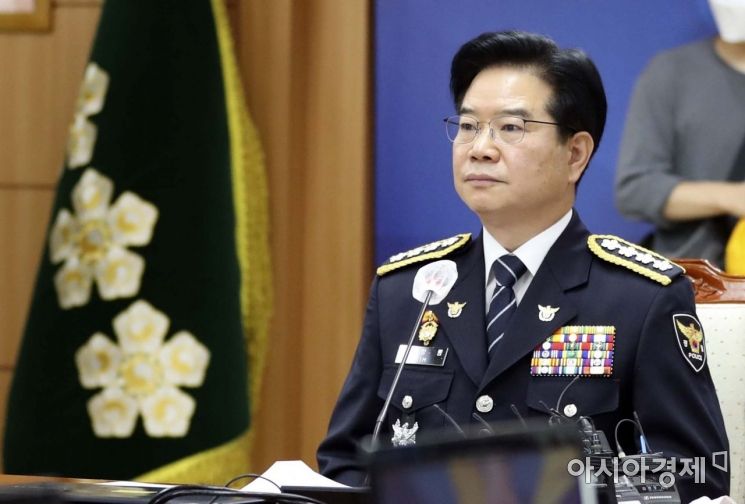
Despite the criticism of the enforcement decree for the adjustment of investigative authority, the Ministry of Justice and the Blue House have not issued any particular stance. This is interpreted as their intention to push forward with the current legislative notice draft. The police have stated their intention to make every effort to revise the enforcement decree during the legislative notice period. Kim Chang-ryong, commissioner of the National Police Agency, recently said at a press briefing, "The amended law transforms the relationship between the police and prosecution into one of mutual cooperation and aims for an investigative structure where the principle of 'checks and balances' operates," adding, "To properly implement the legislative decision according to the reform purpose, we will actively collect opinions during the legislative notice period and do our best in follow-up measures to ensure they are reflected in the final draft."
© The Asia Business Daily(www.asiae.co.kr). All rights reserved.



















