⑨History of the Cement Industry in Korea
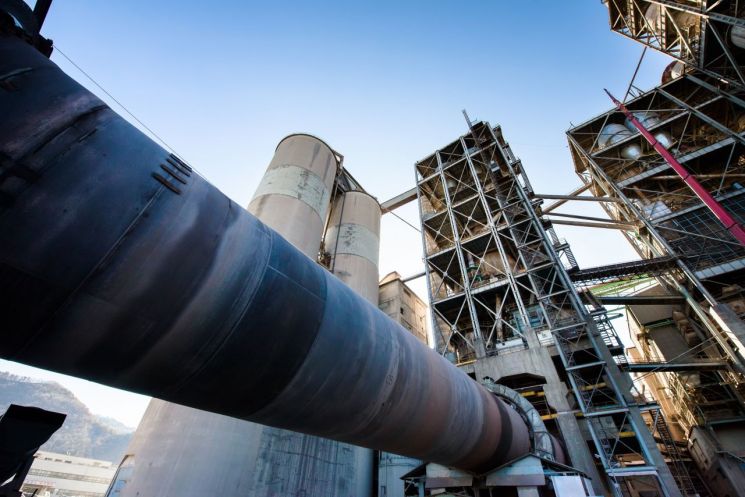 The massive kiln of a cement plant. The internal temperature reaches 1450 degrees Celsius. The preheating system (NSP: New Suspension Preheater) reduces fuel costs, which account for about 30% of cement production expenses. The fuel is recycled from waste resources such as used tires.
 [Photo by Korea Cement Association]
[Asia Economy Reporter Kim Jong-hwa]South Korea is the world's 12th largest cement producer with an annual production scale of about 60 million tons. In terms of cement technology, it has been recognized as an advanced cement country, exporting production technology overseas since the 1980s. However, the public is not fully aware of the status of Korea's cement industry. Although it played a key role as a national infrastructure industry during the economic development period of the 1960s and 1970s, it became stigmatized as a polluting industry damaging the environment in the 2000s, distancing it from public interest. Recently, the cement industry is undergoing a transition to an eco-friendly industry. This article series will re-examine the history of Korea's cement industry, which is transforming from an ugly duckling into a swan, over 11 installments.
Korea's cement industry has supplied large quantities of high-quality cement necessary for improving residential environments through large-scale new town construction and expanding infrastructure such as roads, bridges, and dams from the 1960s to the 1990s during the economic development and high-growth periods. The cement industry was an indispensable infrastructure industry when explaining South Korea's modernization.
Together with the construction and steel industries, Korea's cement industry was an icon of 'development.' In the 2000s, it attempted a paradigm shift toward 'eco-friendliness.' This was made possible by the 'recycling of circular resources,' which brought changes not only domestically but also to advanced cement industries worldwide.
In the 20th century, capitalist economies followed a linear economy model of 'resource extraction - mass production - distribution - mass consumption - disposal.' However, from the late 20th century, a circular economy model emerged, mainly in advanced countries such as Europe and Japan, aiming to reduce natural resource consumption and minimize environmental burdens caused by waste.
In Korea as well, the common understanding that 'waste = resource' took root. By reinvesting resources and energy used in human activities back into the economic activity cycle, the depletion of natural resources was delayed as much as possible, and a resource-circulating society aiming to reduce environmental burdens caused by waste began to be pursued.
In this process, limestone (resource) was extracted, and greenhouse gases (environmental burden) were inevitably generated during manufacturing. However, by applying 'recycling of circular resources' to the industry, the cement industry gradually instilled the perception of being an eco-friendly industry among the public.
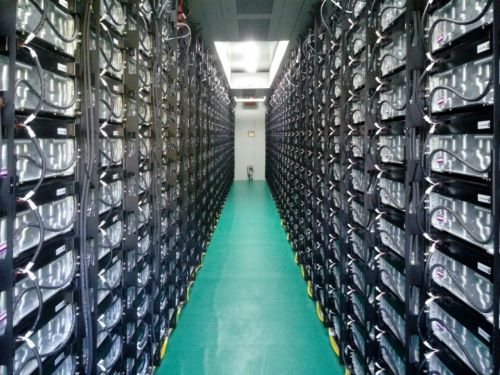 Hallacement and Asia Cement have commenced commercial operation of the industry's largest 112 MWh-class ESS (Energy Storage System). The 'eco-friendly' transformation of the cement industry has not been achieved overnight.
 [Photo by Asia Economy DB]
Let us briefly go back about 30 years. In April 1992, the Korea Tire Industry Association reported that domestic waste tires, which have a high calorific value (9,526 kcal/kg) comparable to bunker C oil, reached about 10 million annually. However, about 6 million of these were not properly utilized, becoming a serious social problem. Accordingly, media reports followed regarding the cement industry's stance that waste tires should be used as fuel.
Subsequently, in February 1994, the three major domestic tire manufacturers?Kumho, Hankook Tire, and Woosung Industry?submitted a proposal titled 'Measures to Activate Waste Tire Recycling' to the Ministry of Commerce, Industry and Energy through the Korea Tire Industry Association. The proposal requested that, like in advanced countries, waste tires be used as alternative fuel in cement manufacturing to resolve the serious social problem.
Regarding the situation at the time, a Korea Cement Association official recalled, "The Ministry of Environment, troubled by the serious social issue of waste tire disposal, referred to cases in advanced countries such as Europe and Japan where waste tires were recycled as fuel in cement manufacturing, and in 1992 requested the largest domestic cement company, Ssangyong Cement, to develop processing technology."
The official added, "Ssangyong Cement's success in developing waste tire heat utilization technology using cement kilns (G7 project) was possible because of the domestic cement industry's technology level comparable to advanced countries. It was an important turning point marking the full-scale start of circular resource recycling and the attempt to shift the paradigm toward an eco-friendly industry."
Afterward, as waste tires were used as alternative fuel replacing bituminous coal in cement manufacturing by major companies such as Dongyang (now Sampyo), Hanil, Hyundai, and Asia Cement, the social problem of waste tires was quickly resolved. This became an opportunity for waste tires to establish themselves as an important circular resource, now also used as fuel in other industries such as the paper industry and combined heat and power generation.
© The Asia Business Daily(www.asiae.co.kr). All rights reserved.


















