Tightening Belts for Survival Strategy
Hope for Sales Rebound Dampened by Resurgence
Meanwhile, Political Circles Raise 'Distribution Regulations'
Concerns Over Double Blow with 2nd Round of Disaster Relief Discussions
[Asia Economy Reporters Lim Hye-seon, Cha Min-young] "We were already struggling after being excluded from the first disaster relief fund payment, and now with discussions about the second disaster relief fund and even stricter business regulations, is the retail industry being told to just die?" (Senior official from the retail industry)
Lee Nak-yeon, leader of the Democratic Party of Korea, has announced plans to swiftly pass the Distribution Industry Development Act, which would expand the mandatory closure regulations previously applied only to large discount stores to include department stores, complex shopping malls, and duty-free shops, causing tension in the offline retail sector. After facing a sales cliff throughout the first half of the year and undergoing restructuring, the political push for stricter regulations is far from welcome. Additionally, despite the hardships caused by the COVID-19 pandemic, Lee Nak-yeon’s meetings with traditional market merchants and his remarks about regulating complex shopping malls have drawn criticism for shifting the blame for traditional market difficulties onto large shopping malls.
On the 2nd, after visiting Mangwon Market in Mapo-gu, Seoul, Lee Nak-yeon held a meeting with merchants and stated, "We will expedite the passage of the Distribution Industry Development Act this time," adding, "The main point is to introduce a mandatory holiday system for shopping malls, and we will also hasten its implementation." Earlier, on June 28, Lee Dong-joo and 27 other Democratic Party lawmakers proposed a partial amendment to the Distribution Industry Development Act. The amendment aims to address serious infringement on small local businesses by applying mandatory holidays twice a month on public holidays to complex shopping malls and similar establishments.
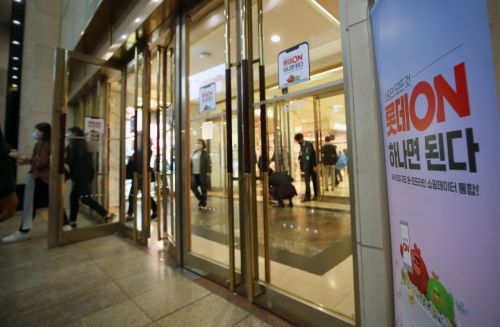
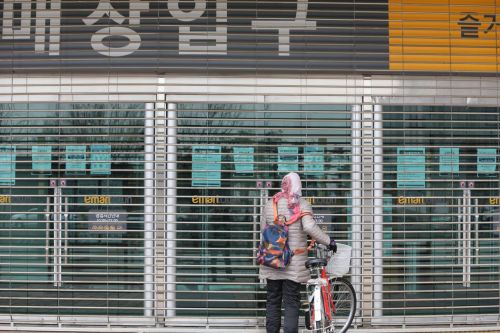
However, offline retail businesses are suffering as COVID-19 resurges. During the first weekend (28th?30th) after the implementation of social distancing level 2.5, total sales at Lotte Department Store, Shinsegae Department Store, and Hyundai Department Store plummeted by 44.0%, 21.4%, and 19.3% respectively compared to the same period last year. Department stores had shown signs of recovery in early August through store renovations and strengthening omni-channel strategies linking online and offline, but these efforts were rendered ineffective. Shinsegae Department Store Gangnam branch, Emart Uijeongbu and Changdong branches, and Lotte Department Store Guri branch temporarily closed and suspended operations from late August due to confirmed COVID-19 cases. From February to June, there were about 100 temporary closures in the retail sector due to shutdown fears.
Moreover, as discussions about the second disaster relief fund gain momentum, if large retail stores are again excluded from eligible spending locations, the impact on businesses is expected to be severe. During the first disaster relief fund payment in May, large discount stores saw their customers shift to Hanaro Mart, supermarkets, and convenience stores, resulting in a sharp sales decline. In fact, from May 13 to June 10, large discount store sales dropped by more than 4% compared to the same period last year. Lotte Mart and Emart’s total sales decreased by 7.6% and 4.7% respectively, while Lotte Super saw a 20% decline. A representative from a large discount store lamented, "During the first disaster relief fund usage period, sales dropped by more than 20%. If we are excluded from the second relief fund usage, we could lose the entire peak sales season during Chuseok."
There are also criticisms that small and medium-sized merchants, farmers, and traditional market small business owners who supply large retail stores are being 'divided.' The fashion industry, which relies heavily on department store sales, has voiced strong opposition. The Korea Fashion Industry Association conducted two rounds of signature campaigns last month among 270 member companies opposing the 'twice-monthly mandatory closure of complex shopping malls' legislation. The collected opinions have been submitted this month to the National Assembly’s Industry, Trade, Energy, Small and Medium Enterprises Committee and related agencies. A fashion company CEO stated, "Most department store suppliers saw sales drop by over 90% compared to the previous year in March and April, and by over 70% in May. While large discount events are important, there needs to be a solution to the issue where disaster relief funds cannot be used inside department stores but only at external outlets." In Homeplus’s fashion, accessories, and non-food categories, over 90% of sales come from small and medium-sized enterprises. Since the disaster relief fund usage began in earnest last May, sales declines have worsened, leaving hundreds of millions of won worth of inventory piled up in warehouses.
© The Asia Business Daily(www.asiae.co.kr). All rights reserved.
![Clutching a Stolen Dior Bag, Saying "I Hate Being Poor but Real"... The Grotesque Con of a "Human Knockoff" [Slate]](https://cwcontent.asiae.co.kr/asiaresize/183/2026021902243444107_1771435474.jpg)












