2018·2019 Facility Capacity 7368.96MW 'Unchanged'
Resident Opposition...Transport Cost Burden...Blocked LNG Cogeneration
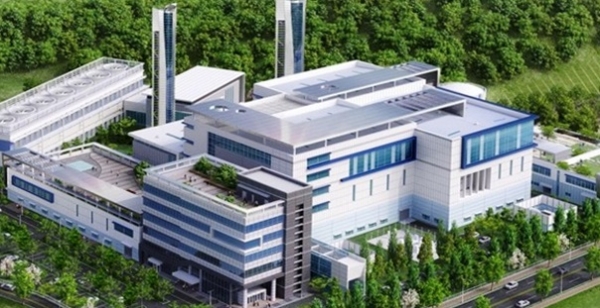
[Asia Economy Reporter Moon Chaeseok] The growth rate of liquefied natural gas (LNG) combined heat and power (CHP) facilities, considered by the government as an alternative to nuclear and coal power phase-out, was 0% last year. This is analyzed to be due to opposition from residents concerned about ultrafine dust emissions, which blocked the construction of power plants near residential areas. This reveals the confusion in the government's energy transition policy, which promotes eco-friendliness.
According to the Korea Power Exchange on the 29th, as of the end of last year, the installed capacity of district energy projects (CHP generators) was 9,190.98 MW (92 units), of which LNG CHP plants accounted for 7,368.96 MW (61 units), or 80.2% of the total. The annual growth rate of LNG CHP plant capacity peaked at 39.39% in 2014, then recorded 11% (2015), 12.67% (2016), 35.74% (2017), and 23.08% (2018), before dropping to 0% last year.
Installing a Dust-Emitting Power Plant in Front of Homes? Strong Resident Opposition
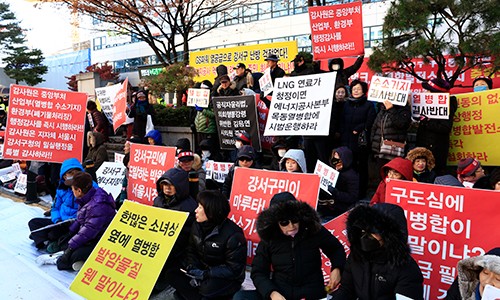
This is the result of no new LNG CHP plants being promoted in recent years due to resident opposition. LNG CHP plants are built near densely populated areas. This business model simultaneously supplies electricity and heat to residents, creating added value, and has been noted for its economic advantages over general LNG power plants.
The problem is that as environmental awareness rises, residents concerned about greenhouse gases and ultrafine dust are reluctant to have LNG CHP plants near residential complexes. According to the Intergovernmental Panel on Climate Change (IPCC) data on "Life Cycle Carbon Emissions by Power Source," LNG emits 490 grams of carbon per kWh, which is 40.8 times higher than nuclear power’s 12 grams.
Experts predict this trend will continue. Professor Jeong Dongwook of the Department of Energy Systems Engineering at Chung-Ang University diagnosed, "LNG CHP plants, like Korea District Heating Corporation’s Pangyo CHP GT, need to be built near densely populated demand areas to maximize economic efficiency, but due to pollution, opposition from residents and environmental groups intensifies, pushing plants farther from demand centers and paradoxically lowering economic viability."
LNG Production Costs Decrease, but... "Transport Costs Are Inevitable"

From the perspective of power producers, high transportation costs are also a burden. Despite the global low oil price trend and falling LNG production costs, transportation expenses remain high, limiting the reduction in raw material import prices. The JKM (Japan Korea Marker), a Northeast Asia LNG price indicator, shows a spot transportation price of $9 per MMBtu. According to academia, liquefaction and transportation account for 60% of LNG import prices.
Professor Lee Deokhwan, Emeritus Professor of Chemistry and Science Communication at Sogang University, pointed out, "Bearing the burden of LNG transportation costs is almost inevitable. Relying on specific countries like Russia to reduce transport costs could lead to trade issues with the U.S., which is undesirable from an energy security perspective."
Government Offers Incentives... Improvement in Power Source Compensation
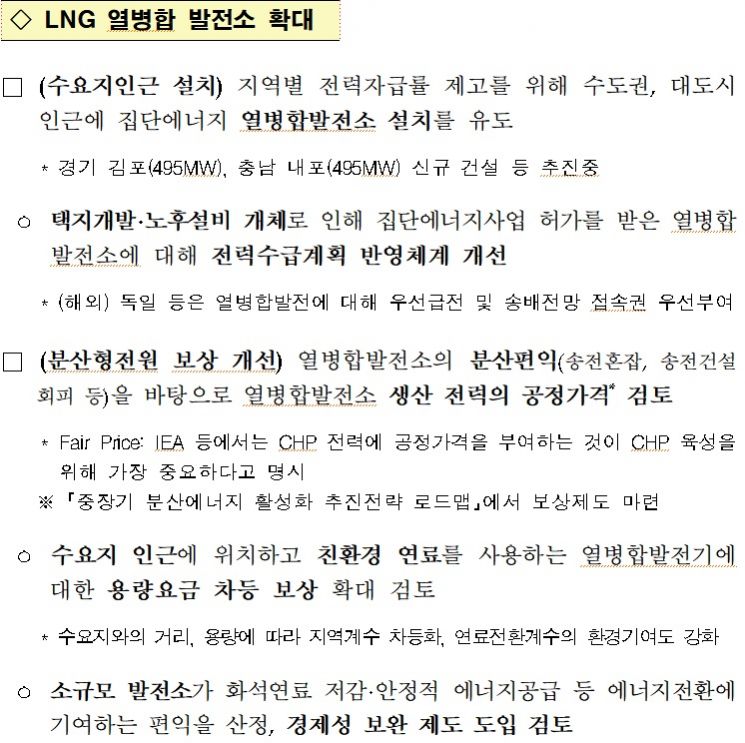 Details related to the expansion of LNG combined heat and power plants, one of the specific policy tasks in the "5th Basic Plan for Collective Energy Supply" announced by the government last February. (Source: Ministry of Trade, Industry and Energy)
The Ministry of Trade, Industry and Energy, the responsible department, announced policies in February to increase LNG CHP plant installations mainly in the metropolitan area, including ▲reviewing the fair price of electricity produced by CHP plants ▲raising capacity charges (CP) for eco-friendly fuel CHP plants, but these measures have been difficult to feel in practice.
The energy industry warns that if the high value-added LNG CHP business stagnates, it could disrupt the long-term national energy transition plan. To achieve the government's Renewable Energy 3020 plan (meeting 20% of total energy with new and renewable energy by 2030), LNG must fill the gap until the supply stability of new and renewable energy improves.
This is because the government has declared it will reduce all existing base power sources such as nuclear and coal. According to the draft of the 9th Basic Plan for Electricity Supply and Demand (Electricity Plan) announced by the working group in May, the projected share of LNG facilities by 2034 is 31% of the national energy total, with power generation at 19.7%. The LNG CHP plant capacity until last year accounts for only 17.84% of the total LNG facility capacity forecast of 41.3 GW by the end of this year, as presented in the 9th Electricity Plan draft.
Domestic Production of LNG Gas Turbines and Energy Transition at Risk
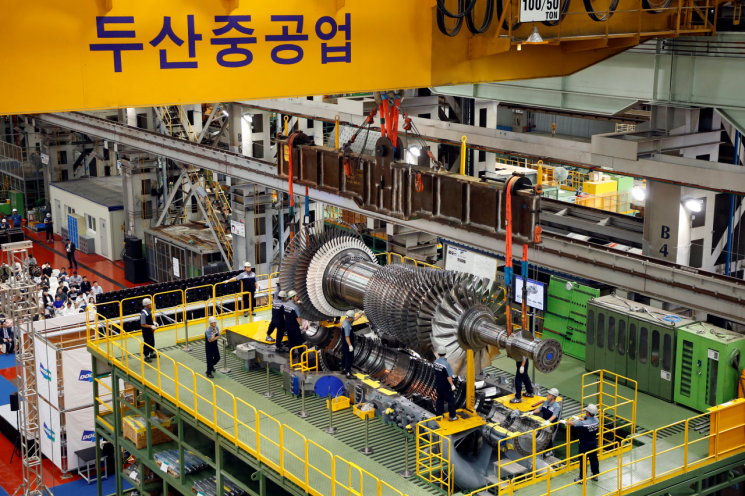
The situation could also be a setback for the domestic production plan of LNG gas turbines. The 495 MW-class Gyeonggi Gimpo LNG CHP plant, mentioned as a representative project in the Ministry of Trade, Industry and Energy’s basic plan, is expected to be completed no earlier than June 2023. The environmental impact assessment was only submitted to the Ministry of Environment on the 11th, and the plant can be built on schedule only if the Ministry does not reject it and construction starts as expected in November.
This plant serves as a demonstration testbed for Doosan Heavy Industries & Construction’s H-class gas turbine (270 MW). If the LNG CHP industry activation slows, it could also affect the domestic gas turbine production policy.
© The Asia Business Daily(www.asiae.co.kr). All rights reserved.
![Clutching a Stolen Dior Bag, Saying "I Hate Being Poor but Real"... The Grotesque Con of a "Human Knockoff" [Slate]](https://cwcontent.asiae.co.kr/asiaresize/183/2026021902243444107_1771435474.jpg)


















