Ministry of Oceans and Fisheries Strengthens Administrative Sanctions for Violations of Fisheries-Related Laws... Effective from the 17th
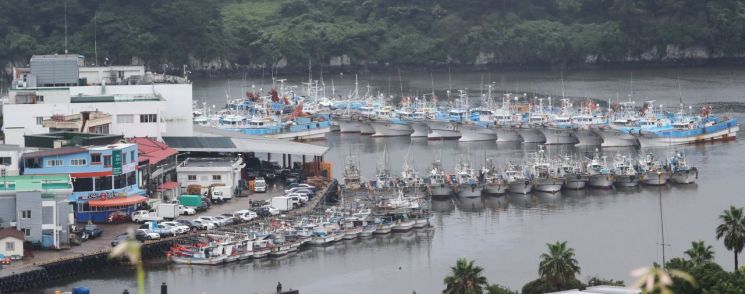
[Sejong=Asia Economy Reporter Joo Sang-don] Administrative sanctions will be strengthened so that major violations such as fishing zone violations and excessive use of fishing gear can lead to cancellation of fishing permits.
The Ministry of Oceans and Fisheries announced on the 13th that it has revised the "Regulations on Standards and Procedures for Administrative Sanctions on Violations of Fisheries-related Laws" to strengthen administrative sanctions against serious violations such as illegal joint fishing, and will implement the revisions starting from the 17th.
An official from the Ministry of Oceans and Fisheries explained, "This revision was made after gathering opinions from relevant local governments, fisheries cooperatives, coastal and offshore fishermen’s organizations and associations through legislative notices and regional field briefings," adding, "Coastal fishermen, who make up the majority of fishermen, have also demanded the eradication of serious illegal violations for the sustainable management and use of future fishery resources."
The standard period for applying the revised regulations is the two years prior to the date of the violation. For example, if a violation was detected on August 17, 2020, the presence of violations during the two years from August 17, 2018, will be checked to determine the sanction.
Specifically, first, sanctions against illegal joint fishing will be strengthened to protect squid resources on the East Coast and coastal fishermen. Currently, if large trawl fisheries, East Coast medium trawl fisheries, and offshore jigging fisheries assist or receive assistance from other fishing vessels to increase catch efficiency, they receive up to 90 days of fishing suspension on the third violation. However, from now on, fishing permits will be canceled upon the second violation.
For the 128-degree mobile fishing of large trawlers and violations of fishing zones by coastal and offshore vessels, currently, a maximum 60-day fishing suspension is imposed on the third violation. However, to establish a culture of compliance with fishing zones for large vessels, sanctions will be strengthened so that fishing permits are canceled upon the third violation.
To protect coastal and offshore fishery resources and prevent ghost fishing, penalties for excessive use of fishing gear will also be strengthened. The maximum fishing suspension for the third violation will be increased from 60 days to 90 days, and if the legal fishing gear usage standards are exceeded by two or three times, additional penalties of 30 days and 60 days will be imposed respectively.
To protect the reproduction and conservation of fishery resources, if female snow crabs, flower crabs, red snow crabs, or mitten crabs are caught, sanctions will be strengthened from a maximum 60-day fishing suspension to cancellation of fishing permits upon the third violation.
Administrative sanctions for bycatch regulations under the Fisheries Act have also been newly established. If bycatch is not sold at designated sales locations, a maximum 90-day fishing suspension will be imposed. Additionally, to manage the Total Allowable Catch (TAC) system stipulated in the Fisheries Resource Management Act, administrative sanctions have been introduced for fishing without an allocated TAC quota, with a maximum 90-day fishing suspension imposed on the third violation.
Choi Yong-seok, Director of Fisheries Resources Policy at the Ministry of Oceans and Fisheries, said, "This strengthening of administrative sanctions on fisheries-related laws improves the system to enable effective sanctions against chronic illegal fishing," adding, "We hope that this revision will raise fishermen’s awareness of lawful fishing and establish a culture of fishery resource conservation for sustainable fisheries."
© The Asia Business Daily(www.asiae.co.kr). All rights reserved.
!["The Woman Who Threw Herself into the Water Clutching a Stolen Dior Bag"...A Grotesque Success Story That Shakes the Korean Psyche [Slate]](https://cwcontent.asiae.co.kr/asiaresize/183/2026021902243444107_1771435474.jpg)
















