Aramco Cuts Capital Expenditure While Distributing Significant Portion of Net Profit as Dividends
Dividend Cuts Difficult Due to Saudi Arabia's Worsened Fiscal Situation
[Asia Economy Reporter Naju-seok] Saudi Arabia's state-owned oil company Aramco has reaffirmed its intention to pay this year's dividends worth $75 billion (89.175 trillion KRW) as planned despite poor performance caused by the oil price crash. While global oil producers have cut dividends due to decreased demand caused by the novel coronavirus (COVID-19), Saudi Arabia plans to pay as originally scheduled.
On the 9th (local time), Aramco announced that its net profit for the second quarter of this year (March to June) was $6.56 billion. This is a 73.4% decrease compared to the net profit of $24.69 billion in the same period last year. It also fell short of the market expectation of $8.34 billion. Due to reduced industrial demand and travel demand caused by lockdown measures in various countries, as well as the impact of the oil price war, oil prices plunged, resulting in the worst performance in the past 20 years.
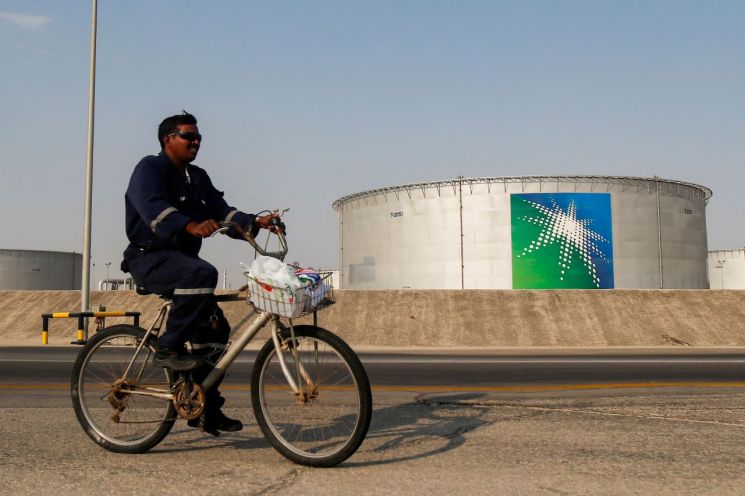
Despite showing the worst performance in 20 years, Aramco explained that the decision to maintain dividends was largely influenced by the market judgment that "the worst is over." Amin Nasser, Aramco's CEO, mentioned, "There are signs of partial recovery in the energy sector." International oil prices, which fluctuated between $60 and $70 per barrel this year, plunged due to COVID-19, falling below $20 in April. CEO Nasser stated, "Gasoline and diesel consumption in China has recovered to COVID-19 levels," and "Oil demand is reviving in Asia and other regions."
Foreign media reported that although Aramco talks about the recovery of the oil market in relation to maintaining dividends, capital expenditures have been drastically cut. This means maintaining dividend size despite reduced net profits.
This move contrasts with other global oil producers. Reflecting poor performance this year, global oil producers have drastically cut dividends. British Petroleum (BP) in the UK cut dividends by half. Royal Dutch Shell, ExxonMobil, Chevron, and Total also reduced dividends.
Unlike global oil producers, Aramco's decision to maintain dividend size despite the oil price drop appears to be largely influenced by Saudi Arabia's fiscal situation. Due to the sharp decline in oil prices, the Saudi government has halted or scaled down large-scale national projects, tripled value-added tax, and implemented emergency fiscal measures. Additionally, the debt ceiling was raised from 30% to 50% of GDP, and $20 billion in government bonds have been issued so far this year to raise funds.
For Saudi Arabia, it is difficult to forgo the dividends paid quarterly by Aramco. Aramco planned to pay $18.75 billion (75 billion ÷ 4 quarters) each quarter this year, and most of this dividend income goes to the Saudi government’s fiscal revenue.
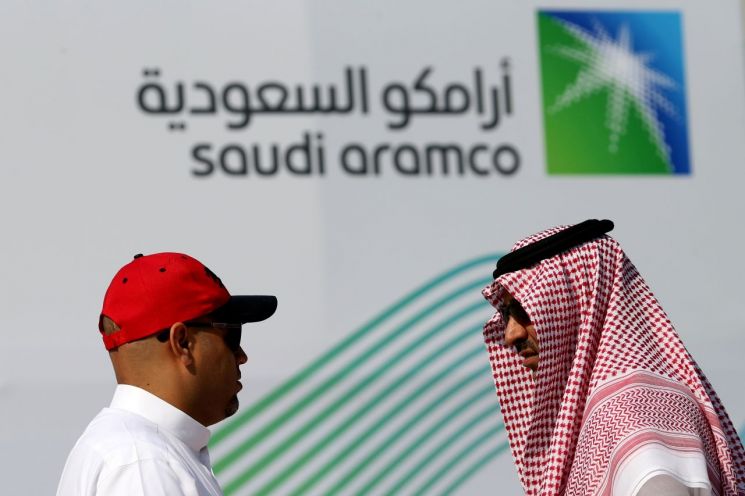
Meanwhile, Aramco recently lost its position as the world's largest market capitalization company. Apple, benefiting from record profits and a stock split, recorded a market capitalization of $1.9003 trillion, surpassing Aramco's $1.7626 trillion.
© The Asia Business Daily(www.asiae.co.kr). All rights reserved.
![Clutching a Stolen Dior Bag, Saying "I Hate Being Poor but Real"... The Grotesque Con of a "Human Knockoff" [Slate]](https://cwcontent.asiae.co.kr/asiaresize/183/2026021902243444107_1771435474.jpg)












