French President Macron Warns "Lebanese Political Reform Needed"
Severe Economic Crisis Before Explosion... Food Shortage Concerns Due to Port Destruction
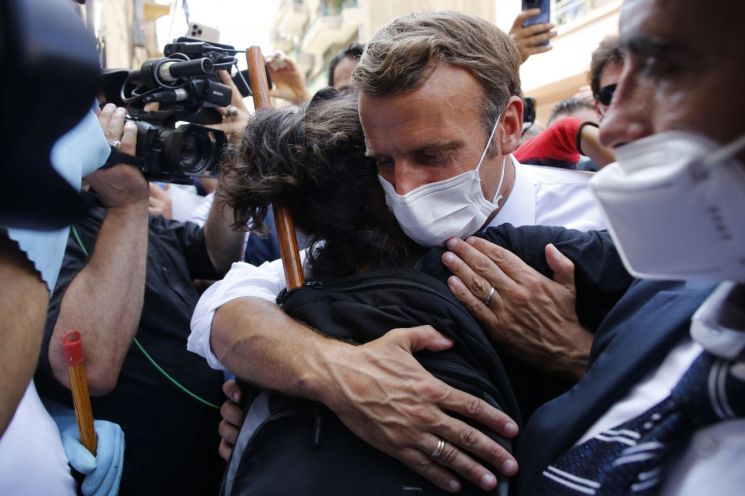
[Asia Economy Reporter Hyunwoo Lee] French President Emmanuel Macron's sudden visit to the explosion disaster site in Beirut, Lebanon has further heightened tensions in the Lebanese political landscape. As Beirut citizens raised their voices demanding the resignation of the Lebanese government and held large-scale anti-government protests directed at President Macron, the blame game among factions within Lebanon is expected to intensify. Even before the explosion disaster, Lebanon was already suffering from economic difficulties amid negative economic growth rates and murderous inflation, and with the Beirut port?the main food supply route?damaged in this disaster, residents' dissatisfaction has reached its peak.
According to foreign media such as CNN, on the 6th (local time), President Macron canceled all his originally scheduled vacations and made a sudden visit to Beirut, visiting the explosion disaster site and consoling the citizens. Thousands of Beirut citizens gathered in crowds to welcome President Macron's visit. The citizens shouted slogans such as "Revolution" and "The Lebanese government is terrorists," raising their voices to President Macron, asking him to "help with the resignation of the current Lebanese regime."
President Macron addressed the protesters, saying, "I understand your anger, and I did not come to offer a blank check to this regime," emphasizing, "What Lebanon needs now is political change, and this explosion must mark the beginning of a new era." After meeting with Lebanese President Michel Aoun and Prime Minister Hassan Diab, he warned at a press conference, "If reforms are not implemented, Lebanon will continue to sink."
Some express concerns that public sentiment has deteriorated so severely that large-scale anti-government protests similar to those in October last year may recur. At that time, anti-government protests erupted after Lebanese Prime Minister Saad Hariri announced a tax on the use of the smartphone messenger 'WhatsApp,' eventually leading to Hariri's resignation and a change in government.
The Lebanese government appears to be primarily focused on identifying those responsible for the explosion to appease the enraged public sentiment. Lebanon's state-run NNA news agency reported that Lebanese authorities are investigating the Beirut explosion disaster and have detained 16 port officials, including Hassan Kraytem, director of the Beirut port. A Lebanese military court official explained, "16 people have been detained as part of the investigation, travel bans have been imposed, and their bank accounts have been frozen."
Earlier, Lebanese authorities announced that port officials were placed under house arrest in connection with the explosion of 2,750 tons of ammonium nitrate, identified as the direct cause of the explosion. President Michel Aoun and Prime Minister Hassan Diab also pledged transparent investigations and punishment of those responsible, and an investigative committee was launched. However, the already deeply angered public sentiment is not calming down easily.
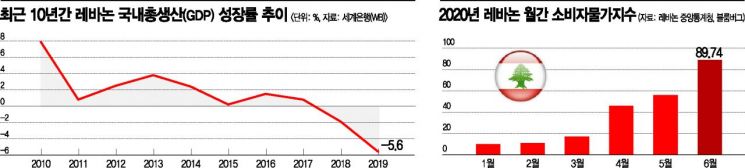
Public sentiment in Lebanon had already deteriorated significantly due to economic difficulties even before the explosion disaster. According to the World Bank's (WB) economic growth rate statistics by country, Lebanon's gross domestic product (GDP) growth rate recorded a negative growth of -5.6% last year compared to the previous year, and the consumer price index soared to 89.74% by the end of June this year, putting residents in a severe poverty situation. With a youth unemployment rate reaching 40% and government debt exceeding 150% of GDP, dissatisfaction with the state's incompetence and corruption has reached its peak.
Even after the current regime took office, there has been little sign of economic improvement. To make matters worse, Lebanese banks ran out of foreign currency reserves, causing the Lebanese pound, the national currency, to plummet by more than 80%. Coupled with the outbreak of the novel coronavirus disease (COVID-19), cash withdrawal restrictions have been imposed since October last year due to fears of massive withdrawals. Negotiations for emergency bailout funds with the International Monetary Fund (IMF) broke down last month, resulting in Lebanese citizens being unable to withdraw more than $200 in foreign currency over two weeks, and remittances have been restricted, making it difficult to purchase daily necessities.
With the economic crisis already severe, the explosion disaster has caused additional damages exceeding $15 billion, and the destruction of the Beirut port, which accounted for 60% of total food imports, has raised concerns about a food shortage. The death toll from the explosion disaster, as reported by Lebanese authorities so far, has risen to 157, with over 5,000 injured.
© The Asia Business Daily(www.asiae.co.kr). All rights reserved.
![Clutching a Stolen Dior Bag, Saying "I Hate Being Poor but Real"... The Grotesque Con of a "Human Knockoff" [Slate]](https://cwcontent.asiae.co.kr/asiaresize/183/2026021902243444107_1771435474.jpg)

















