Lotte Mart Operating Loss of 57.8 Billion
Cultural Works 82% Decrease Due to Cinema Slump
Department Store and Convenience Store Performance Improvement
Home Appliance Retailers Emerging as Beneficiary Sectors
Hi-Mart Operating Profit Soars 51%

[Asia Economy Reporter Cha Min-young] During the peak of the novel coronavirus infection (COVID-19) crisis in the second quarter, large discount stores received a performance report far below expectations, at a level of 'earnings shock.' Department stores, convenience stores, and home shopping showed relatively better results, improving compared to the first quarter.
Large Discount Stores and Movie Theaters 'Rain'... Department Stores and Convenience Stores 'Cloudy'
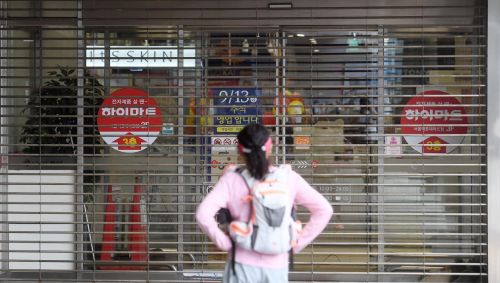
According to the industry on the 7th, Lotte Mart, a large discount store, recorded an operating loss of 57.8 billion KRW on a provisional basis for the second quarter, widening its deficit compared to the same period last year. Sales also decreased by 8.5% to 1.465 trillion KRW. The temporary closures, shortened business hours due to the spread of COVID-19, and restrictions on the use of emergency disaster relief funds had a significant impact. E-Mart, which has not yet announced its results, and Homeplus, a non-listed company, are also observed to have continued poor same-store sales compared to the previous year. The movie theater business, a representative crowded facility, also performed poorly. Lotte Cultureworks’ sales in the second quarter were 31.7 billion KRW, down 82.2% year-on-year. The main reasons were a decrease in movie theater audiences and the non-release of major films. During the same period, the company also recorded an operating loss of 50.6 billion KRW due to sluggish sales and limited reductions in selling and administrative expenses.
Department stores were sluggish in the second quarter but showed improved performance compared to the first quarter. Lotte Department Store’s operating profit was 43.9 billion KRW, down 40.6% year-on-year but up 54% compared to the previous quarter. Sales during the same period were 666.5 billion KRW, down 12.3% year-on-year but increased by 9.9% compared to the previous quarter. Sales of general luxury goods and demand for home appliances also increased.
The convenience store industry experienced a decrease in sales near schools, offices, and travel destinations, but the designation of emergency disaster relief fund usage locations had a combined effect. GS25, a convenience store, posted an operating profit of 70.2 billion KRW in the second quarter, down 19% year-on-year due to poor same-store sales and an increased proportion of tobacco sales. Sales during the same period were 1.7629 trillion KRW, a 0.3% increase compared to the same period last year. BGF Retail, which operates the convenience store CU, recorded an operating profit of 44.5 billion KRW in the second quarter, down 27.0% year-on-year. Sales were 1.5491 trillion KRW, up 2.1% from the previous year.
Home Shopping 'Partly Cloudy'... Electronics Retailers 'Clear'
Conversely, the top three home shopping companies succeeded in defending their performance with a tightening strategy amid demand for health functional foods and daily necessities. Lotte Home Shopping’s sales and operating profit were 259.8 billion KRW and 37.6 billion KRW, respectively, growing by 10.1% and 13.3%. GS Home Shopping posted an operating profit of 41.5 billion KRW in the second quarter, up 27.3% year-on-year through efforts to reduce confidential expenses such as marketing. During this period, sales were 304.3 billion KRW, down 2.0%, but merchandise handling volume increased by 1.3% year-on-year to 1.1341 trillion KRW. CJ ENM O Shopping Division recorded an operating profit of 49.8 billion KRW, up 38.3% year-on-year. This was thanks to boldly reducing low-profit online products and increasing sales of exclusive brands such as 'Atssential,' 'Secret,' and 'Daniel Cremieux.' Sales increased by 5.2% year-on-year to 376.2 billion KRW, while merchandise handling volume decreased by 4.5% to 972.3 billion KRW.
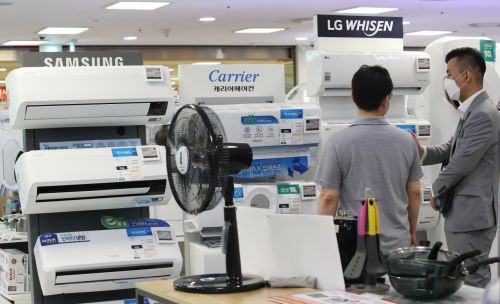
With the increase in staying at home, electronics retailers emerged as a beneficiary industry. Lotte Hi-Mart’s operating profit surged 51.1% year-on-year to 69.3 billion KRW. Sales also rose 4.2% to 1.1157 trillion KRW. Growth in high-efficiency premium home appliance product groups and increased demand for office PCs and TVs due to the spread of non-face-to-face classes and telecommuting were key factors.
© The Asia Business Daily(www.asiae.co.kr). All rights reserved.



















