Moon's Approval Rating at 44.5%, Declines Again... Democratic and United Parties' Support Rates Close by 0.8%p
Democratic 35.6% vs United 34.8%, Criticism for Ignoring Youth Sentiment in 20s-30s
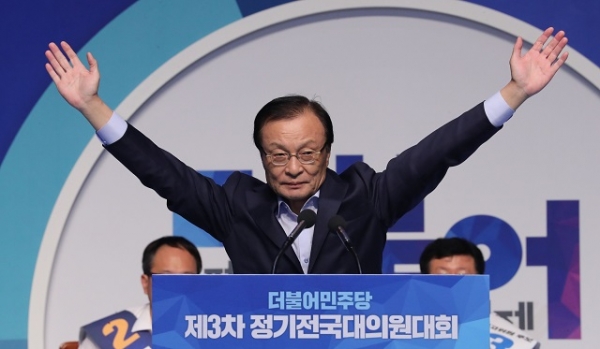 Lee Hae-chan, the newly appointed leader of the Democratic Party of Korea, raises his hand to greet before delivering his acceptance speech at the National Delegate Convention held on the afternoon of August 25, 2018, at the Seoul Olympic Gymnastics Arena. Photo by Yonhap News.
[Asia Economy Reporter Han Seung-gon] The ruling Democratic Party of Korea (DPK), which swept 163 out of 253 constituency seats nationwide (total 300 seats including proportional representation), is barely outpacing the Future United Party (FUP), which holds only 103 seats, in approval ratings. When adding the seats of the broader ruling coalition, totaling 176 seats, there are criticisms that the truly dominant ruling party is not exerting its full strength in terms of approval ratings.
The FUP's approval rating reached its highest point since its founding in February this year. The gap in approval ratings between the two major parties narrowed to within 1 percentage point. Support among the 20s and 30s age groups, representing the future generation and a sign of the DPK's dynamism, is also declining.
This phenomenon appeared 113 days after the general election day on April 15, as of today (the 6th). As a result, some voices express self-deprecating criticism, asking, "What on earth has happened within the DPK over these 100 days?" There are also cautious forecasts that a golden cross in approval ratings is imminent.
Regarding the emergence of this situation within about 100 days, some DPK supporters criticize that the party, trapped in the opinions of so-called 'hardcore supporters,' may be failing to make sound judgments. There are also criticisms that the party is overly cautious of the pro-Moon (親文) supporters.
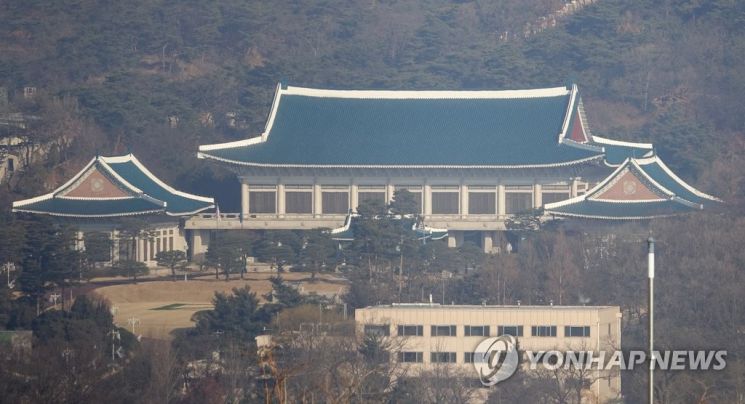
◆ President Moon's Approval Rating Declines... Large Drop Among 20s and 30s
In the first week of August, President Moon Jae-in's approval rating for his administration stood at 44.5%, down 1.9 percentage points from the previous week. The decline was particularly significant among the 20s and 30s age groups and women.
Polling agency Realmeter announced on the 6th that a survey conducted from the 3rd to the 5th among 1,510 men and women aged 18 and older nationwide showed that the positive evaluation rate of President Moon's administration was 44.5%.
The negative evaluation rate rose 2.2 percentage points from the previous week to 51.6%. The gap between positive and negative evaluations widened to 7.1 percentage points, beyond the margin of error. The percentage of respondents who were unsure or did not respond decreased by 0.4 percentage points to 3.9%.
By age group, the positive evaluation rate among the key support base of people in their 20s and 30s declined. The positive evaluation rate among those in their 30s dropped 9.4 percentage points from the previous week to 43.9%. Among those in their 20s, it fell 3.8 percentage points to 39.9%.
By gender, the positive evaluation rate among women decreased. The rate of women who positively evaluated President Moon's administration dropped 2.7 percentage points to 45.1%. Among men, it decreased by 1.2 percentage points to 43.7%.
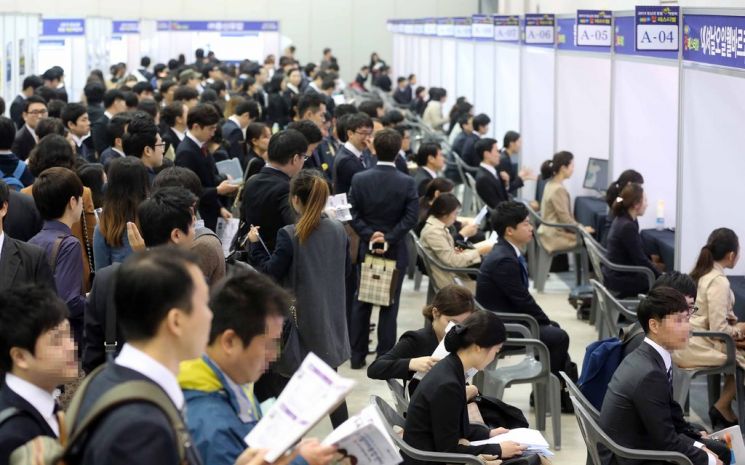
◆ Is the 'Golden Cross' of FUP Surpassing DPK Approval Ratings Imminent?
The party approval rating survey is also inevitably embarrassing from the DPK's perspective. The results show that the FUP has caught up to the DPK's heels.
According to the preliminary weekday aggregate for the first week of August conducted by Realmeter on the 6th at the request of TBS, the DPK's approval rating fell 2.7 percentage points from the previous week to 35.6%. Meanwhile, the FUP's approval rating rose 3.1 percentage points to 34.8%.
The gap between the two parties narrowed from 6.6 percentage points to 0.8 percentage points, which is within the margin of error. Consequently, there are forecasts that the golden cross in approval ratings is imminent. This decline in the DPK's approval rating is interpreted as reflecting public disappointment with the government's real estate measures. Additionally, controversies such as the regularization of irregular workers at Incheon International Airport, sexual harassment allegations against the late former Seoul Mayor Park Won-soon, secondary victimization remarks by some lawmakers, and real estate policies have compounded the negative factors. In fact, young people in their 20s to 40s have taken to the streets, holding rallies to demand improvements in women's rights stemming from the Moon administration's real estate policies and the Park scandal.
Criticism is also emerging among supporters. Kim, a company employee in his 30s, said, "These days, the DPK seems to lack empathy," adding, "Especially the real estate issue is one of the most sensitive issues in our society regardless of party affiliation, yet handling the legislation like this is unacceptable. They should have listened to sufficient opinions before proceeding." However, he added, "This is only an approach to approval ratings and not a criticism of the real estate policies themselves."
Another office worker in his 40s, Mr. B, pointed out, "It seems they failed in crisis management," citing issues such as the regularization of irregular workers at Incheon International Airport and the former Minister of Justice Cho Kuk's controversies as examples of inadequate responses to various current affairs.

Separately, there is also a view that the party is completely trapped by the opinions of hardcore supporters. There is criticism that the party is overly cautious of the so-called pro-Moon faction, which can be seen as President Moon's hardcore supporters. A DPK supporter expressed frustration, saying, "Looking at the recent legislative process, it seems like the bills are being passed as if they were just waiting for it," and added, "I want to ask those supporters who feel relieved by this, what do they think about democratic politics?"
This view has already been expressed among experts. Choi Jang-jip, an emeritus professor of political science and diplomacy at Korea University with a progressive orientation, wrote in a paper titled "Rethinking Korean Democracy" published in late June in the Seoul National University Korean Political Studies Institute's journal 'Korean Political Studies' that "The emergence of the Moon administration after the candlelight protests was expected to be a turning point ushering Korean democracy into a new stage, but now Korean democracy is in crisis," and added, "This crisis stems from the political failure of the elite group from the student activist generation and the so-called 'ppa' faction allied with them."
He analyzed that "The phenomenon of 'ppa,' who passionately follow a particular politician, is a political movement centered on strong cohesion and aggressiveness," and pointed out that "A virtually organized majority leads public opinion through internet social media, attacking dissenting opinions or criticism, effectively restricting freedom of the press."
© The Asia Business Daily(www.asiae.co.kr). All rights reserved.
![Clutching a Stolen Dior Bag, Saying "I Hate Being Poor but Real"... The Grotesque Con of a "Human Knockoff" [Slate]](https://cwcontent.asiae.co.kr/asiaresize/183/2026021902243444107_1771435474.jpg)


















