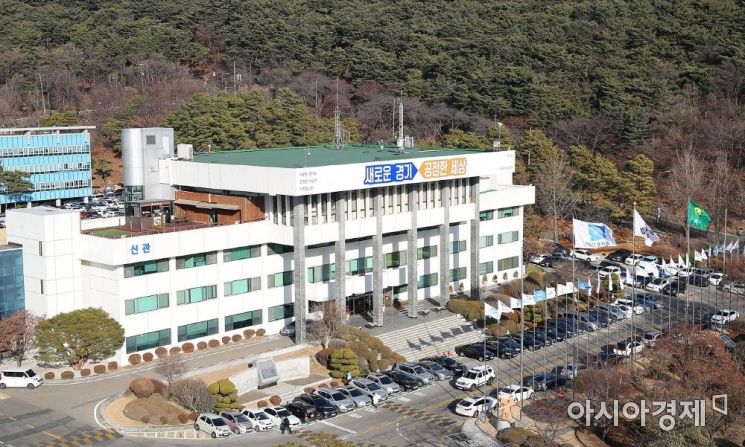
[Asia Economy (Suwon) = Reporter Lee Young-gyu] Gyeonggi-do's 'disaster fund' is running dry. The disaster fund is a mandatory reserve fund set aside to prepare for various disasters such as floods, monsoons, and earthquakes, and consists of the Disaster Management Fund and the Disaster Relief Fund.
At the beginning of this year, Gyeonggi-do used the disaster fund to provide the 'Gyeonggi-do Basic Income' due to the spread of COVID-19, reducing the fund to one-third of its original size. Additionally, the demand for disaster funds is increasing due to the recent flood damage, and the fund is expected to decrease further. There are concerns that if the second wave of COVID-19 occurs in the second half of the year, the fund may be depleted, making timely response impossible.
According to Gyeonggi-do on the 6th, the disaster fund, which was 920 billion KRW (Disaster Management Fund 616 billion KRW, Disaster Relief Fund 299 billion KRW) at the beginning of this year, sharply decreased by 690 billion KRW to 230 billion KRW at the end of last month.
The sharp decrease in the disaster fund is due to the payment of the disaster basic income. Since April, the province decided to provide 100,000 KRW per resident as Gyeonggi-do Disaster Basic Income, and used 614 billion KRW from the disaster fund to cover the shortfall of the total 1.3642 trillion KRW budget. Specifically, 385 billion KRW was used from the Disaster Management Fund for restoration costs, and 229 billion KRW from the Disaster Relief Fund for consolation payments and other support.
The province also spent a total of 70 billion KRW, including 60 billion KRW from the Disaster Management Fund and 10 billion KRW from the Disaster Relief Fund, for quarantine expenses in response to COVID-19 and African Swine Fever outbreaks.
Due to the excessive expenditure of the disaster fund caused by the unexpected COVID-19 situation, emergency measures are needed to support damage caused by recent heavy rains in various cities and counties within the province.
Anseong City estimates the flood damage to exceed 20 billion KRW, but its own Disaster Management Fund is only 6.5 billion KRW, and the Disaster and Accident Reserve Fund is 4.4 billion KRW, totaling just 11 billion KRW.
Yeoncheon County has suffered significant damage, including flooding of 49 houses and 250.68 hectares of farmland, but its own disaster fund is only 3.5 billion KRW, making support from the province and government more urgent than ever.
However, the disaster fund currently held by the province is 230 billion KRW, which is considered insufficient to support flood damage recovery in the 31 cities and counties within the province. Accordingly, the province plans to request urgent support from the government, including declaring 'special disaster areas' for severely affected regions such as Anseong.
There are also concerns that if the second wave of COVID-19 begins in the fall, timely response will be impossible due to the depletion of the disaster fund.
A provincial official stated, "We currently believe that the disaster situation can be managed with the disaster fund held by Gyeonggi-do, but additional measures will be necessary in case of emergency situations such as a large-scale COVID-19 outbreak. If such a crisis occurs, we will respond as flexibly as possible by changing existing project plans and securing additional resources."
© The Asia Business Daily(www.asiae.co.kr). All rights reserved.

















