Increased Burden When Switching from Monthly Rent to Jeonse
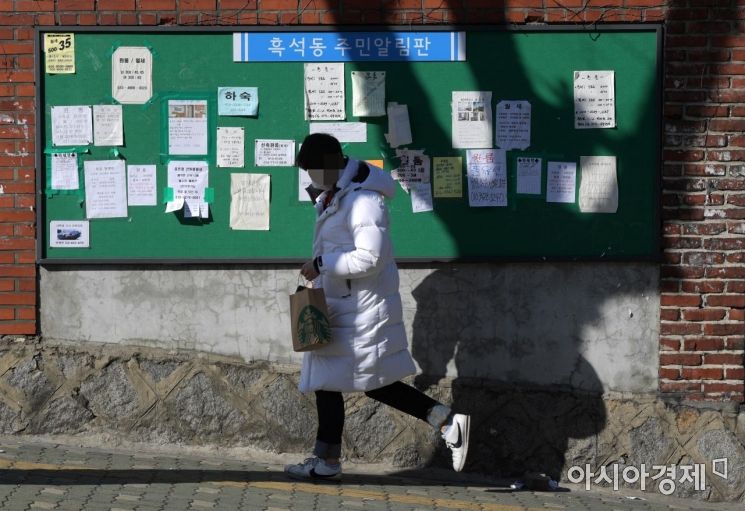
[Asia Economy Reporter Donghyun Choi] Concerns have been raised that the government's policy to lower the jeonse-to-monthly rent conversion rate could be exploited to increase jeonse prices in officetels and other properties with a high proportion of monthly rent. When the jeonse-to-monthly rent conversion rate decreases, monthly rent prices go down when converting from jeonse to monthly rent, but conversely, when converting from monthly rent to jeonse, landlords can raise the jeonse price higher than before.
According to the Housing Lease Protection Act on the 6th, the jeonse-to-monthly rent conversion rate is set at 'base interest rate + 3.5%'. With the current base interest rate at 0.5%, the conversion rate is 4.0%. The jeonse-to-monthly rent conversion rate is the ratio applied when converting a jeonse deposit into monthly rent. A higher rate means a relatively higher monthly rent burden compared to jeonse, and a lower rate means the opposite.
For example, if a house with a jeonse deposit of 200 million KRW is converted to monthly rent with a deposit of 20 million KRW, applying a conversion rate of 4% results in a monthly rent of 600,000 KRW. At 3%, it would be 450,000 KRW, and at 2%, 300,000 KRW. The lower the conversion rate, the lower the monthly rent.
The problem is that the conversion rate applies not only to 'jeonse → monthly rent' but also equally to 'monthly rent → jeonse' conversions. For instance, if a landlord operating a property with a 20 million KRW deposit and 600,000 KRW monthly rent converts it to jeonse, applying the existing 4% conversion rate results in a converted jeonse deposit of 200 million KRW. However, if the rate is 3%, the converted deposit rises to 260 million KRW, and at 2%, it can go up to 380 million KRW.
Because of this, the industry is concerned that landlords of officetels or one-room apartments near universities, where monthly rent is predominant, may evict current monthly tenants and convert the properties to jeonse. Jeong (30) said, "After talking with my landlord recently, I heard that if the jeonse-to-monthly rent conversion rate lowers and market monthly rents fall, it would be better to convert monthly rent to jeonse and invest elsewhere," adding, "I hope the government implements tenant protection measures first before enforcing this policy."
Especially as the recent jeonse shortage triggered in apartments is spreading to officetels and villas, if market supply and demand instability continues, the possibility of deposit increases using the jeonse-to-monthly rent conversion rate is growing. Yoo (32), an office worker living in an officetel in Mapo-gu, Seoul, said, "If the landlord wants to convert from monthly rent to jeonse, tenants would have no choice but to accept the conversion by utilizing jeonse loans for small and medium enterprises, which offer low market interest rates and support 80-100% of the deposit."
Experts also expressed concerns that uniform market adjustments could cause other side effects. Professor Daejung Kwon of Myongji University Graduate School of Real Estate said, "Landlords sensitive to yields will want to receive higher jeonse deposits instead of monthly rent if the conversion rate decreases," adding, "Combined with recently implemented lease protection laws, various problems are likely to emerge."
© The Asia Business Daily(www.asiae.co.kr). All rights reserved.

















