Extension of $60 Billion Korea-US Currency Swap
From September This Year to March Next Year
"Market Stabilized but Foreign Currency Safety Net Still Needed"
All Nine Central Banks Including Korea Participate
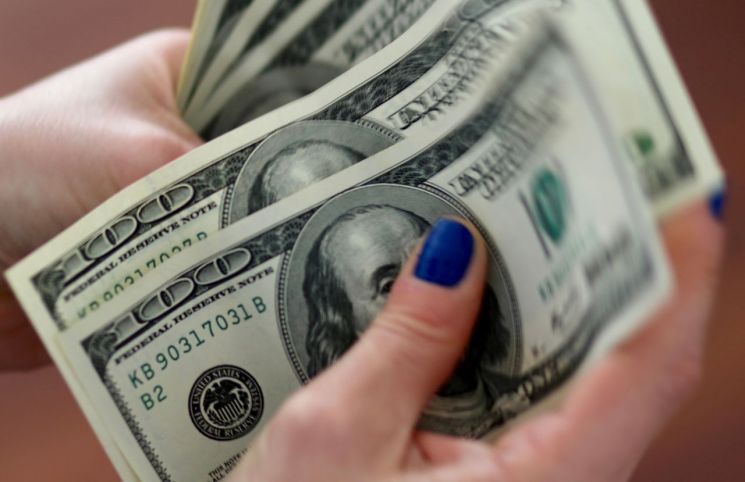
[Asia Economy Reporters Eunbyeol Kim and Sehee Jang] The currency swap agreement between South Korea and the United States has been extended for an additional six months. The extension was made in advance, two months before the original expiration date. Although the market has stabilized compared to the early days of the COVID-19 outbreak, uncertainties related to COVID-19 remain, leading to the decision to maintain the 'foreign currency safety net.'
The Bank of Korea and the U.S. Federal Reserve (Fed) announced on the 30th that the expiration date of the $60 billion (approximately 72 trillion KRW) Korea-U.S. currency swap agreement would be extended by six months from 3 a.m. (2 p.m. Eastern Time on the 29th). Accordingly, the expiration date, originally set for September 30 this year, has been postponed to March 31 next year.
A senior official from the Bank of Korea stated, "After continuously monitoring market conditions since March, we expressed our position to extend the Korea-U.S. currency swap," adding, "The U.S. also conveyed that maintaining the currency swap would be beneficial amid high uncertainty, leading to the final agreement on the extension." The scale and conditions remain the same, with only the contract period extended.
South Korea: "No reason to remove foreign currency safety net"
U.S.: "Currency swaps should serve as safety mechanisms for each country"
It is said that during negotiations with the Fed, it was unclear whether other countries would also extend their currency swaps. The Fed allowed each country to decide individually whether to extend their currency swaps. Officials explained that South Korea's foreign exchange authorities judged that "securing dollars is always beneficial in times of high uncertainty." Even if none of the swap funds are used, simply having them helps stabilize the market. A government official said, "Since the COVID-19 crisis is not over, we judged there was no need to remove the foreign currency safety net," emphasizing that "the greatest weight was placed on the fact that market instability has not been completely resolved."
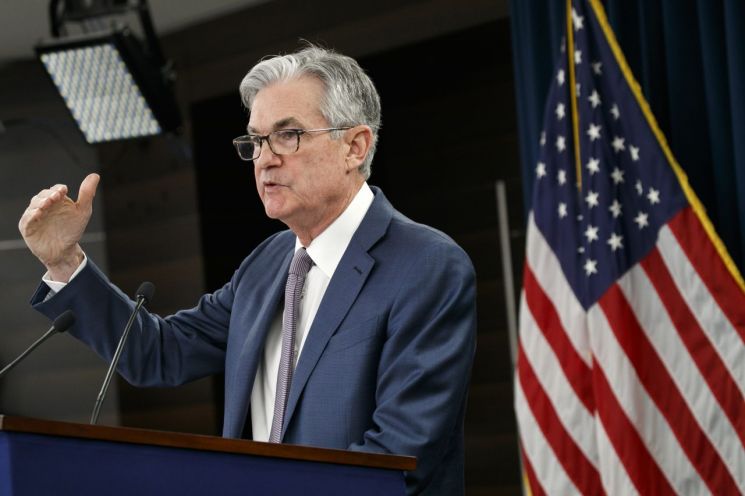
Jerome Powell, Chair of the U.S. Fed, also said at a press conference following the Federal Open Market Committee (FOMC) meeting that day, "Currently, there are no worries in the market, but I hope the currency swap serves as a backstop," explaining, "Because the pandemic crisis is not over, the intention is to allow other countries to use it whenever necessary." In addition to South Korea, nine other central banks from Australia, Brazil, Mexico, Singapore, Sweden, Denmark, Norway, and New Zealand also participated in the currency swap extension. The Fed also extended the operation of the temporary facility (FIMA) for repurchase agreement (RP) transactions, which supply dollars in exchange for U.S. Treasury securities held by central banks, until the end of March next year.
Currency swap effects proven again in March... Fed prioritizes market stability despite dollar weakness
The effectiveness of the currency swap was also demonstrated in March. On March 20, the day after the currency swap news was announced, the KOSPI index rose by 7.4%, and the won-dollar exchange rate fell by 3.1%. After the fund supply, the swap rate (3-month) improved from -141 basis points (bp) in March to -115 bp in April, indicating improved foreign currency liquidity conditions and reduced exchange rate volatility. The Bank of Korea has supplied a total of $19.872 billion in six rounds so far.
The Fed's decision to extend the currency swap two months ahead of maturity appears to be largely influenced by a negative economic outlook. Although the decision could have been made at the next FOMC meeting (September 15-16), the proactive approach aims to avoid unnecessary controversy and market shocks. Chair Powell emphasized, "Full recovery will not come until people are confident," and added, "We will use all available tools to support economic recovery."
Although global liquidity is increasing and the U.S. dollar is weakening, the Fed intends to maintain supply even if it means tolerating a weaker dollar for the time being. Recently, the U.S. dollar has continued to weaken. On the 21st (local time), the European Union (EU) agreed to provide a 760 billion euro (approximately 152 trillion KRW) economic recovery fund, strengthening the euro and weakening the dollar. The U.S. shows no signs of calming the COVID-19 situation compared to the EU, and with the economy continuing to perform poorly, the dollar weakness is intensifying. Although warnings have emerged that the U.S. dollar could lose its status as the global reserve currency due to its weakness, the Fed aims to prepare for crises through abundant supply and build trust as the 'central bank of the world.'
© The Asia Business Daily(www.asiae.co.kr). All rights reserved.


















