Government and Seoul City Consider Ultra-High-Density Development and Public Reconstruction to Expand Supply
Concerns Over Rising Housing Prices Due to Increased Reconstruction and Rentals in Gangnam Area
Opinions That Higher Floor Area Ratios May Worsen Residential Environment
Possible Interest in Less Profitable Non-Gangnam Reconstruction
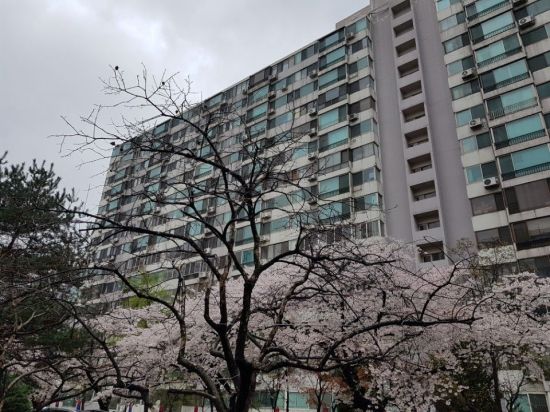 Jamsil-dong Jugong Complex 5, Songpa-gu, Seoul
[Asia Economy Reporter Onyu Lim] "Why would we choose such a method when the public sector intervenes and rental housing increases significantly?" (A representative of the Jamsil-dong Jugong 5 Complex Reconstruction Association, Seoul)
On the 28th, although it was reported that the government and Seoul City are reviewing a high-density development plan through zoning changes from residential to quasi-residential areas as a supply expansion measure, the reaction from reconstruction complexes in the Gangnam area is lukewarm. This is due to resistance to 'public reconstruction.' Public reconstruction is a system where public entities such as Korea Land and Housing Corporation (LH) and Seoul Housing and Communities Corporation (SH) participate as project operators, providing incentives such as floor area ratio (FAR) relaxation in exchange for recovering a certain amount of development profits through building rental housing.
According to the industry on the 28th, the government and Seoul City are expected to grant incentives such as exemption from the price ceiling system and FAR increase for public reconstruction projects in the supply plan scheduled to be announced at the end of this month. Specifically, they are reportedly discussing changing the zoning of station-area reconstruction projects from general residential to quasi-residential areas and increasing the FAR of quasi-residential areas, currently 400% under Seoul City ordinances, to a maximum of 800-1000%. Currently, the FAR cap for type 3 residential areas under Seoul City ordinances is 250%, and since 2014, the building height has been limited to 35 floors.
However, reconstruction complexes in the Gangnam area find it difficult to accept such a plan. A representative of the Jugong 5 Complex Reconstruction Association in Jamsil-dong, Songpa-gu, said, "In our complex, part of the maintenance plan change has already been approved," adding, "What we want is for reconstruction to proceed normally according to the existing plan." He further said, "If many rental apartments are built, there is concern that housing price increases will be blocked, so the association members do not welcome it."
The reason why the government's reconstruction deregulation plan is not welcomed is due to the countermeasures related to incentives. The government is considering recovering half of the increased housing from the FAR increase in the form of rental housing. Han Hyung-gi, former chairman of the Sinbanpo 1st (Acro River Park) Reconstruction Association in Jamwon-dong, Seocho-gu, Seoul, pointed out, "Gangnam reconstruction complexes do not want FARs of 800% or 1000%," adding, "Because rental housing will increase significantly and high-density reconstruction will make the residential environment poor like commercial areas."
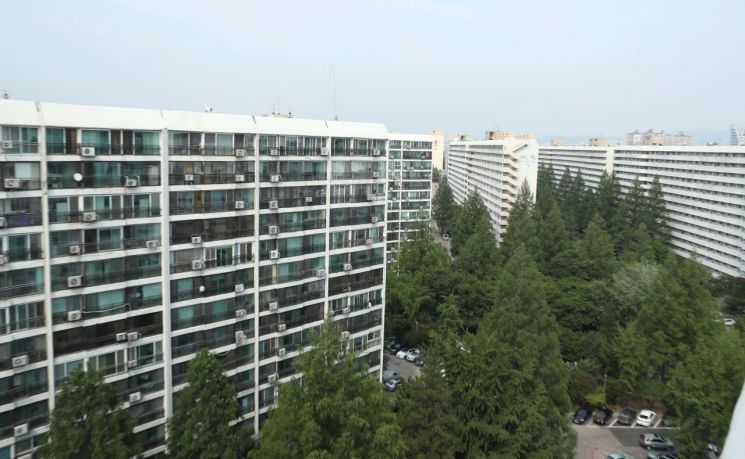
The Eunma Apartment, which has been stalled at the promotion committee stage for 18 years, also shows little interest in the government plan. A resident of this apartment bluntly said, "Residents are not interested in high-density development or public reconstruction." This is because the project itself cannot proceed due to various reconstruction regulations. The official said, "The maintenance zone has not even been designated yet," adding, "The priority is to establish an association to exempt the two-year actual residence requirement." Earlier, the government announced in the June 17th measures that only owners who meet the two-year actual residence requirement would be given reconstruction move-in rights. The government plans to revise the Urban and Residential Environment Maintenance Act within this year to apply this regulation to complexes that receive association establishment approval from next year.
However, there is also a possibility that reconstruction projects outside Gangnam, which have low profitability due to already high FARs, may show interest in public reconstruction. Even if they donate a certain portion of rental apartments, increasing the FAR could cover the insufficient project costs. An official in the maintenance industry said, "Even in public redevelopment, only areas with low profitability have shown interest, causing delays," adding, "Public reconstruction is also more likely to see active participation from reconstruction complexes outside Gangnam rather than those in Gangnam."
Professor Kwon Dae-jung of Myongji University's Department of Real Estate said, "Since residents dislike rental housing, active participation from Gangnam reconstruction complexes is hard to expect," adding, "However, it could be an opportunity for reconstruction complexes that have no capacity for additional contributions."
© The Asia Business Daily(www.asiae.co.kr). All rights reserved.

![User Who Sold Erroneously Deposited Bitcoins to Repay Debt and Fund Entertainment... What Did the Supreme Court Decide in 2021? [Legal Issue Check]](https://cwcontent.asiae.co.kr/asiaresize/183/2026020910431234020_1770601391.png)














