Special Exhibition at National Palace Museum from Tomorrow: 'Western-style Ceramics Used in the Joseon Royal Family'
Over 400 Items Including 'Baekja Painted Salamina Bottle' and 'Philibert Style Ware' on Display
Large Collection of Western Export Vases Made in Japan Also Revealed
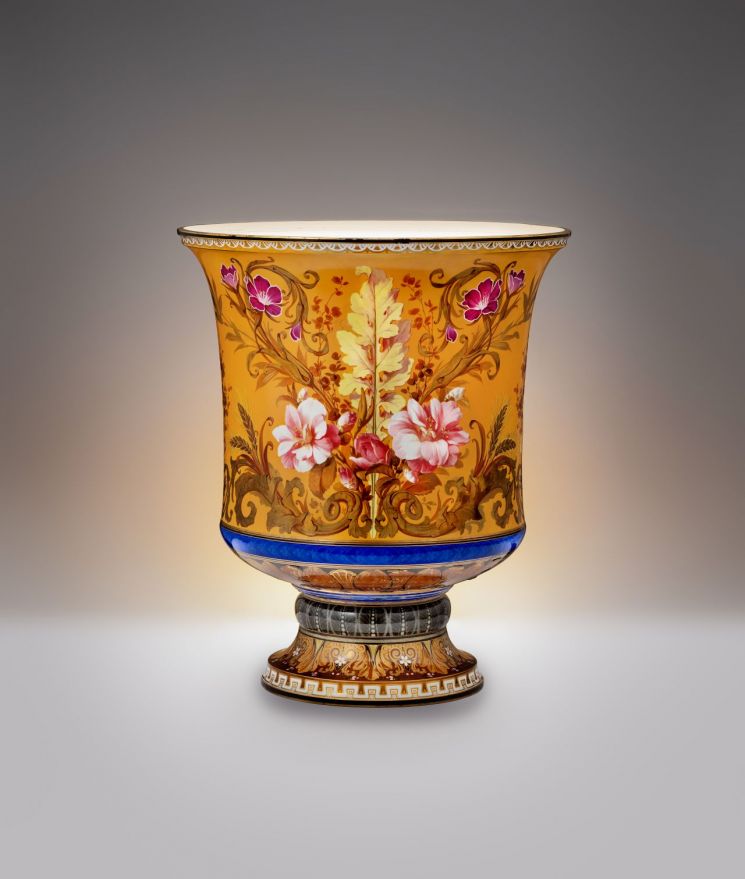
“I have heard that French artworks are famous, but this is the first time I have seen something so beautiful.” These were the words of King Gojong of Joseon (reigned 1863?1907) upon receiving a gift from French President Sadi Carnot (in office 1876?1894). The artwork that elicited such admiration was a ‘white porcelain polychrome Salamina vase.’ It is a masterpiece made in 1878 at the S?vres porcelain manufactory in France. President Carnot presented it in 1888 to commemorate the second anniversary of diplomatic relations. After the opening of the port, King Gojong, who received the first gift from a Western diplomatic country, reciprocated by presenting two pieces of 12th?13th century Goryeo celadon and a pair of banhwa (盤花; decorative items made by standing gold-painted wood in a metal flowerpot and expressing flowers and leaves with various jewels). In effect, the two heads of state engaged in ‘porcelain diplomacy.’
The ‘white porcelain polychrome Salamina vase’ that King Gojong admired is being publicly exhibited for the first time. The National Palace Museum of Korea will hold a special exhibition titled ‘New Royal Porcelain: Western-style Porcelain Used by the Joseon Royal Family’ from the 29th through October 4th. This exhibition offers a comprehensive look at the changes in porcelain used by the Joseon royal family before and after the opening of the port. It features about forty pieces of modern Western-style porcelain, including a set of Pillivuyt tableware and a ‘white porcelain celadon-colored vase with classical figure patterns,’ as well as approximately 310 items and 400 pieces of Western-style porcelain made in France, the UK, Germany, Japan, and China. The museum stated, “We highlight Joseon’s determination to advance as a modern nation through porcelain after the opening of the port.”
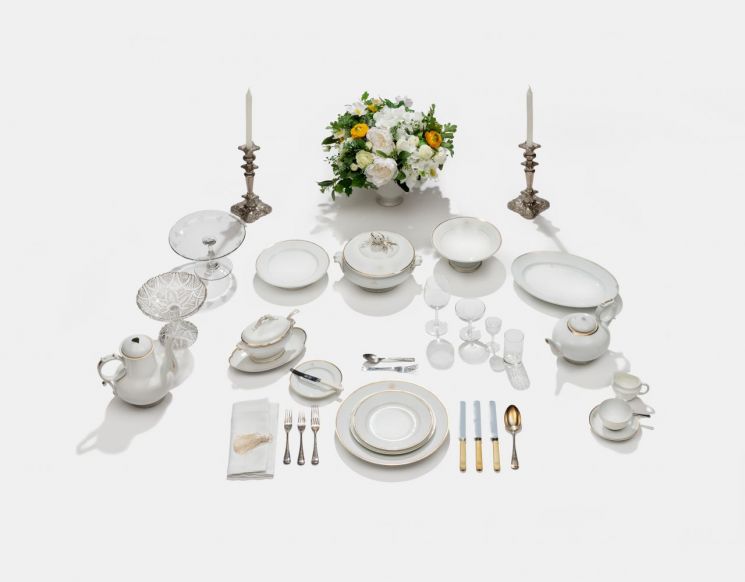
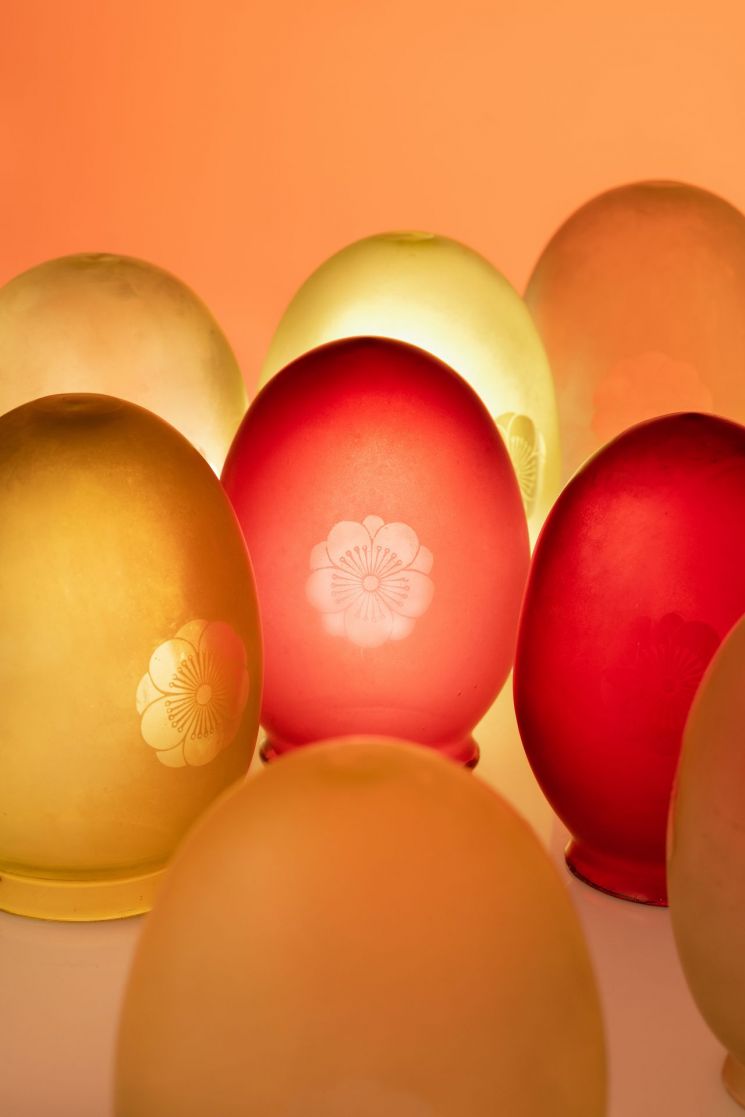
Joseon actively embraced Western culture after signing the Treaty of Ganghwa in 1876. Representative examples include glass lampshades with ‘plum blossom patterns’ exhibited this time. Electricity was introduced in 1887, and these lampshades were installed inside and outside the royal palace. Under this light, Joseon held Western-style banquets, interacting with diplomats from various countries and gathering international information. The museum has recreated a Western-style kitchen in the Daebudojeon area of Changdeokgung Palace and displays various culinary artifacts such as ‘iron pastry molds’ and ‘samovars.’ The most eye-catching tableware is the French Pillivuyt tableware stamped with the Lee flower (李花文). These porcelains were custom-made in Joseon and served authentic French dishes such as foie gras p?t?, grilled tenderloin with truffles, and pheasant breast with grape sauce.
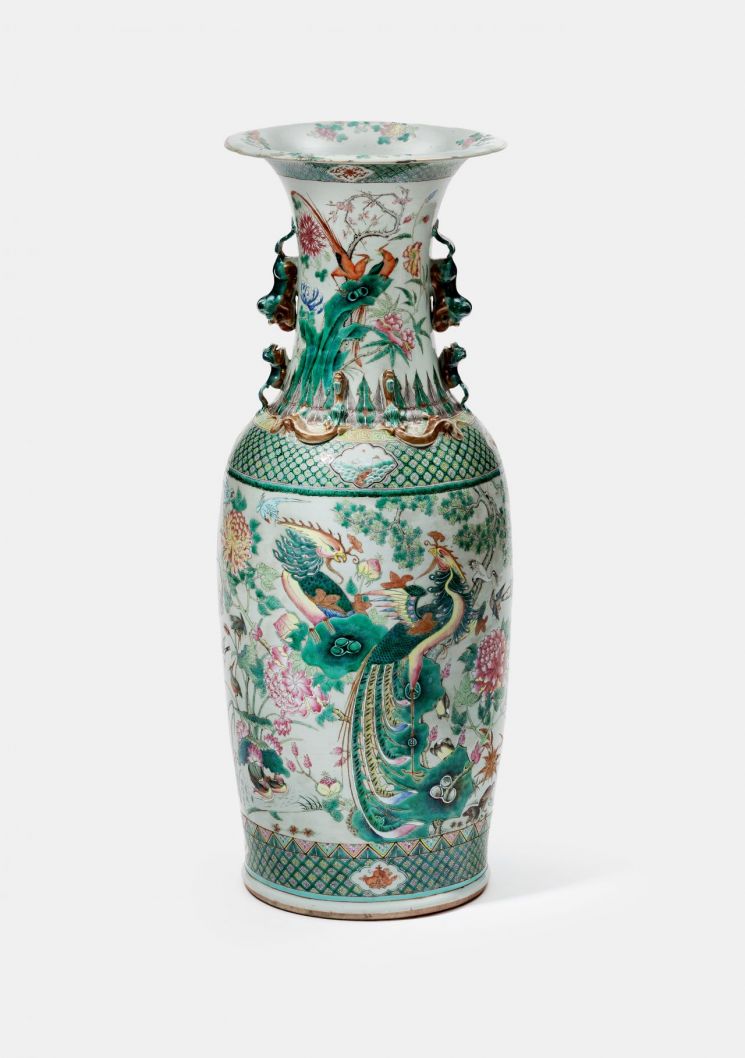
This exhibition also features Japonism vases?vases influenced by Japonism (the mid-19th century Western fascination with Japanese culture) that rose to prominence as a mainstream of global porcelain culture through world expositions?and Chinese Peranakan (descendants of Chinese traders living in the Malay Peninsula and Singapore in the late 19th century) enamel vases. These vases were produced by factory porcelain companies such as K?ransha (香蘭社) and Gink?zan (錦光山), lavishly decorated with various motifs like birds, flowers, and dragons, and embellished with gold paint. The museum noted, “This is the first time it has been publicly revealed domestically and internationally that a large number of Western export vases produced in Japan’s Arita, Kyoto, and Nagoya remain in Korea.”
© The Asia Business Daily(www.asiae.co.kr). All rights reserved.



















