Over 1,000 Daily Deaths in the US Over the Past 4 Days
Spain's Daily Cases Exceed 2,000 Again...Travel Bans Imposed
Japan's Domestic Travel Promotion Policy Amid Over 30,000 Cases
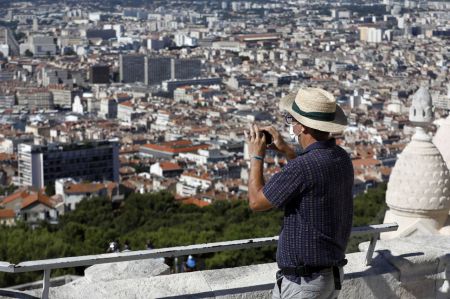
[Asia Economy Reporter Hyunwoo Lee] Following the United States, the novel coronavirus disease (COVID-19) is rapidly resurging worldwide, including in Europe, Japan, and Australia. The main factors cited are the lifting of lockdown orders in various countries since last month and the increase in tourist movements to vacation spots with the arrival of the peak summer holiday season this month. There is also analysis suggesting that the COVID-19 vaccines, which are currently being rapidly developed under emergency approvals in various countries, will require far greater quantities than expected due to concerns about the duration of antibody persistence.
According to CNN, on the 26th (local time), the U.S. Centers for Disease Control and Prevention (CDC) warned that since the 22nd, the daily average number of COVID-19 deaths in the United States has exceeded 1,000, and if the current rate of increase continues, more than 175,000 deaths will occur in the U.S. by mid-next month. According to the COVID-19 statistics site Worldometer, as of that day, the cumulative confirmed cases in the U.S. reached 4,315,709, with cumulative deaths at 149,398. In particular, Florida's cumulative confirmed cases surpassed New York's on that day, rising to second place in the U.S. after California, with the spread intensifying mainly in southern regions that have many summer vacation destinations.
The European region, where the spread had subsided for a while, is also showing signs of concern. According to the BBC, Spanish health authorities announced on the 25th that daily confirmed cases reached 2,255, far exceeding the recent average of around 500. Consequently, European countries have started restricting travel to Spain. The UK Foreign Office advised against travel to mainland Spain starting on the 26th and introduced a mandatory two-week quarantine for all returning nationals from Spain. Norway and France also implemented travel advisories against Spain and mandatory quarantine measures for visitors to the region starting on the 25th.
Japan, which had a four-day holiday from the 23rd, surpassed 30,000 cumulative confirmed cases. According to NHK, as of the 26th, Japan's cumulative confirmed cases stood at 31,378, with cumulative deaths at 1,011. During the four days since the holiday began on the 23rd, 3,386 new cases were reported, averaging 846 new cases per day. In Tokyo, 239 new confirmed cases were reported the previous day, with more than half of them having unknown infection routes, raising alarms among authorities.
In Australia, cluster infections occurred mainly in elderly care hospitals in the southern state of Victoria. According to AFP, on the 26th, Victoria reported 495 new daily confirmed cases, marking the highest daily count ever recorded in Australia. Other regions in Australia reported 12 new confirmed cases. As the number of people traveling during the holiday season increases and the spread continues in various countries, the global confirmed cases surpassed 16 million over the weekend. According to Worldometer statistics, as of that day, global confirmed cases reached 16,189,203, with deaths at 647,574. In just one day, 257,789 new confirmed cases were added worldwide.
There are also gloomy forecasts that the spread will continue even after the COVID-19 vaccine is released. This is because there are views that antibody persistence after vaccination may last only three months. Last month, medical staff at Chongqing Hospital in China reported in an experiment involving 74 COVID-19 patients that over 90% of infected individuals experienced a sharp decline in immune antibodies 2 to 3 months after infection. Philip Dormitzer, Pfizer's head of vaccine research and development, said in an interview with The Wall Street Journal that "unfortunately, it is not yet known how long immunity will last."
Anthony Fauci, director of the U.S. National Institute of Allergy and Infectious Diseases (NIAID), also stated in a prior video interview with The Washington Post, "It has only been six months since COVID-19 emerged, so the duration of antibody persistence in both vaccinated individuals and those who have had COVID-19 is unknown," adding, "Vaccination may require two doses rather than one, and much larger quantities of vaccines than anticipated may be needed."
© The Asia Business Daily(www.asiae.co.kr). All rights reserved.

















