Separation of Capital's Economic and Administrative Functions Mainly in Federal States
Brazil's Capital 'Brasilia' Built for Inland Development
60 Years After Relocation... Issues Like Infrastructure and Housing Shortages Persist
Experts Say "Key Is Getting Citizens to Move to the New Capital"
 Kim Tae-nyeon, floor leader of the Democratic Party of Korea, is delivering a negotiation group representative speech at the National Assembly plenary session on the 20th. / Photo by Yonhap News
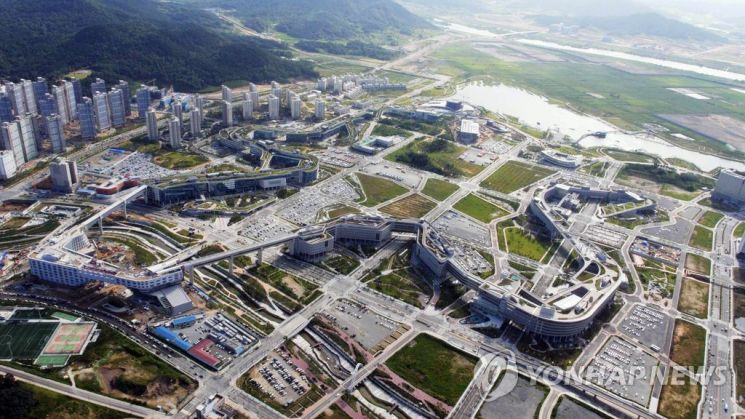
[Asia Economy Reporter Lim Juhyung] Kim Tae-nyeon, the floor leader of the Democratic Party of Korea, proposed the formation of a 'Special Committee for the Completion of the Administrative Capital' to fully relocate the Blue House, National Assembly, and government ministries to Sejong City, sparking various views on the economic effects of the 'administrative capital relocation.'
Experts say that while the immediate overcrowding of the metropolitan area population can be reduced, the actual effects depend on a complex interplay of factors such as infrastructure development, and thus a cautious stance of observation is necessary at this point. In other countries that have already relocated their administrative capitals, only government ministries are concentrated, and local residents' living infrastructure is lacking, leading to criticism that the policy has effectively failed.
The 'administrative capital relocation' advocated by Kim and the Democratic Party was also discussed during the Roh Moo-hyun administration. However, it was settled in 2004 when the Constitutional Court ruled the Special Act on the Construction of the New Administrative Capital unconstitutional. At that time, the court judged, "The fact that Seoul is the capital is an unwritten constitutional custom. Relocating the capital requires a constitutional amendment."
However, some opinions suggest that as economic conditions and times have changed, the Constitutional Court might make a different decision. In an interview with MBC Radio's 'Kim Jong-bae's Focus,' Democratic Party lawmaker Lee Nak-yeon said, "There could be ways for the ruling and opposition parties to reach an agreement or to ask the Constitutional Court for its opinion again," adding, "The Constitutional Court blocked the administrative capital relocation with the unprecedented logic that it violates the customary constitution in 2004, 16 years ago. However, times have changed significantly, and even then, there were various counterarguments and issues raised."
In response, the opposition party holds a negative stance for now. Joo Ho-young, floor leader of the United Future Party, said, "I believe this topic was brought up to divert attention from the rising housing prices in the metropolitan area," and added, "If it is a plan to further develop Sejong City itself within the scope allowed by law, rather than relocating the administrative capital, I am open to discussion."
Aside from the differing opinions in the political arena surrounding the administrative capital relocation, there are also varied views on the economic effects assuming government ministries relocate to Sejong City. There are few cases where the capital was relocated solely to solve urban overcrowding, and some argue that the side effects of capital relocation cannot be ignored.
Countries that designate a separate administrative capital by separating administrative functions usually adopt a federal system. Representative examples include the United States, which moved its capital from New York City to Philadelphia and then to Washington DC, and Australia, which moved its capital from Melbourne to Canberra.
These federal countries relocated their capitals for historical and political reasons. In the case of the United States, Washington DC was established near the Potomac River, south of New York, to ease conflicts between northern and southern states.
Australia also had Melbourne as its temporary capital at independence, but after political compromise between its two major cities, Sydney and Melbourne, Canberra, located in between, was selected as the capital.
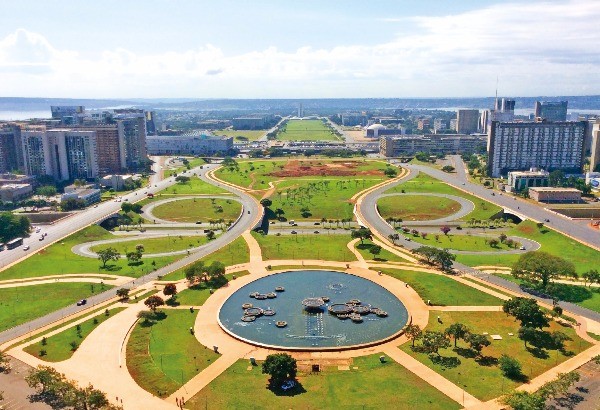 Brasilia, the administrative capital of Brazil, Sambhu Square. / Photo by Internet Community Capture
Meanwhile, an example of building a separate administrative capital for regional development is Bras?lia in Brazil.
Previously, Brazil's economic activities were concentrated in Rio de Janeiro and S?o Paulo, located on the eastern coast since colonial times. To develop the inland and alleviate severe capital overcrowding, the Brazilian government decided to build the planned city of Bras?lia 965 km inland from the coast.
Bras?lia was designated as the capital in 1960 and has since developed into a large city with a population of 3 million. It houses key institutions of the executive, legislative, and judicial branches, including the presidential residence, National Congress, and Supreme Court, serving as Brazil's administrative center.
However, Bras?lia has been criticized for a significant decline in quality of life due to rapid urban expansion. It lacks infrastructure such as roads, sewage treatment, and housing, and jobs are concentrated only in the city center where government offices are located, resulting in a city that is crowded during commuting hours but empties out afterward as people leave for nearby dormitory towns.
In this regard, the British media outlet 'Financial Times' once analyzed Bras?lia in a special feature as "a cautionary example for those dreaming of urban romance."
Experts suggest that infrastructure development is essential for the success of administrative capital relocation.
Kang Nam-hoon, a professor of economics at Hanshin University, told Asia Economy, "It is difficult to predict how much the administrative capital relocation can actually disperse the population," but added, "If well implemented, it can be expected to alleviate the concentration of population in the metropolitan area in the long term and revitalize local regions."
He emphasized, "The key is how many civil servants and ordinary citizens actually move to the new capital due to the administrative function relocation," adding, "Especially in Korea, where children's education is a very important factor in residence, establishing extensive educational infrastructure and universities comparable to those in the Seoul area in the new capital region is crucial for success."
© The Asia Business Daily(www.asiae.co.kr). All rights reserved.
![User Who Sold Erroneously Deposited Bitcoins to Repay Debt and Fund Entertainment... What Did the Supreme Court Decide in 2021? [Legal Issue Check]](https://cwcontent.asiae.co.kr/asiaresize/183/2026020910431234020_1770601391.png)

















