Democratic and Korean Federation of Trade Unions Worker Representatives Exit in Turn
Active Stance Including Proposal of Deliberation Acceleration Section
9 Votes in Favor in Public Interest Committee Proposal Vote
Virtually Unanimous Support from Public Interest Committee... 'Win-Win' Fails
[Asia Economy Reporter Kim Bo-kyung] The 2021 minimum wage decision was led by the public interest members. The historically lowest increase rate, set at 8,720 won, was proposed by the public interest members. This marked a 180-degree shift from last year's passive stance, where the final proposals from labor and management were put to a vote without significant mediation efforts, resulting in the approval of the employers' proposal of 8,590 won.
At the 8th plenary meeting of the Minimum Wage Commission held on the 13th, the public interest members proposed a deliberation facilitation range setting the minimum wage floor and ceiling at 8,620 to 9,110 won (0.35% to 6.1%) within about two hours, and held several meetings to narrow the gap between labor and management positions. However, the opinions of both sides were not easily reconciled.
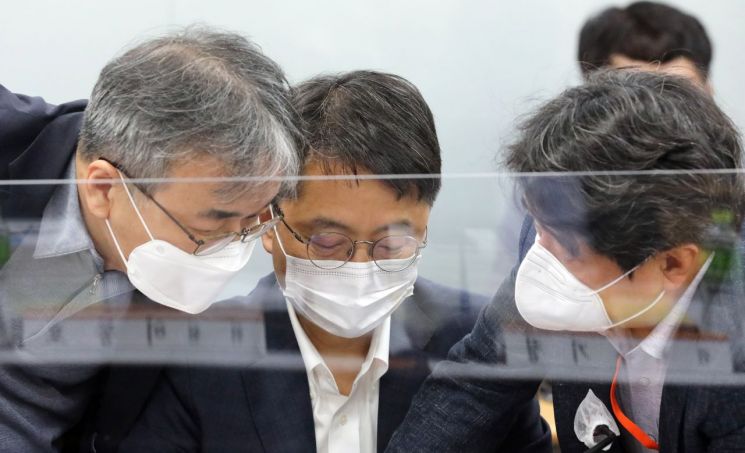
At this point, the first to storm out of the meeting room were four worker representatives affiliated with the Korean Confederation of Trade Unions (KCTU). Their reason for leaving was that the management side had not withdrawn their reduction proposal. Yoon Taek-geun, KCTU Vice Chairman, said, "We judged that we could not engage in dialogue with the employers who made claims that deviated from the purpose and intent of the minimum wage." Jung Min-jung, Secretary-General of the Mart Union, appealed, "If we don't do this, there is no chance to explain why KCTU demanded 10,000 won. Please understand how desperate we are."
KCTU insisted until the end that the government keep its pledge of a "10,000 won minimum wage." They appeared to focus more on off-site protests than on minimum wage deliberations. Throughout the day, they did not attend the meeting and instead held a group protest near the Sejong Government Complex condemning the employers' reduction proposal, putting pressure on management.
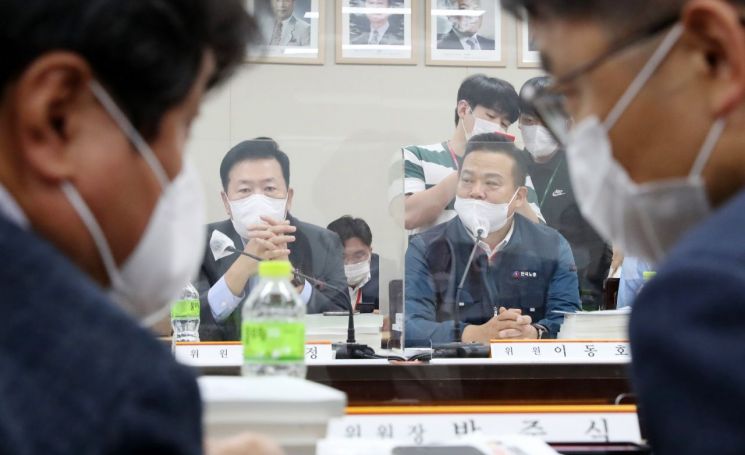
With KCTU's exit, the labor side was numerically disadvantaged. The Federation of Korean Trade Unions (FKTU) judged that further discussion was difficult and, in agreement with the employers' representatives, requested the public interest members to "propose a single plan." In response, the public interest members submitted a proposal of 8,720 won, a 1.5% increase over this year's minimum wage. However, even the five worker representatives recommended by FKTU collectively walked out of the meeting, stating they "could not accept the public interest members' proposal."
Lee Dong-ho, Secretary-General of FKTU, declared, "The public interest members said 'there is no increase above 1.5%.' There was no room for further negotiation," and added, "FKTU will conclude this year's minimum wage negotiations by walking out." Two employer representatives from the Small Business Federation, who had advocated for a reduction or freeze of the minimum wage, also left in protest.
As a result, the final vote was attended by seven employer representatives and nine public interest members, with nine votes in favor and seven against, passing the public interest members' proposal. It is inferred that all nine public interest members voted unanimously for their proposal, while all participating employer representatives opposed it.
The role of the public interest members in this minimum wage deliberation can be seen as a "half success." Although they played an active and independent role for the public good, they failed to gain agreement from either labor or management. Throughout the deliberation period, the public interest members emphasized the need to produce a "win-win" outcome for both sides, but they could not quell the dissatisfaction on either side.
Regarding the minimum wage proposal approved that day, both labor and management can raise objections before the final announcement by the Minister of Employment and Labor on August 5. If the Minister acknowledges the grounds for objection, they can request a re-deliberation by the Minimum Wage Commission. To date, there has been no instance of re-deliberation in the domestic minimum wage system.
© The Asia Business Daily(www.asiae.co.kr). All rights reserved.


















