Cheil Worldwide and Hyundai Department Store Still Suffering Damage
Lotte Department Store Main Branch Misunderstood as Visited by Confirmed Case
Coupang and Market Kurly Food Delivery Hit
[Asia Economy Reporter Minyoung Cha] The spread of the novel coronavirus infection (COVID-19) continues to suddenly impact retail industry workplaces and headquarters buildings. Although a rapid response system has been established since the outbreak of COVID-19, business disruptions are inevitable.
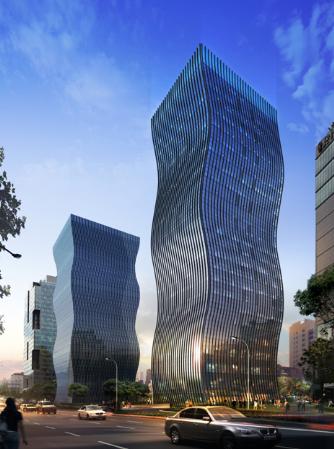
According to Cheil Worldwide on the 13th, one employee working at the Gangnam workplace GT Tower in Seocho-dong, Seocho-gu, Seoul, tested positive for COVID-19 on the 11th, leading to the closure of the workplace and disinfection measures. Cheil Worldwide rents four floors in the building, and it is reported that there are a total of 380 headquarters employees. A Cheil Worldwide official stated, "According to the guidelines of the Korea Disease Control and Prevention Agency and quarantine authorities, employees working on the 12th floor where the confirmed case worked were tested the day before, and some close contacts on the other three floors will also be tested. The 12th-floor employees will work from home until Friday, and employees on the other floors will also work from home until Wednesday."
The hardships of department stores, marts, and complex shopping malls, which are estimated to have lost more than 500 billion KRW in sales within a month since the COVID-19 outbreak, have continued for six months. On the 10th, there was even a misunderstanding when six confirmed cases were announced at the Lotte Midopa Gwanghwamun Building by the Korea Disease Control and Prevention Agency, prompting Lotte Department Store to issue a clarification. This was because consumers could mistakenly think it was the main department store branch in Jung-gu, Seoul, due to the building name.
The 'Daejeon Hyundai Premium Outlet,' ambitiously opened by Hyundai Department Store Group on the 26th of last month, was closed on the 3rd after receiving notification of a COVID-19 confirmed visitor just one week after opening. It was reported that the confirmed case visited during the busiest time on the opening day evening of the 26th, raising concerns mainly within the local community. The initial opening benefits were also affected. In particular, criticism spread mainly through online communities of local mothers, accusing the outlet of a delayed response despite notification from quarantine authorities.
The most severely affected were companies providing online fresh food delivery services such as Coupang and Market Kurly. Due to the working environment where short-term daily workers, whose identities cannot be confirmed, move between workplaces at key logistics centers connected to various regions, concerns about the spread have increased. Similar issues are recurring in the food service industry. Delivery Hero Korea, which had a confirmed case at its Seocho headquarters on the 26th of last month, ended its two-week work-from-home period on the 13th and resumed normal operations. Delivery Hero Korea operates food ordering apps such as 'Yogiyo' and 'Baedaltong.'
A retail industry official said, "Regardless of the industry, there are many cases where employees suddenly have to pack up, so continuity of work inevitably suffers. Since multiple companies share one building, it is a really difficult problem because even if our company responds well to COVID-19, it cannot be solved alone."
Meanwhile, as of midnight on the 13th, the cumulative number of COVID-19 confirmed cases reached 13,479, an increase of 62 from the previous day, the 12th. The new confirmed cases were tentatively counted as 43 imported cases and 19 domestic cases. The 43 new imported cases marked the highest number in 110 days since March 25th (51 cases).
© The Asia Business Daily(www.asiae.co.kr). All rights reserved.

















