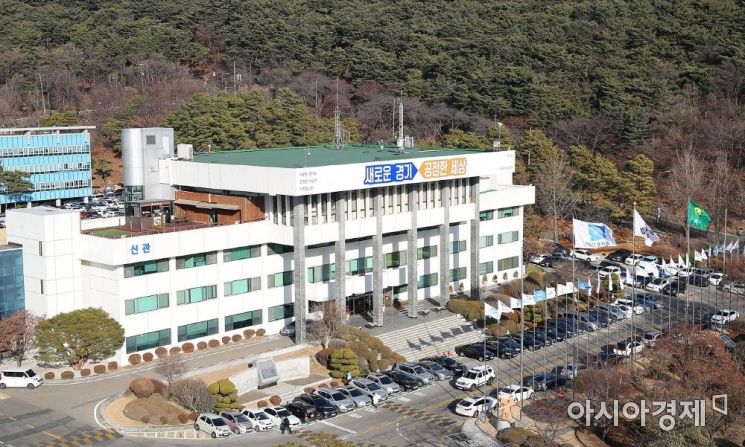
[Asia Economy (Suwon) = Reporter Lee Young-gyu] Gyeonggi Province is expanding the 'Public Development Profit Return to Residents System,' which reinvests development profits into local communities to strengthen the public interest of real estate, to the 3rd phase new towns.
On the 12th, Gyeonggi Province announced the policy direction for urban housing in the second half of the 7th term of the elected government, which includes this content.
The province cited five major strategies for policy operation: ▲ Establishing a foundation for industrial diversification to strengthen regional resilience ▲ Creating sustainable urban spaces centered on people and the environment ▲ Implementing universal housing welfare for the common people ▲ Strengthening the public interest function of real estate for a fair society ▲ Creating a safe and pleasant living environment.
First, it decided to expand the 'Public Development Profit Return to Residents System,' one of Governor Lee Jae-myung's core pledges, and plans to promote the revision of related laws and the discovery of new project candidate sites.
The Public Development Profit Return to Residents System refers to reinvesting development profits into rental housing or public facilities for residents to prevent excessive privatization of profits by specific groups.
This system has been implemented this year in Dasan New Town in Namyangju, Gwanggyo New Town Gyeonggi Convergence Town, and the balanced regional development industrial complexes in Pyeongtaek and Paju.
The new implementation targets under review include the 3rd phase new towns such as Wangsuk in Namyangju, Gyosan in Hanam, Changneung in Goyang, and Daejang in Bucheon.
The 3rd phase new town development project, in which the private sector, government, and public sector jointly participate from the planning stage, is also expected to establish a roadmap by starting district plan establishment within this year.
Additionally, the four currently underway Techno Valley projects will be expedited as much as possible, with plans to commence construction by 2022 at the latest.
The 3rd Pangyo Techno Valley will begin construction in 2021, and the Goyang Ilsan, Gwangmyeong Siheung, and Yangju Techno Valleys will start in 2022, aiming to prepare for the 4th Industrial Revolution and the resulting industrial diversification.
The project to transform the former asphalt plant site near Yeonhyeon Village in Anyang, which attracted attention as the 'No. 1 Livelihood Issue' project of the 7th term elected government, will also be in full swing.
This year, the former factory site will be applied as a restoration target for damaged areas in the development restriction zone, with restoration targets confirmed and park facilities decided next year, aiming to create a citizen park by 2023.
Hong Ji-seon, Director of the Urban Housing Office of the province, emphasized, "We will create a city where universal housing welfare is realized and public interest functions are strengthened to enhance economic crisis resilience," adding, "Especially in the second half, we will first look at inconvenient and insufficient areas from the residents' perspective and implement appropriate measures accordingly."
© The Asia Business Daily(www.asiae.co.kr). All rights reserved.
![User Who Sold Erroneously Deposited Bitcoins to Repay Debt and Fund Entertainment... What Did the Supreme Court Decide in 2021? [Legal Issue Check]](https://cwcontent.asiae.co.kr/asiaresize/183/2026020910431234020_1770601391.png)
















