Chairman Shin Chun-ho: "Let's Introduce Shin Ramyun's Original Taste to the US Market" Upholding Principles
The New York Times Names 'Shin Ramyun Black' the World's Most Delicious Ramen
Walmart Deal Sparks Entry into Alcohol Market... Establishing K-Food Presence
[Asia Economy Reporter Lee Seon-ae] “Don’t just follow what others do; even if it takes time, let’s go our own way. The taste of Korea will become the most global flavor.” Since Shin Chun-ho, Chairman of Nongshim, first exported ramen to the U.S. market in 1971, he has adhered to one principle: preserving the original taste of Nongshim ramen. Chairman Shin believed that releasing products similar to Japanese ramen, which had already entered and monopolized the U.S. market, might bring short-term sales but would ultimately cause the Nongshim brand to disappear in the long run. And his judgment has proven accurate today.
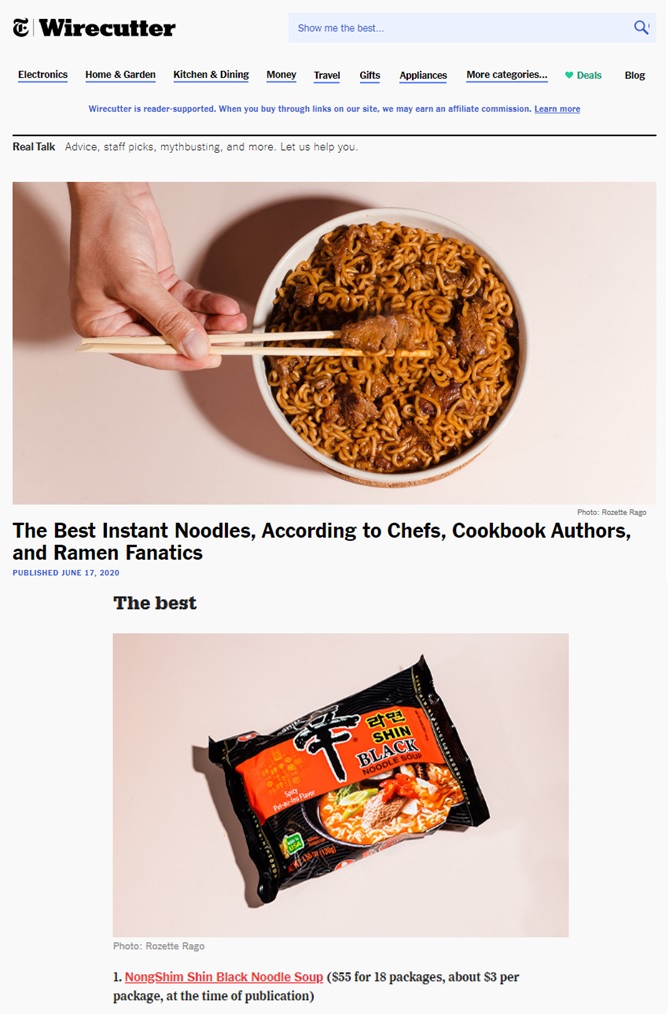
“I couldn’t stop eating Shin Ramyun Black!” The New York Times, one of the top three daily newspapers in the U.S., named Nongshim’s “Shin Ramyun Black” as the most delicious ramen in the world. In the New York Times’ product review site “Wirecutter,” the article titled “The best instant noodles” ranked Shin Ramyun Black first among the global “Best 11 Ramen” selected by journalists and experts. Shin Ramyun Black received high marks for its distinctive rich broth and chewy noodles.
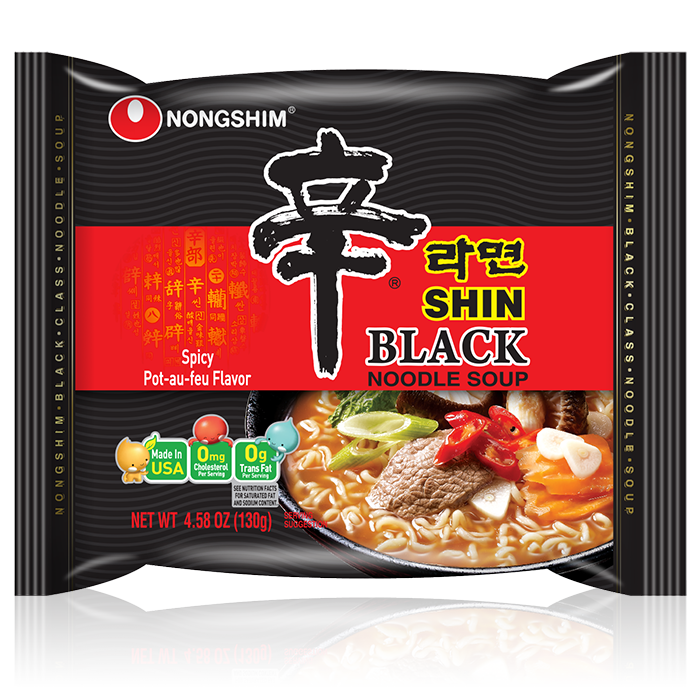
◆The World’s Best Ramen Chosen by The New York Times: ‘Shin Ramyun Black’= According to Nongshim on the 11th, The New York Times introduced Shin Ramyun Black as a “premium version of Shin Ramyun,” praising its rich beef broth with seolleongtang seasoning, balanced spiciness, sliced garlic, large mushroom pieces, and the excellent texture combination provided by its chewy noodles.
This evaluation was conducted by the New York Times Wirecutter team, who received recommendations for the best ramen from seven food experts including chefs, writers, and critics. They then tasted and scored the final 11 selected ramen products to determine the ranking. Among the Best 11 ramen, there were four Korean ramen, six Japanese ramen, and one Singaporean ramen.
Anna, the reporter who wrote the article, said, “Among thousands of ramen worldwide, we grouped the ramen selected by experts from various fields by taste type and conducted tasting tests over several days,” adding, “For fairness, all products were prepared according to the standard cooking instructions on the packaging, and taste, quality, and advertising authenticity were comprehensively considered.”
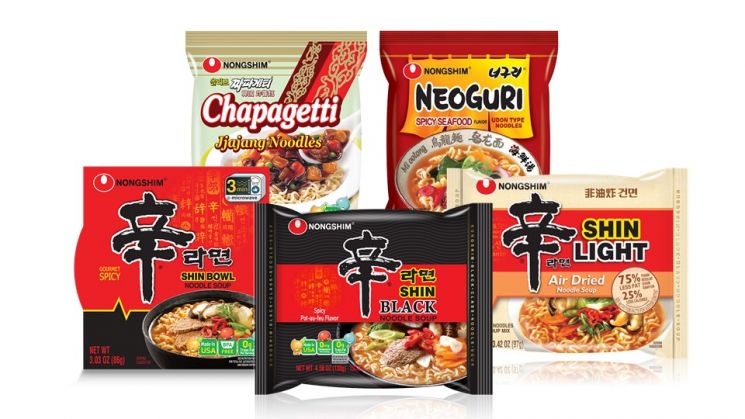
Following Shin Ramyun Black, Nongshim’s Chapaguri (Chapagetti + Neoguri, 3rd place), Shin Ramyun Noodles (6th place), and Shin Ramyun Bowl (8th place) also made the rankings, drawing attention. Among the 11 products, four from the Nongshim brand were the only Korean products to rank, upholding the pride of Korean ramen.
‘Chapaguri’ became famous through the Oscar-winning film Parasite and was praised for its balanced sweetness of black bean sauce and spicy seafood flavor. ‘Shin Ramyun Noodles’ was described as having air-dried noodles that are chewier and healthier compared to other products. The bowl-type ‘Shin Ramyun Bowl’ sold in the U.S. is the most popular cup noodle version of Shin Ramyun in Korea, noted for its convenience with microwave cooking, thin noodles, and spicy broth.
A Nongshim official said, “Good evaluations of the Nongshim brand in the fiercely competitive U.S. ramen market also reflect the status of Korean ramen,” adding, “Based on Nongshim’s overseas business competitiveness boasting superior taste, quality, and production systems, we will continue to increase the popularity of K-food (Korean food wave) in the global market.”
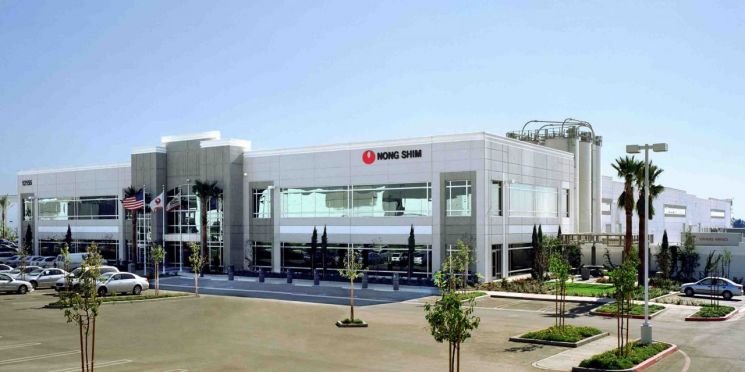
◆Shin Ramyun Spreading Korea’s Spicy Flavor= Nongshim first exported ramen overseas in 1971. At that time, Nongshim exported its popular domestic beef ramen to the U.S., mainly targeting the Korean-American market. Over about ten years of steady market development, Nongshim’s major brands such as Neoguri, Ansungtangmyun, Chapagetti, and Shin Ramyun successfully established themselves in the 1980s. In 1984, Nongshim opened a sales office in San Francisco, and in 1994, it established its first overseas corporation, Nongshim USA, in Los Angeles.
Twenty-four years after establishing its corporation in the U.S. market, Nongshim’s mainstream market sales surpassed those of the Asian market. Last year, the mainstream market share was 62%, overwhelmingly ahead of the Asian market’s 38%. Expanding sales to large local markets such as Walmart was effective.
The secret to success in the U.S. market can be summarized in three keywords. First, Nongshim pursues a premium strategy overseas. In the U.S., where income levels are high, Nongshim positioned ramen not as a cheap food but as a premium product comparable to pasta and spaghetti. Shin Ramyun is currently regarded as a higher-quality product than domestic brands in the U.S., China, and Southeast Asia.
The premium strategy was also effective in establishing a foothold in the U.S. market. While Japanese ramen dominating the market is mostly sold in packs of 3-4 for about $1, Shin Ramyun and Shin Ramyun Black are priced around $1 to $3 per pack. Japanese brands mainly target low-income consumers and, despite having factories in the U.S., source noodles and soup externally to mix and sell at low prices.
Although Shin Ramyun is more expensive, it has competitiveness in taste and quality. Currently, Shin Ramyun is sold through major U.S. distribution channels including Walmart and is the first ramen to be stocked in key government facilities such as the Pentagon.
Another key to success was bringing Korea’s spicy flavor as is. Since Nongshim had to compete in foreign markets with different tastes, it reviewed the overall environment including U.S. consumers, market, and food culture, and adhered to the principle of bringing Korea’s flavor unchanged. Chairman Shin’s insistence on not imitating local products but introducing Nongshim’s original taste also played a role.
Accordingly, from the 1980s with Neoguri, Ansungtangmyun, and Shin Ramyun, Nongshim exported the same products sold in Korea to the U.S. market. Although initially unfamiliar to American consumers, over time they became captivated by Shin Ramyun’s taste, and now mainstream consumers including White and Black Americans enjoy Shin Ramyun.
A Nongshim official explained, “The reason Americans like Shin Ramyun is its unique spicy flavor and good quality that cannot be found elsewhere.” According to a consumer survey conducted last year at over 1,300 Walmart stores in the U.S., consumers cited “deep flavor not found in other products” and “quality suitable as a meal” as major purchasing factors.
The strategy of selection and concentration to target the market step-by-step was also a driving force. When entering the U.S. market, Nongshim targeted markets with high growth potential through selection and concentration. Instead of entering multiple markets simultaneously, it settled products in one place and then expanded to neighboring areas based on that competitiveness. Nongshim expanded its sales network centered on Los Angeles (LA) to major cities such as San Diego, Las Vegas, and San Francisco.
Nongshim has strengthened its competitiveness by expanding sales mainly in the western region, where demand and interest in Korean ramen are high, and operating production plants. Later, it expanded to Asian markets near Korean communities and Hispanic markets, and recently expanded its sales network to key U.S. distribution channels such as Walmart and Costco.
A Nongshim official emphasized, “We entered the U.S. market step-by-step with success stories such as success in the Korean market and entry into all Walmart stores, and the competitiveness built this way made Nongshim America what it is today.”
◆Shin Ramyun First Sought After by the U.S. Mainstream Market= The turning point for targeting the mainstream market was the deal with Walmart. Shin Ramyun was first sold at Walmart in 2013, starting with test sales at seven stores.
A Nongshim official said, “Walmart is known for its strict product verification, and if a product fails the test sale, it can never be listed,” adding, “They even check the company’s management status, so only a few products among countless global brands are listed at Walmart,” describing the situation at the time.
Nongshim deals directly with Walmart. Few companies deliver products directly to Walmart’s 42 distribution centers across the U.S. This requires strong logistics and product competitiveness. Through direct transactions with Walmart, Nongshim was able to strategically target the local U.S. market. By analyzing Walmart sales data, customized sales activities matching market trends became possible, and face-to-face sales with store buyers allowed effective product listing, display, and promotional events.
Thanks to direct dealings with Walmart, Nongshim became the first in the industry to complete listing in all Walmart stores across the U.S. in 2017. Starting from over 4,000 large Walmart stores, it completed product listings even in small and medium-sized markets in small towns.
The fact that Shin Ramyun is listed in all Walmart stores indicates that Shin Ramyun’s brand power is recognized on the global stage. In fact, the food products sold nationwide at Walmart include global brands such as Coca-Cola, Nestl?, Pepsi, Kellogg’s, and Heinz. Shin Ramyun has been recognized as a brand on par with these global brands in the U.S.
Being chosen by the world’s top distribution company became Shin Ramyun’s greatest competitive advantage. Subsequently, Shin Ramyun also achieved the milestone of being the first ramen to be stocked in major government institution stores such as the U.S. Department of Defense and the Capitol.
A Nongshim official said, “After operating the LA plant since 2005 and expanding the sales network mainly in the western and Korean-American markets for over ten years, we have now established a distribution network across the U.S., including eastern major cities, northern Alaska, and Pacific Hawaii,” emphasizing, “Shin Ramyun has now become a global product recognized and purchased first by American consumers beyond the Korean community.”
Nongshim plans to accelerate its global market expansion, including the U.S., by starting construction of its second U.S. plant this year. The second plant will reflect the growing cup noodle market in the U.S. and will be equipped with cup noodle lines and dried noodle facilities to offer premium products that meet the demands of consumers seeking healthy food.
Meanwhile, Nongshim exports ramen to about 100 countries worldwide, including China, the U.S., Japan, Southeast Asia, and Europe. Shin Ramyun is a representative K-food spreading Korea’s spicy flavor globally, generating approximately 760 billion KRW in annual domestic and overseas sales.
© The Asia Business Daily(www.asiae.co.kr). All rights reserved.



















