8 out of 10 Office Workers Say "Remote Work Needed"
Zuckerberg: "Half Will Work Remotely Within 10 Years"
Mastercard Expands Remote Work Globally
Ministry of Employment: "Remote Work Needs to Become a Routine Work Style"
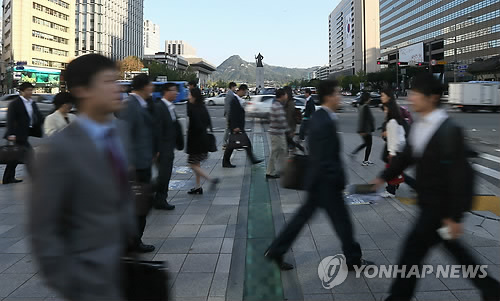
[Asia Economy Reporter Kim Suwan] "I see no reason why working from home shouldn't be possible."
Office worker A (27) said regarding the continuation of working from home after the COVID-19 outbreak, "The COVID-19 situation has brought 'untact' as a new form of labor into the spotlight. I no longer feel the necessity to go to the office to work."
A continued, "In most industries such as finance, I believe productivity has been secured enough to replace existing work efficiency through working from home. If there is no significant difference in productivity or work efficiency, companies should actively adopt working from home. My quality of life has also improved through working from home. Thinking that I work comfortably at home has actually increased my work efficiency," he emphasized.
With working from home becoming more active after the COVID-19 outbreak, voices calling for its expansion even after the end of COVID-19 are growing louder. Office workers respond positively to working from home, saying "quality of life has improved," "psychological ease has increased," and agree with the expansion of working from home.
According to one survey, 8 out of 10 office workers feel the necessity of working from home.
According to a perception survey on 'working from home' conducted by market research specialist Embrain Trend Monitor on the 1st, targeting 1,000 male and female office workers aged 19 to 59 nationwide, 87.7% of all respondents answered that "activation of working from home is necessary."
The reasons for satisfaction with working from home included △saving commuting time (78.3%) △increased time with family (63.8%) △efficient use of time (61.4%) △no need to worry about work attire (54.3%) △reduction in transportation and meal expenses (53.8%) △no need to be cautious of supervisors or colleagues (48.9%). Especially, more than half (55.5%) of those with working from home experience said they have more time to invest in themselves. The working from home system has brought significant changes to the way office life looks.
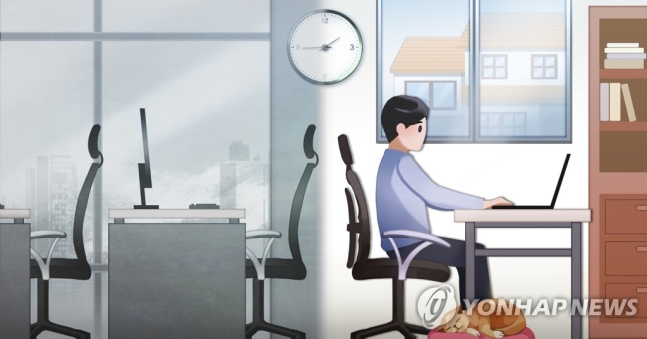
In fact, more than 2,000 small and medium-sized enterprises (SMEs) and mid-sized companies have introduced working from home systems and applied for related government subsidies in response to the COVID-19 situation. According to the Ministry of Employment and Labor last month, from February 25, when the national infectious disease crisis alert was raised to 'serious' due to the spread of COVID-19, until the 19th of this month, 4,789 companies applied for 'indirect labor cost' subsidies for flexible work systems.
The indirect labor cost subsidy for flexible work systems is a government payment of part of labor costs to workplaces that have introduced flexible work systems such as working from home, staggered commuting, and remote work, targeting SMEs and mid-sized companies.
Among the companies applying for subsidies, 2,047 introduced working from home systems, and the number of eligible workers was 20,014.
Meanwhile, most companies introduced working from home to prevent COVID-19 infection. Naver and Kakao decided to maintain remote work systems for the time being.
According to the industry, Naver and Kakao initially planned to maintain remote work until the end of June but decided to extend it until the second week of July. This decision was made due to the re-spread of COVID-19 centered on local communities.
Nexon has maintained a system of coming to the office three days a week and working from home two days a week since early April after implementing company-wide working from home from the end of February.
Although these measures by companies are to prevent COVID-19 infection, there is a forecast that they will affect future work styles.
Earlier, the government announced plans to invest 13.4 trillion won in the Digital New Deal by 2022 and create 330,000 jobs to prepare for the post-COVID-19 era. This is to respond to the major transformation of the economic and social structure, such as the acceleration of non-face-to-face and digital economy due to COVID-19.
The Korean version of the Digital New Deal, being a policy to prepare for the post-COVID-19 era, is actively encouraging the spread of flexible work systems that enable non-face-to-face work.
In other countries, movements to continue working from home even after COVID-19 are active. Mark Zuckerberg, founder and CEO of Facebook, said in May, "Within the next 5 to 10 years, half of Facebook's 45,000 employees will work remotely."
Jack Dorsey, founder and CEO of Twitter, also declared in the same month, "You can work from home forever." This means making working from home, introduced to prevent the spread of COVID-19, a routine.
Global financial company Mastercard also declared, "We will continue the working from home system for headquarters and global branch employees until a COVID-19 vaccine is released."
Google announced it will close offices until September 7 and maintain remote work systems until the end of the year.
Meanwhile, the government also holds the position that expanding working from home is necessary in line with the changing economic and social structure. Minister of Labor Lee Jae-gap said at a meeting last month to promote the spread of working from home in SMEs, "There is a need for flexible work systems such as working from home to settle as one of the routine work styles to respond to COVID-19 and similar disasters and infectious diseases, family care, and work-life balance demands."
He added, "As the change to a non-face-to-face digital economy accelerates after COVID-19, it is also time to change the way we work accordingly."
© The Asia Business Daily(www.asiae.co.kr). All rights reserved.



















