Kwangmin Lee, Director of Policy Planning at the Pharmaceutical Association
"Reflecting on the Roles of Pharmacies and Pharmacists is Rewarding"
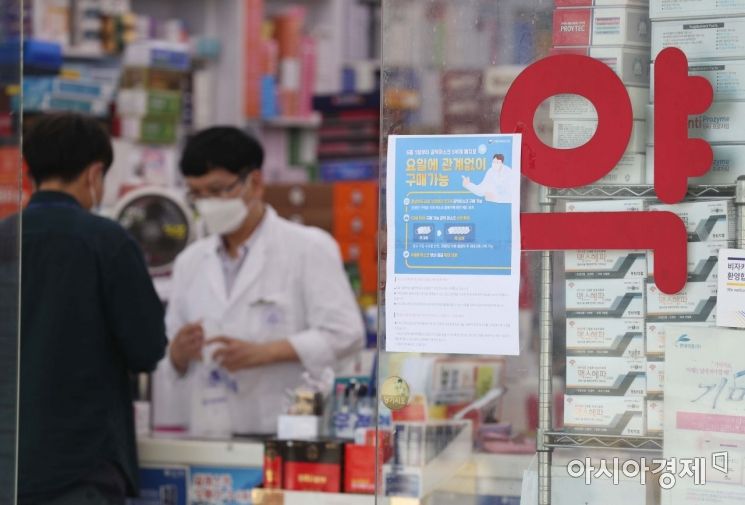 Citizens are purchasing masks on the pharmacy street in Jongno 5-ga, Seoul. Photo by Mun Ho-nam munonam@
[Asia Economy Reporter Choi Dae-yeol] The public mask system, which began in late February, will end on the 11th. It has been 137 days since it started on February 26, when hundreds of new COVID-19 cases were reported daily. Mask shortages occurred not only in the Daegu and Gyeongbuk regions, where cases surged at the time, but also across the country.
Since there were no COVID-19 treatments or vaccines available, the majority of citizens regarded masks as the best protective tool, leading to increased demand. Although the concept of 'public management of mask supply' was unfamiliar, it quickly took root. Pharmacies and pharmacists played a significant role in stabilizing the new system.
Lee Kwang-min, Director of Policy Planning at the Korea Pharmaceutical Association’s COVID-19 Task Force responsible for mask supply, said in an interview with Asia Economy on the 10th, "At the beginning of the crisis, the situation escalated suddenly, and we looked for institutions or organizations that could fulfill the role of the public mask system in line with its purpose. After reviewing it within a day or two, pharmacies were chosen. As the system and supply quantities changed constantly, difficulties and complaints arose simultaneously among consumers and pharmacy staff," he said.
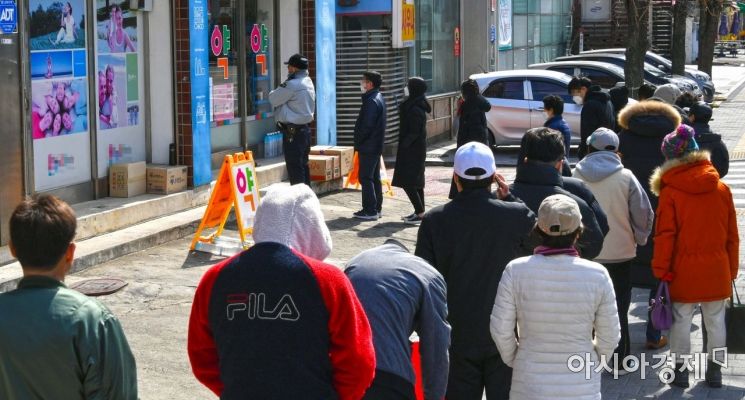 In mid-March, when the five-day rotation system for public masks was in effect, citizens lined up in front of a pharmacy in Mapo-gu, Seoul to purchase masks. Photo by Jinhyung Kang aymsdream@
In the early days of the system, queues in front of pharmacies were a common sight. Although some found it cumbersome at first to check IDs, limit purchase quantities, and verify documents for proxy purchases, people gradually accepted it. Lee said, "Complaints from consumers such as 'Why can't I buy more?' or 'I have to buy for my family' inevitably fell on the frontline pharmacists. The situation was challenging, but most pharmacies silently understood and complied. Among the public, awareness of sharing, consideration, and solidarity spread, allowing the public mask system to be concluded even as the COVID-19 crisis continued," he explained.
From the 12th, mask supply will shift to a market supply system, but no one expects a complete return to the pre-COVID-19 situation. Some regions still report dozens of cases daily, and if a resurgence occurs after autumn, mask supply shortages similar to those in February could happen again at any time. However, since pharmacies have gained months of experience and production and supply have increased with government support, it is unlikely that the chaotic situations of the past will recur.
Lee said, "Considering the possibility of future resurgences or new infectious diseases, we plan to prepare manuals for more efficient responses during emergencies. I feel a sense of fulfillment reflecting on the role of pharmacies and pharmacists when society faces difficulties and urgent needs," he concluded.
© The Asia Business Daily(www.asiae.co.kr). All rights reserved.


















