Social Welfare Facilities Providing After-School Care Services for Elementary Students... Ministry of Health and Welfare, Seoul City, and Jongno-gu Collaborate to Establish General and Integrated Types
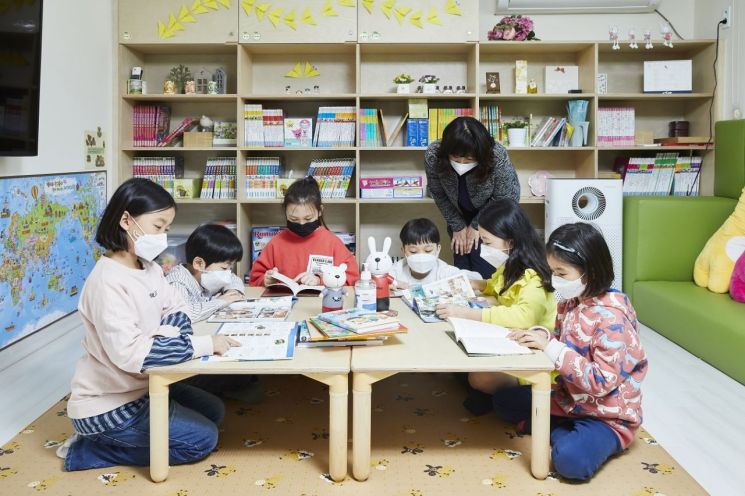
[Asia Economy Reporter Jongil Park] Jongno-gu (Mayor Kim Young-jong) plans to open a total of five 'Uri Dongnae Care Centers' in 2020 as part of the 'Making Jongno a Good Place to Raise Children' project to proactively address the low birthrate issue.
The Uri Dongnae Care Centers are social welfare facilities established through the collaboration of the Ministry of Health and Welfare, Seoul City, and Jongno-gu to provide after-school care services for elementary school students aged 6 to 12.
Anyone can use the service by making a reservation through the 'Uri Dongnae Care Portal,' regardless of parental income.
Jongno-gu aims to create a tightly knit, community-centered child care system by establishing Uri Dongnae Care Centers in areas with high local care demand, filling the care gap caused by parents' dual-income work schedules for children, and reducing parenting burdens to prevent career interruptions for parents.
Accordingly, on March 25, the 'Jongno 1st Uri Dongnae Care Center' was opened in Cheongunhyoja-dong (82 Pilwun-daero, 2nd floor). This center corresponds to the general type among the three types of Uri Dongnae Care Centers: general, integrated, and hub types.
The general type Uri Dongnae Care Center aims to serve as a space near schools and within the community where children can visit anytime to rest and play comfortably. It operates from 1 PM to 8 PM during the school term and from 9 AM to 6 PM during vacations. The capacity is 20 children.
There are two types of care services. 'Regular care' is for those who use the center regularly by setting a specific period or desired time slot, and 'temporary care' is for irregular use, such as during the current COVID-19 pandemic when schools are closed or when caregivers have sudden schedule changes.
Among the remaining four Uri Dongnae Care Centers opening in 2020, all except the 4th center (integrated type) will be built as general type centers. The 2nd center is confirmed to be established in Buam-dong, where Segumjeong Elementary School is located, and is scheduled to open in August this year. The 3rd and 5th centers will open near Hyehwa Elementary School in Hyehwa-dong and near Doknipmun Elementary School in Muak-dong, respectively, by the end of this year.
In addition to these confirmed centers, Jongno-gu plans to identify areas urgently needing elementary care services and prepare sites for the 6th and 7th centers within this year.
The 'Jongno 4th Uri Dongnae Care Center,' scheduled to open in August, is an integrated type center. The integrated center adds the role of a 'community care coordinator' to the care functions of the general center. The term 'integrated' is used because it connects local resources (schools, community child centers, care centers, etc.) that currently do not collaborate due to different founding bodies, creating a unified care system.
The 4th center will serve as a hub in the Changsin-Sungin area, where community child centers are densely concentrated, linking and coordinating care demands.
Moreover, Jongno plans to listen to and incorporate the opinions of care experts who have long participated in care in Jongno to establish a detailed elementary care system.
The center's use by children also differs from the general type. It will be open on Saturdays as well, providing at least four hours of care service, which is expected to alleviate concerns for parents working on weekends.
The last type of Uri Dongnae Care Center, the hub type, differs from the district-run 'Jongno 1st to 5th Uri Dongnae Care Centers' (general and integrated types) as it is a city-run center established and operated by Seoul City. The site has been selected in Gyodong, and it is scheduled to open by the end of this year.
Among the three types of Uri Dongnae Care Centers, the hub type is the largest in scale and oversees all care centers in neighboring autonomous districts as well as Jongno. Functionally, it differs by aiming to provide cultural and artistic experiences such as music and art to children beyond simple care services. Thanks to the hub type center attracted by Jongno, local children will have the great advantage of cultivating artistic tastes and sensibilities closer to home than in other districts.
With the sequential opening of these diverse types of Uri Dongnae Care Centers established for various purposes, Jongno is expected to move closer to realizing a welfare city where both parents and children are happy.
Mayor Kim Young-jong said, "The opening of the Uri Dongnae Care Centers is great news for parents who had no place to leave their children after school and had to rely on private academies," adding, "Since these centers were created through the joint efforts of the central and local governments, you can use them with the utmost confidence in terms of safety and environment."
© The Asia Business Daily(www.asiae.co.kr). All rights reserved.

















