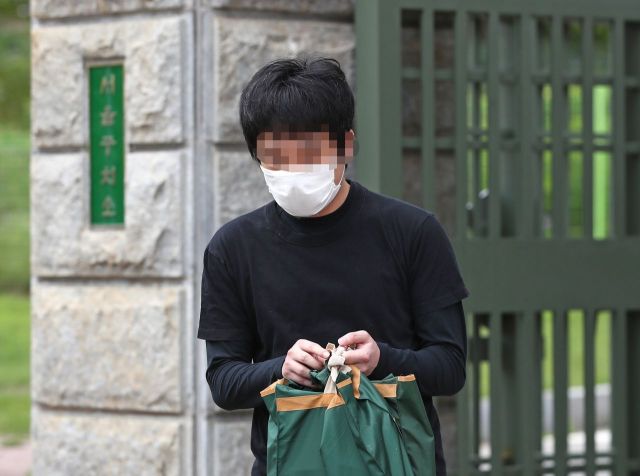
[Asia Economy Reporter Seongpil Cho] "Order. The criminal Son Jeong-woo shall not be extradited to the requesting country, the United States of America."
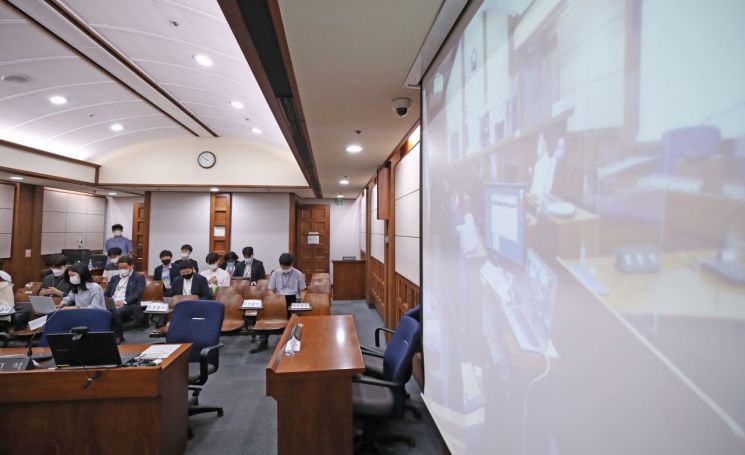
At the judge's order, Son Jeong-woo (24) wiped away tears. He did not cry out loud. He seemed drained of energy and could barely stand properly. With an unsteady gait, he took a few steps and bowed his head toward the judge. Son's father, Mr. Son, who was watching this scene, also shed tears. He repeatedly swallowed his tears as if struggling to hold back sobbing. This was at around 10:40 a.m. on the 6th in courtroom 403 of the Seoul High Court, where the decision to deny extradition of Son Jeong-woo was made.
South Korea’s investigation more urgent than U.S. investigation
The Seoul High Court Criminal Division 20 (Chief Judge Kang Young-soo) denied the extradition of Son Jeong-woo, operator of the world's largest child sexual exploitation site "Welcome to Video," to the United States. The court judged that, for the prevention and suppression of child and youth sexual exploitation crimes, it is appropriate to investigate and punish Son domestically rather than extradite him to the U.S.
The court explained, "To eradicate crimes related to child and youth pornography, thorough and root-level investigations of the members of the Welcome to Video site are necessary," adding, "It is necessary to secure the criminal's custody in South Korea to collect and utilize additional information and evidence required for related investigations."
It further stated, "If the criminal is extradited to the requesting country, investigations into domestic members of Welcome to Video in South Korea may remain incomplete, and there is a possibility that the progress could be hindered," and "If the requesting country benefits from receiving the criminal to enhance investigation efficiency, the case in South Korea is more urgent and serious."
According to the court's statement that day, Son Jeong-woo operated Welcome to Video from July 2015 to March 2018, distributing pornography to about 4,000 paid members in exchange for cryptocurrency worth approximately 400 million KRW. So far, the identities of 346 of these paid members have been confirmed, with 223 found to hold South Korean nationality.
The court's ruling means that investigations into the 223 confirmed and other unidentified South Korean members of Welcome to Video should be thoroughly conducted to sever links to related crimes. The court said, "By not extraditing the criminal to the requesting country and securing custody in South Korea, we can lead and conduct more thorough related investigations."
Son Jeong-woo’s claims not fully accepted but...
Previously, the defense argued during the review process that ① there is no actual guarantee that Son would not be punished again for child pornography charges already punished domestically, ② there is no credible likelihood that the criminal committed money laundering, and ③ the criminal, a national of South Korea, committed part of the related crimes within South Korean territory. These are all grounds stipulated in the Extradition Act to argue against extradition.
However, the court did not accept all of the defense’s claims but unusually reached a conclusion akin to a 'victory' for Son Jeong-woo. Especially regarding the third point, which is a discretionary ground for refusal under the Extradition Act, the court stated, "It is difficult to conclude that it was a decisive factor in this case."
The court focused on the fact that Son’s money laundering crimes could have occurred anywhere connected to networks accessible via the dark web and cryptocurrency exchanges, regardless of nationality. In fact, the cryptocurrency exchanges where Son opened accounts under his and his father's names are located across multiple countries, including the U.S. and South Korea. The court viewed this crime as different from so-called 'traditional crimes' or 'face-to-face crimes' that do not use networks.
The court said, "Just because some cryptocurrency exchanges are located in the requesting country does not mean the criminal should be extradited to the U.S. Likewise, refusal to extradite on the grounds that part of the extraditable crimes were committed within South Korean territory is also not justified." It added, "On this premise, the criminal’s claim that it is reasonable not to extradite him for crimes committed within South Korean territory is also difficult to accept."

'Let’s punish strongly in our country' reflected in the ruling
Nevertheless, the court’s decision to deny extradition reflects a desire for stronger domestic punishment of child sexual exploitation crimes. The court expressed hope that "this case will establish a new criminal justice paradigm that aligns with the public’s legal consciousness."
Before the order, the court explained the nature of the case and expressed this hope. It said, "The reason this case has attracted significant social attention is that child and youth sexual exploitation crimes are inhumane and heinous, yet appropriate criminal punishment in line with public sentiment has not been adequately imposed."
It continued, "The statutory penalties for these crimes in South Korea are significantly lighter than in the U.S., and related legislation is insufficient. We sympathize with the argument that the criminal should be sent to the U.S. to receive severe punishment and realize justice."
However, the court emphasized, "As acknowledged by the prosecutor during this trial, the purpose of the extradition system is not to send criminals to places where they can be punished more severely." It also said, "In this case, South Korea, as a sovereign state, can exercise authority over the criminal proactively and can actively utilize international criminal justice cooperation with the U.S. if necessary."
It added, "To suppress child sexual exploitation crimes in South Korea going forward, appropriate legislative measures for victim prevention must follow. Investigative agencies and courts should also break away from past investigation and sentencing practices and strive for efforts and actions to prevent recurrence."
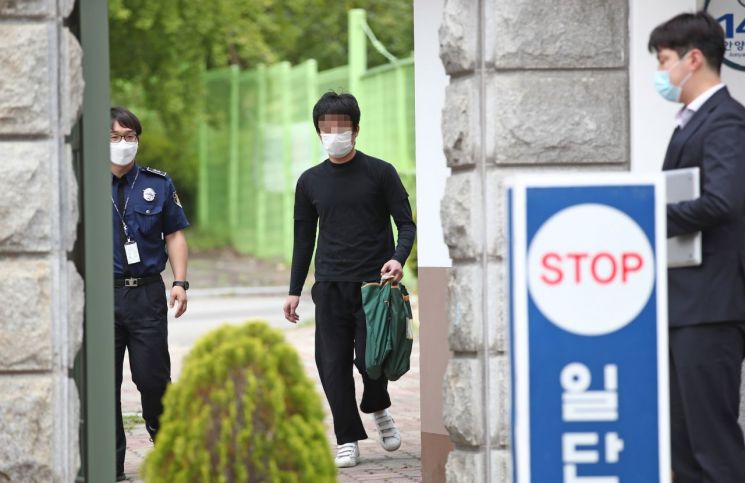
Son Jeong-woo’s release procedure… Father: "He will pay for his crimes"
At the end of the order, the court reminded that the decision to deny extradition "is not an absolute acquittal" and conveyed a message to Son Jeong-woo. The court said, "The criminal and his defense stated that they would accept the sentence for the crime of concealing criminal proceeds in South Korea," and "We hope the criminal will actively cooperate in the upcoming investigation and trial process and receive just punishment."
Following the court’s decision that day, Son Jeong-woo immediately began release procedures. He was indicted for selling child sexual exploitation materials via the dark web from July 2015 to March 2018 and was sentenced to 1 year and 6 months in prison by a South Korean court last year. He completed his sentence on April 27. However, because the U.S. Department of Justice requested extradition last April for nine charges including money laundering of criminal proceeds, he was not released and has been undergoing extradition review since May.
Son’s father, who opposed his extradition, met reporters outside the courtroom immediately after the decision and said, "I am grateful that the judge made a wise decision." He also said, "I feel sorry for the victims," and emphasized, "It is not right to only defend my child, and if there are crimes for which he must pay again, I will make sure he does." He added, "I do not want to defend him. Since he committed crimes, I think it is best for him to undergo investigation and pay for his crimes in line with public sentiment."
© The Asia Business Daily(www.asiae.co.kr). All rights reserved.
![Clutching a Stolen Dior Bag, Saying "I Hate Being Poor but Real"... The Grotesque Con of a "Human Knockoff" [Slate]](https://cwcontent.asiae.co.kr/asiaresize/183/2026021902243444107_1771435474.jpg)













