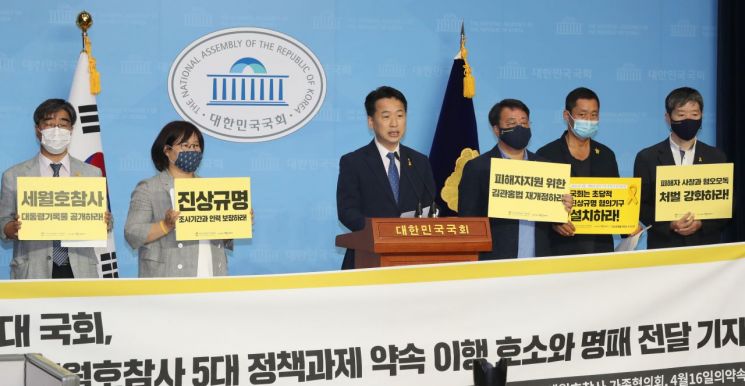
[Asia Economy Reporter Wondara] Go Young-in, a member of the Democratic Party of Korea, has openly criticized Lee Jae-myung, Governor of Gyeonggi Province, and his basic income theory. Go emphasized that discussions on the social safety net should focus on a universal welfare state that provides sufficient support to those in need rather than giving everyone the same small amount through basic income.
Go, a member of the National Assembly’s Health and Welfare Committee, pointed out in a post titled "Criticism of Basic Income" on his Facebook page on the morning of the 6th, "Governor Lee Jae-myung’s proposal to start with an annual basic income payment of 200,000 won and gradually increase it to 500,000 won per year is insignificant and barely affects our lives."
He continued, "An amount of 200,000 to 300,000 won does little to stabilize the lives of unemployed people," and explained, "The basic income theory has a fatal limitation in that it is difficult to guarantee even a minimum standard of living when applied mechanically to everyone." He also expressed concern that "(basic income) payments to all people without labor inevitably reduce the motivation to work," and warned that it cannot accompany economic growth.
Go also pointed out that basic income weakens the income redistribution function.
He said, "Recently, the Basic Income Party announced plans to raise taxes by 360 trillion won to provide every citizen with 600,000 won per month and to integrate existing basic living security benefits and allowances for infants, children, and youth," adding, "In this case, basic living recipients would lose the 530,000 won they previously received and instead receive 600,000 won (paid to all citizens), resulting in an income increase of about 70,000 won. Meanwhile, public officials, office workers, and business owners would newly receive 600,000 won every month."
He criticized, "(This proposal) is problematic not only because of unrealistic and excessive tax increases but also because it destroys the universal welfare state system and significantly weakens the income redistribution function."
Go proposed the universal welfare state as an alternative. He said, "Building a social safety net through a universal welfare state aims to design a customized welfare safety net based on 'sufficiency' for those at risk," emphasizing, "This is clearly distinguished from basic income, which is given unconditionally to everyone without considering their circumstances." He added, "It creates incentives for labor participation through pension insurance contributions based on differences in labor periods," and stressed, "It simultaneously enables the alleviation of social inequality and sustainable economic growth."
Meanwhile, Go explained the reason for expressing this position on the same day, saying, "It is somewhat burdensome to voice opinions as recent discussions are being expressed at the level of presidential candidates," but added, "However, since these discussions are expected to have a significant impact on the sustainable growth potential of Korean society, careful and rational debate is necessary."
© The Asia Business Daily(www.asiae.co.kr). All rights reserved.
![Clutching a Stolen Dior Bag, Saying "I Hate Being Poor but Real"... The Grotesque Con of a "Human Knockoff" [Slate]](https://cwcontent.asiae.co.kr/asiaresize/183/2026021902243444107_1771435474.jpg)
















