[Asia Economy Reporter Junho Hwang] A protective agent capable of shielding the entire body from high-dose radiation has been developed. On the 6th, the research team led by Taekwhan Hyun, head of the Nano Particle Research Division at the Institute for Basic Science (IBS) and distinguished professor at Seoul National University, along with Professor Kyungpyo Park from Seoul National University School of Dentistry, announced that they have developed nanoparticles that can eliminate excessive reactive oxygen species generated by radiation exposure to the human body with an extremely small dosage.
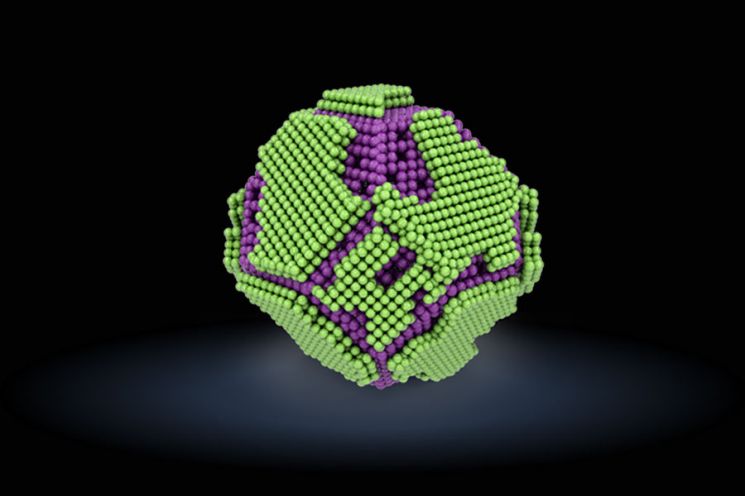
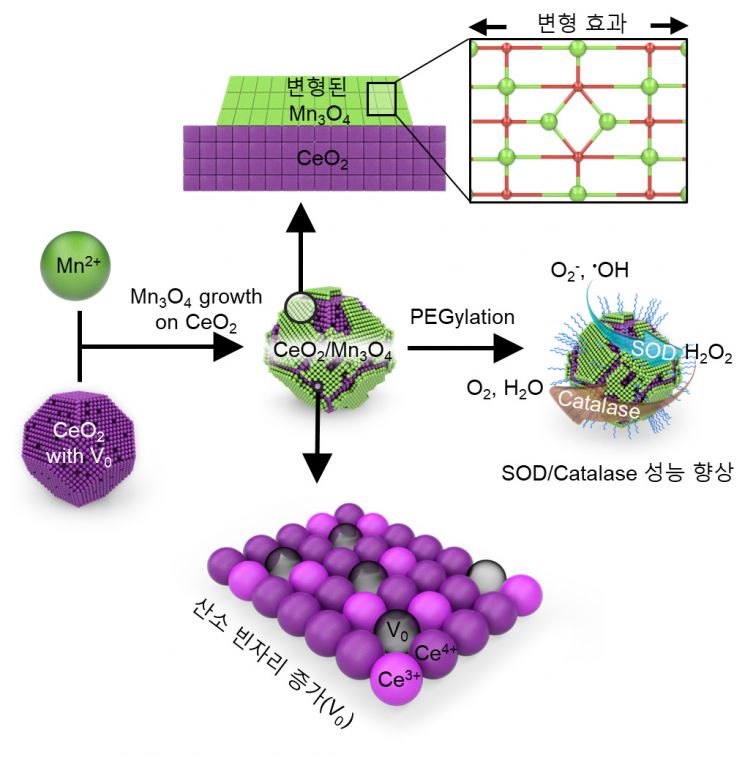
The research team developed a protective agent that protects the whole body from radiation while reducing side effects. The core technology is nanoparticles that remove reactive oxygen species even in very small amounts. The team developed new nanoparticles using cerium oxide (CeO2) and manganese oxide (Mn3O4), known for their therapeutic effects on diseases related to reactive oxygen species such as sepsis, Parkinson’s disease, and Alzheimer’s disease. Manganese oxide particles were deposited on cerium oxide particles, resulting in a material with antioxidant performance up to five times higher.
The research team analyzed the radiation protection effect of the synthesized nanoparticles using human small intestine organoids. As a result, they confirmed a remarkable improvement in side effects such as DNA damage, apoptosis, and stress caused by radiation. The expression of genes related to cell regeneration also increased.
Animal experiments also demonstrated high protective effects with a small amount of nanoparticles. Very small amounts of nanoparticles, equivalent to 1/360 of the recommended dose of amifostine, were administered to experimental mice, and despite exposure to high-dose radiation with a 100% mortality rate, 66% survived. This survival rate is about 3.3 times higher than that of amifostine. Furthermore, it was confirmed that organ damage in the experimental mice was reduced and organ regeneration was actively progressing.
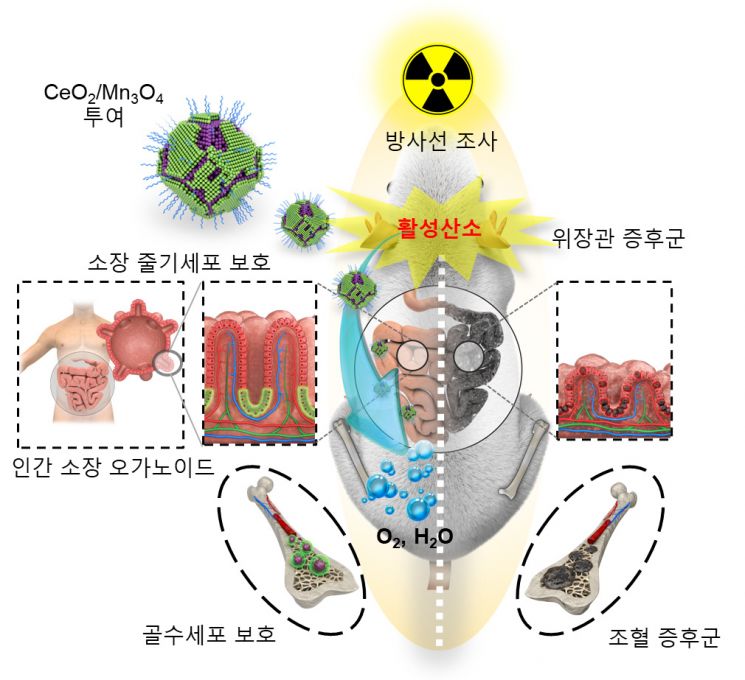
When exposed to radiation, water molecules in the human body decompose within a few milliseconds (ms; one-thousandth of a second), generating excessive reactive oxygen species. Reactive oxygen species damage cells and can lead to death if severe. Rapidly removing the excessive reactive oxygen species generated by radiation decomposition to minimize damage to stem cells in the body is the fundamental way to protect the human body from radiation.
Professor Kyungpyo Park explained, "We focused on demonstrating high antioxidant performance while minimizing biotoxicity issues so that the synthesized nanoparticles can be applied clinically."
Division Head Taekwhan Hyun said, "Cerium-manganese oxide hetero nanoparticles can be used as an effective protective agent to shield the human body from radiation exposure," adding, "This could alleviate concerns not only about the medical use of radiation but also about damage caused by nuclear power plant accidents."
The research results were introduced online in the materials science journal Advanced Materials and are scheduled to be featured as the cover paper in the August issue.
© The Asia Business Daily(www.asiae.co.kr). All rights reserved.



















