Rising Savings Rates Worldwide Amid COVID-19 Crisis
Reflection of Suppressed Spending vs Funds for Emergencies
Savings Rate Trends After Economic Reopening Determine Recovery Speed
[Asia Economy Reporter Naju-seok] Amid the novel coronavirus infection (COVID-19) crisis, households in various countries have been increasing their savings. Central banks hope that the money accumulated by individual households will serve as a catalyst for economic recovery in the future, but there are also concerns that this money might remain only as bank account balances, potentially hindering economic recovery.
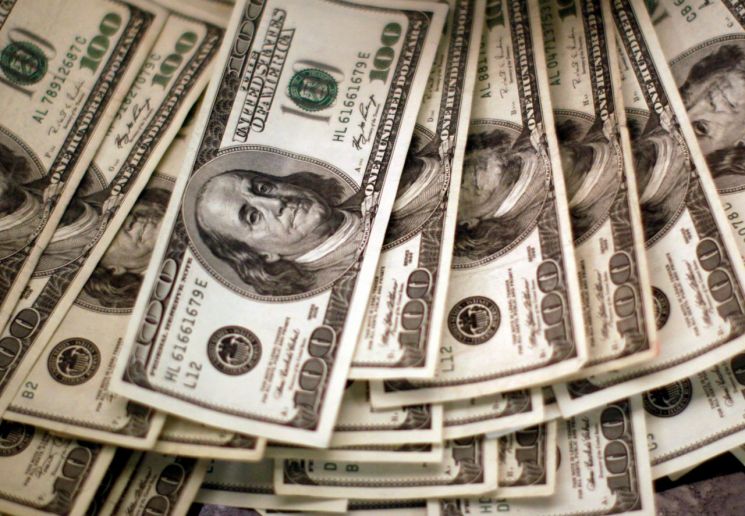
According to foreign media on the 5th (local time), savings rates (savings relative to disposable income) have been rapidly increasing across the United States, Europe, and Asia during the COVID-19 pandemic. For example, in the first quarter of this year, the savings rate in the Eurozone (countries using the euro) recorded 16.9%, up 4.2 percentage points from 12.7% in the same period last year. According to Eurostat, this savings rate is the highest since 1999. In the United States, the savings rate was around 7.9% at the beginning of this year but surged to 32% in April.
There are various interpretations as to why household savings rates are rising like this. Some argue that as countries chose lockdowns, consumption was restricted, leading to involuntary increases in savings, while others analyze that households are accumulating funds as emergency reserves in preparation for an uncertain future.
Central banks in each country are showing sensitive interest in the direction of this accumulating money because it is considered one of the key variables determining future economic conditions. If households increase consumption after economic activities resume, the economy could grow rapidly; however, if savings rates continue to rise despite the resumption of economic activities, a vicious cycle of weak consumption → delayed economic recovery → high unemployment could occur.
Perspectives on the nature of these savings vary among institutions. Christine Lagarde, President of the European Central Bank (ECB), explained that the increase in savings is due to concerns about the speed of economic recovery. On the other hand, Andy Haldane, Chief Economist of the Bank of England (BOE), predicted that the scale of involuntary savings caused by lockdowns might be larger than savings accumulated in preparation for uncertainties.
Recently, as consumption-related indicators have shown a rapid recovery, the argument that savings increased because people had nowhere to spend due to COVID-19 lockdowns is gaining traction. In France and Germany, retail sales have increased, even surpassing the previous year's levels. There is also hope that suppressed consumer sentiment may revive.
However, concerns about uncertainty remain. Some point out that the unemployment crisis caused by COVID-19 has not immediately materialized only because governments have implemented numerous unemployment-related measures. Households are also holding onto savings in preparation for such crisis situations. Katarina Uterm?hl, an economist at Allianz, pointed out, "In countries like Spain and Italy, where economic outlooks are bleak, emergency savings are increasing. As preventive savings by both businesses and households rise, consumption may contract."
There are also indications that the efficiency of health systems capable of curbing the spread of COVID-19 could determine the future economic direction. Countries that respond effectively to COVID-19 may achieve a V-shaped recovery.
© The Asia Business Daily(www.asiae.co.kr). All rights reserved.
![From Bar Hostess to Organ Seller to High Society... The Grotesque Con of a "Human Counterfeit" [Slate]](https://cwcontent.asiae.co.kr/asiaresize/183/2026021902243444107_1771435474.jpg)
















