90.4% of Budget Invested in Solar and Wind Power
New Solar Power and Resident Participation Support Project in Industrial Complexes
Expanded Support for Solar Installation in Homes and Schools
Support for R&D and Demonstration Infrastructure... "Early Capture of New Market"
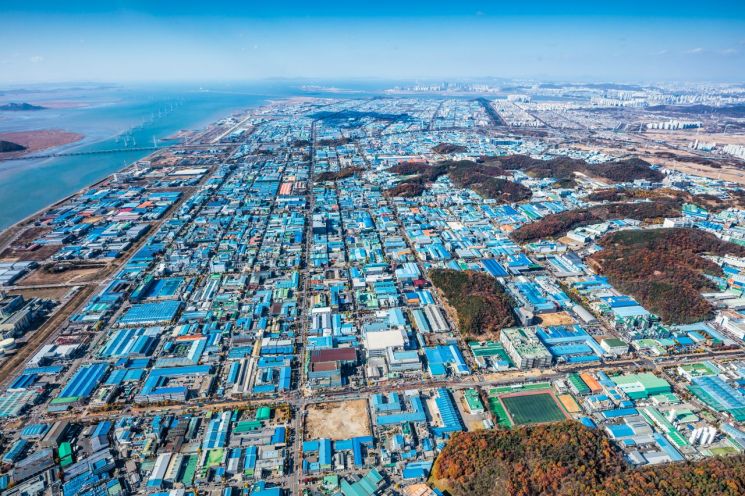 The government's plan is to increase investment and expand the market by encouraging the installation of renewable energy facilities on roofs throughout industrial complexes. A view of Banwol National Industrial Complex in Ansan, Gyeonggi Province. (Photo by Asia Economy DB)
[Asia Economy Reporter Moon Chaeseok] The Ministry of Trade, Industry and Energy secured an additional supplementary budget of 271 billion KRW to expand renewable energy, the core of the Green New Deal, which the government is promoting as the nation's future industry. 90% of the budget will be invested in solar and wind power. They plan to install solar panels in industrial complexes and support the establishment of research and development (R&D) to gain early market dominance.
On the 5th, the Ministry announced that with the passage of the third supplementary budget bill in the National Assembly on the 3rd, an additional 271 billion KRW can be invested in six renewable energy projects including solar and wind power. The supplementary budget will support the expansion of solar and wind power dissemination and the fostering of related industries.
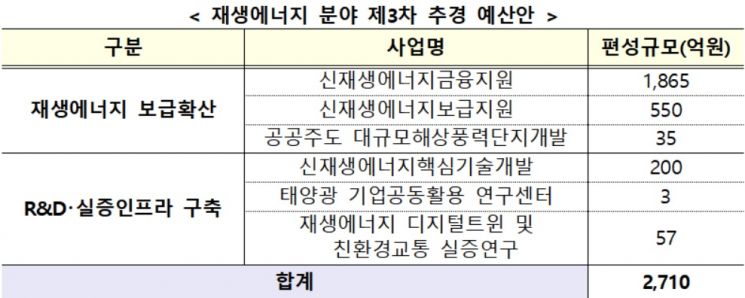
First, 90.4% of the budget, amounting to 245 billion KRW, will be used for new and renewable energy finance and dissemination support to promote solar and wind power expansion.
186.5 billion KRW, or 68.8% of the budget, will be allocated to financial support for new and renewable energy. New projects such as resident-participation renewable energy projects and industrial complex solar loan support have been established. This expresses the intention to develop these into 'profitable businesses.' This alternative seems to have been prepared in response to criticism that the aggressive increase in supply to achieve Renewable Energy 3020 (solving 20% of the national energy supply with new and renewable energy by 2030) led to price drops.

36.5 billion KRW, or 13.5% of the budget, will be invested in financial support projects that provide loans for investment costs in renewable energy projects such as shares and bonds held by residents. This aims to promote the spread of renewable energy by encouraging profit sharing between power producers and local residents. Support targets include village enterprises composed of residents living near power plants or local residents.
100 billion KRW, or 36.9% of the budget, will be used to install solar facilities on factory roofs, parking lots, and idle land in industrial complexes, with up to 90% loan support. Since industrial complexes have many idle factory sites and consume a lot of electricity, it was judged essential to increase energy self-sufficiency, leading to policy support. Support will be provided to individuals or organizations that lease factory roofs or other spaces to promote power generation projects.
50 billion KRW, or 18.5% of the budget, is allocated to the existing rural solar loan support project. The Ministry explained that the budget was increased due to the possibility of early depletion and excess demand.

55 billion KRW, or 20.3% of the budget, will be invested in new and renewable energy dissemination support. Of this, 50 billion KRW, or 90%, will be used for housing and building support. The core is to expand subsidy budgets for installing self-consumption solar panels in residential and commercial buildings. The remaining 5 billion KRW, or 10%, will be used to support solar panel installation on rooftops and idle spaces of national elementary, middle, and high schools, encouraging the spread of facilities to similar institutions.
26 billion KRW, or 9.6% of the budget, will be spent on core technology development projects for new and renewable energy and the establishment of shared research centers for solar companies. R&D and demonstration infrastructure will be promoted focusing on urgent areas such as early market capture of new markets.
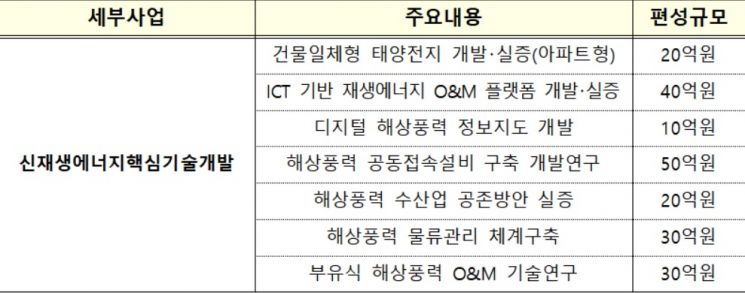
20 billion KRW, or 7.4% of the budget, will be invested in next-generation promising fields. This includes technology development for building-integrated photovoltaics (BIPV), ICT-based renewable energy operation and maintenance (O&M) platforms, and laying the foundation for offshore wind power activation. In particular, the BIPV development and demonstration project will develop and demonstrate products with greatly enhanced aesthetics, safety, and economic feasibility for use in urban high-rise buildings such as apartments.
An official from the Ministry said, "Considering the mandatory zero-energy building system to be applied to private buildings from 2025 and the global BIPV market outlook, after technology development is completed, it is expected to greatly contribute to fostering the related industrial ecosystem and reducing greenhouse gas emissions in the building sector."
According to the International Energy Agency (IEA), the building-type solar installation market is expected to grow 3.5 times from 2 billion USD this year to 7 billion USD by 2026. As of 2017, greenhouse gas emissions were 55% from industry, 22% from buildings, and 14% from transportation. Since the industrial sector has a large share, improving this area is calculated by the Ministry to reduce greenhouse gases.
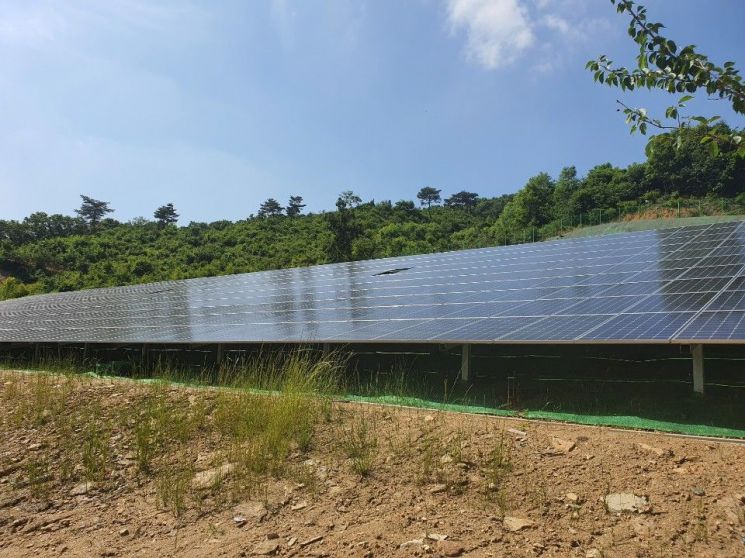 For the government's 'energy transition' policy to succeed, there are many challenges to address, including strengthening investment sentiment in the new and renewable energy market, maintaining profitability amid the decline in Renewable Energy Certificates (REC) prices, and revitalizing the market. (Photo by Moon Chae-seok)
The Ministry stated that it plans to promptly execute the supplementary budget by sequentially announcing projects according to their characteristics within the next one to two months. Dissemination support projects will be announced from this month to next month, and financial support projects will be announced this month. Public-led large-scale offshore wind farm development projects will be announced this month, and R&D and demonstration infrastructure establishment projects will be announced next month.
© The Asia Business Daily(www.asiae.co.kr). All rights reserved.



















