Survey of 500 Small Business Owners... 83.7% Responded Economic Assistance... 48.8% of Respondents Reported 13.9% Average Sales Increase After Former Emergency Economic Support Policy
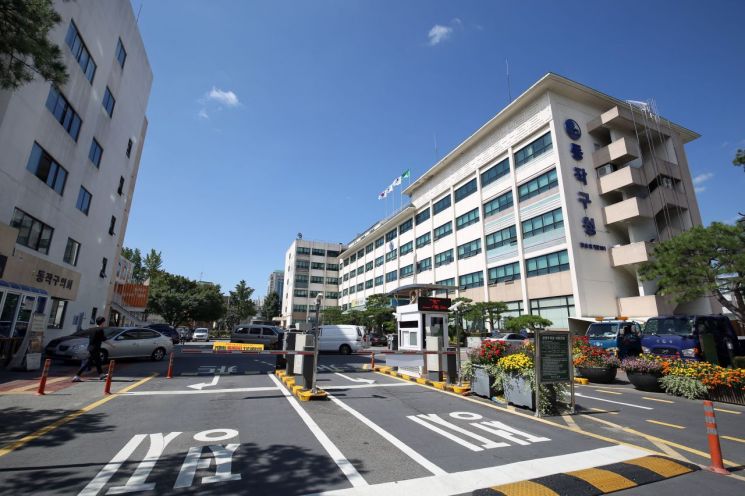
[Asia Economy Reporter Park Jong-il] Dongjak-gu (Mayor Lee Chang-woo) has been implementing emergency economic support policies (hereinafter referred to as support policies) since April to revitalize the local economy, which has been stagnant due to the prolonged COVID-19 pandemic. These include ▲Emergency Living Stabilization Fund for Small Business Owners ▲Interest-Free Loans from the Small and Medium Enterprise Development Fund ▲Good Landlord Program ▲Closure Support Fund for Multi-Use Facilities.
Accordingly, the district conducted a survey to analyze the effects and issues of the support policies on the local economy and to set the direction for future economic revitalization support policies.
From the 8th to the 19th of last month, over 12 days, the district conducted a survey targeting 500 small business owners (locations) in the area, including restaurants, academies, and service industries, in cooperation with the public opinion research firm GRI Research (confidence level 95%, sampling error ±4.4%p).
The survey items included ▲the impact of COVID-19 on the local economy ▲evaluation of Dongjak-gu’s support policies ▲and other respondent characteristics.
First, 96.6% of businesses experienced a decrease in sales after the outbreak of COVID-19, with an average sales decline rate of 43.2% compared to before the outbreak.
Regarding sales changes after the support policies, 48.8% reported an increase in sales, with an average sales increase rate of 13.9%.
Among the support policies, the ‘Dongjak-gu Emergency Living Stabilization Fund Support Project’ received the highest satisfaction rate of 79.2%, reflecting a positive evaluation of direct cash support. In a survey on how much the support policies helped overcome economic difficulties, 83.7% of respondents answered that they were helpful.
Additionally, in a survey on the necessity of each support project (on a 5-point scale), the Emergency Living Stabilization Fund scored 4.45 points, and the Good Consumption Movement scored 3.36 points. Satisfaction with the scale of support projects (on a 5-point scale) was highest for the Emergency Living Stabilization Fund (3.27 points) and the Closure Support Fund for Multi-Use Facilities (2.96 points).
This is analyzed as small business owners’ opinion that expanding the amount of support funds and providing continuous support should be the direction of the support policies.
Furthermore, in a survey on the necessity of the form of support projects, direct cash support accounted for 62.6%, loan-type support 23.6%, indirect support such as consumption promotion campaigns 7.2%, and system improvement support 6.6%.
The district plans to utilize the survey results in conjunction with the ‘Dongjak-gu Local Economy Small Business Sensitive Area Big Data Analysis’ for future economic revitalization support projects.
Meanwhile, the district has promoted various support projects to revive the local economy, which has been depressed due to COVID-19.
Economic support policies for small business owners included ▲Emergency Living Stabilization Fund for 6,483 people, approximately 4.538 billion KRW ▲Interest-Free Loans from the Small and Medium Enterprise Development Fund for 425 companies, 4.25 billion KRW ▲Closure Support Fund for Multi-Use Facilities for 336 people, approximately 330 million KRW.
Kim Jeong-won, Director of the Economic Promotion Division, said, “Through the analysis of this survey’s results, we will listen to the opinions of small business owners in the area who are struggling due to COVID-19 and find ways to overcome the economic crisis together. We will continue to implement various support policies so that residents can regain stable daily lives and the local economy can recover quickly.”
© The Asia Business Daily(www.asiae.co.kr). All rights reserved.

















