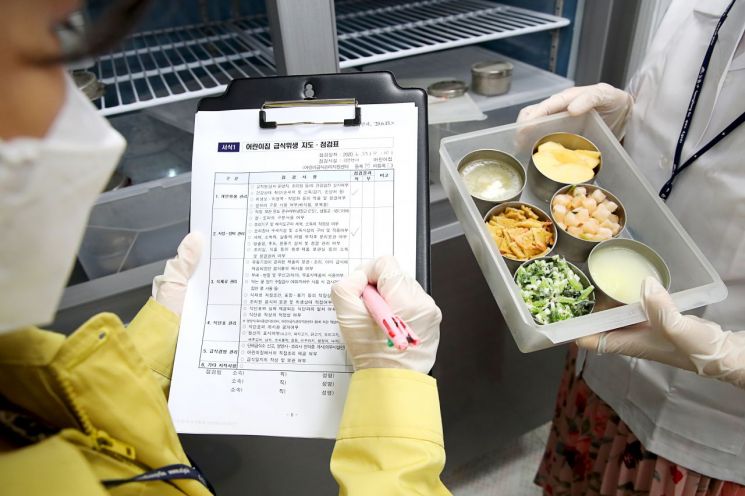
 Seongdong-gu, Seoul conducted hygiene inspections of meals at local daycare centers in preparation for the occurrence of mass food poisoning during the summer season. The photo shows Seongdong-gu office staff inspecting meal hygiene at a daycare center in the district.
 [Asia Economy Reporter Choi Dae-yeol] The health authorities announced on the 2nd that Salmonella bacteria were detected in watermelon punch and japchae in relation to a mass food poisoning incident at a daycare center in Yeonje-gu, Busan.
The Ministry of Food and Drug Safety and Busan Metropolitan City are conducting a cause investigation and epidemiological survey after confirming the mass food poisoning. Since the 26th of last month, 36 suspected food poisoning patients with high fever and diarrhea have appeared at this daycare center, and onsite investigations along with preserved food tests are being conducted to find the cause.
According to the Ministry of Food and Drug Safety, Salmonella food poisoning bacteria were detected in 10 out of the 36 suspected food poisoning patients. A total of 24 preserved food samples were collected during the cause investigation, and Salmonella bacteria were detected in watermelon punch and japchae among them, prompting an investigation into the correlation with the Salmonella detected from the patients.
Salmonella is a food poisoning bacterium widely spread in nature and is eliminated by heating at 60°C for 20 minutes. However, it can survive relatively long in soil, water, and even inside refrigerators. When infected, it usually causes gastrointestinal symptoms such as diarrhea, vomiting, fever, and abdominal pain within 6 to 72 hours. Most symptoms appear within half a day to three days. Contaminated water, eggs, undercooked egg products, dairy products, meat, and poultry are mainly cited as the causative foods.
The Ministry of Food and Drug Safety stated, "We are operating an emergency response team to promptly respond to food poisoning incidents in preparation for the summer season, when food poisoning occurrences are high." They added, "During the hot and humid summer, leaving ingredients at room temperature or failing to follow hygienic cooking processes increases the likelihood of food poisoning."
© The Asia Business Daily(www.asiae.co.kr). All rights reserved.

















