Emphasizing Regulatory Innovation and Fair Economy
Attention on Which Bills Will Emerge
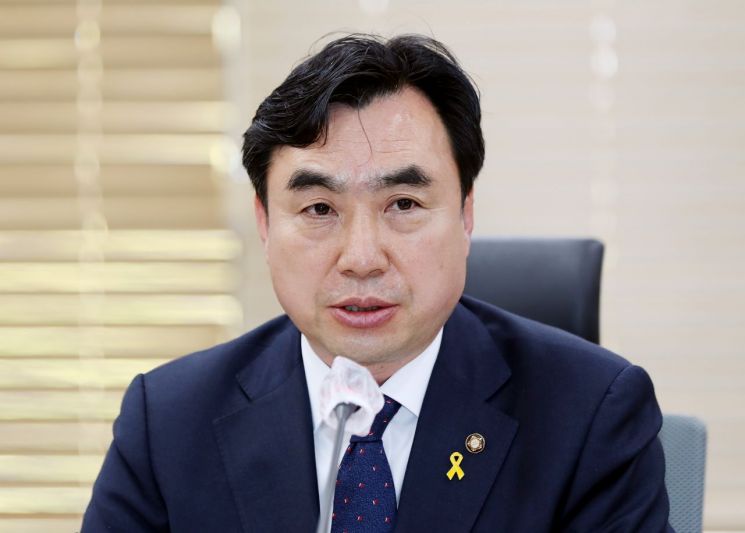
[Asia Economy Reporter Kangwook Cho] The financial sector is on edge as the ruling party has secured the chairmanship of the National Assembly's Political Affairs Committee, which oversees financial laws and financial authorities. The committee chair has the powerful authority to convene or cancel full committee meetings and to set the agenda for bills. Adding to the tension is the fact that many members of the committee from the ruling party are classified as 'hawks'?strong reformists within the party advocating for financial sector reform. The financial sector is keenly watching, concerned that the opposition's ability to check the ruling party has weakened, potentially enabling the ruling party lawmakers to aggressively push reform initiatives like never before.
According to political circles on the 30th, Yoon Kwan-seok, a member of the Democratic Party representing Namdong-gu Eul in Incheon, was elected as the chair of the 21st National Assembly's Political Affairs Committee. A three-term veteran, Yoon has served as the party's deputy spokesperson, spokesperson, floor spokesperson, and chief spokesperson, acting as the voice of the Democratic Party. He has also held key positions such as vice-chair of the party's Policy Committee, chair of the 5th Policy Coordination Committee, head of the Livelihood Situation Office, senior vice-chair of the Policy Committee, and head of the 21st general election pledge planning team, making him a prominent figure within the ruling party.
However, some have expressed surprise at Yoon's election as committee chair. It was widely expected that he would take the chairmanship of the Land, Infrastructure and Transport Committee in the 21st National Assembly. Having served as a member and later as a secretary of the Land, Infrastructure and Transport Committee in the 20th National Assembly, Yoon was reportedly hoping to chair the same committee again.
His relative lack of experience in the financial sector also contributes to the unexpected nature of his appointment. After graduating from Hanyang University, Yoon devoted himself to labor activism in the Bupyeong Industrial Complex in Incheon and was involved in various civic organizations. During his first and second terms, he was active in the Culture, Sports, Tourism, Broadcasting and Communications Committee and the Future Creation, Science, and Broadcasting and Communications Committee.
As a result, some analysts suggest that Yoon's appointment signals a move to tackle the pressing financial reform agenda exacerbated by the COVID-19 pandemic. Indeed, immediately after his election as committee chair, Yoon emphasized, "There are numerous government policy issues such as innovation-driven growth, fair economy, and financial innovation in preparation for the post-COVID era," adding, "Securing new growth engines, revitalizing capital markets, addressing issues in the Fair Trade Act to strengthen the foundation of a fair economy, enacting conflict of interest prevention laws, and expanding medical service infrastructure in response to aging are all tasks that must be accomplished."
Looking at the ruling party members assigned to the Political Affairs Committee, there is a high likelihood that financial regulatory strengthening bills emphasizing financial sector reform will gain momentum. Notably, lawmakers Park Yong-jin, known as a 'chaebol sniper,' and Lee Yong-woo, former CEO of KakaoBank, stand out.
Park recently introduced the 'Commercial Act Amendment' as his first bill, which falls under the jurisdiction of the Legislation and Judiciary Committee. The bill aims to enhance management oversight rights over major shareholders through the introduction of a multiple derivative suit system, thereby increasing the power of ordinary shareholders. However, concerns have been raised that this could aid speculative capital's 'hit-and-run' tactics and stifle corporate management activities, potentially tightening constraints on companies and hindering economic revitalization. Park seems aware of these concerns, having dubbed the bill the 'KOSPI 300 Act,' drawing attention.
Lee Yong-woo has proposed amendments to the Capital Market Act and the Insurance Business Act. Among these, the amendment to the Insurance Business Act changes the valuation of acquired stocks from 'cost' to 'market price,' commonly referred to as the 'Samsung Life Act.' Although this bill sparked debate in the 19th and 20th National Assemblies, it ultimately failed to pass. Additionally, lawmaker Hong Sung-guk has introduced the 'Partial Amendment to the National Assembly Act' aimed at establishing a National Assembly branch office in Sejong City.
Financial companies have already begun adjusting their government relations strategies. They are considering shifting from party-based to lawmaker-based management. A financial sector official said, "It will be difficult to drastically reduce government relations with the opposition, but a transition to a ruling party-centered government relations system seems inevitable," adding, "We are also considering managing relations on a lawmaker-by-lawmaker basis without distinguishing between ruling and opposition parties."
© The Asia Business Daily(www.asiae.co.kr). All rights reserved.
![Clutching a Stolen Dior Bag, Saying "I Hate Being Poor but Real"... The Grotesque Con of a "Human Knockoff" [Slate]](https://cwcontent.asiae.co.kr/asiaresize/183/2026021902243444107_1771435474.jpg)
















