'Social Distancing Level 1' Implementation Plan Announced, 'Limited Permission for Professional Sports'
Sports Fans "Outdoors is Safer" vs "Concerns Over COVID Spread"
Experts "Maintaining Distancing Advisable Unless Facility Is Essential"
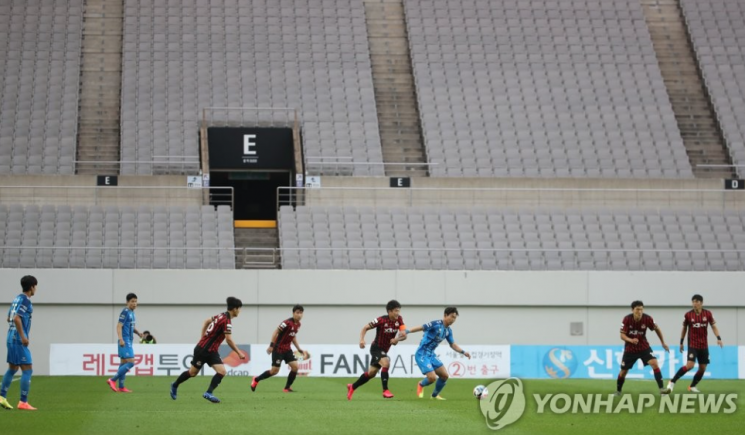 On the 20th, a K League 1 match between FC Seoul and Ulsan Hyundai is being held without spectators at Seoul World Cup Stadium in Mapo-gu, Seoul. Photo by Yonhap News
[Asia Economy Reporter Han Seung-gon, Intern Reporter Min Jun-young] As the government announced that it will allow spectators to enter professional baseball games and other events currently held without audiences due to the impact of the novel coronavirus infection (COVID-19), differing opinions have emerged surrounding this decision.
Those in favor of allowing spectators argue that stadiums are relatively safer than indoor venues such as movie theaters or restaurants, where the risk of infection is higher. On the other hand, there are concerns that infections could spread further amid the current situation where daily new COVID-19 cases are around 50.
Experts emphasize that unless under special circumstances, maintaining continuous social distancing is necessary to slow the spread of COVID-19.
On the 29th, the Ministry of Culture, Sports and Tourism stated in a press release, "After consultation with quarantine authorities, detailed plans including the scale of allowed spectators and game schedules will be finalized next week. Together with professional sports organizations, thorough quarantine plans will be established to prevent COVID-19 spread at stadiums."
Accordingly, spectators will soon be allowed to attend professional sports games, including professional baseball which opened without audiences on the 5th of last month, professional soccer which started on the 8th, and professional women's golf which began on the 14th.
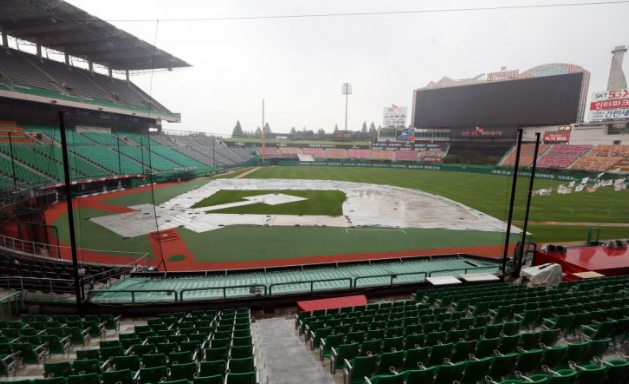
However, reactions among sports fans are divided over this decision. A university student A (24), a fan of the K League, said, "Outdoor venues are safer than indoor ones, so I didn't understand why entry was allowed for cafes or movie theaters but blocked for stadiums. Isn't this unfair? Considering these situations, I think it's actually a bit late, but still an appropriate measure."
A added, "Movie theaters are well controlled with measures like leaving one seat empty between viewers, so if the stadium follows similar instructions, there should be no problem."
On the other hand, there are concerns about the potential spread of COVID-19. An office worker B (28), who regularly watches professional baseball, said, "The league was postponed for months and finally started with difficulty, but if even one confirmed case appears in the stands, wouldn't the league have to be suspended again? Even if social distancing is maintained in the stadium, if many people crowd the restrooms, isn't there no solution?"
B continued, "With about 40 to 50 new confirmed cases daily, allowing spectators into stadiums is premature. Even if spectators are allowed, I will definitely not go."
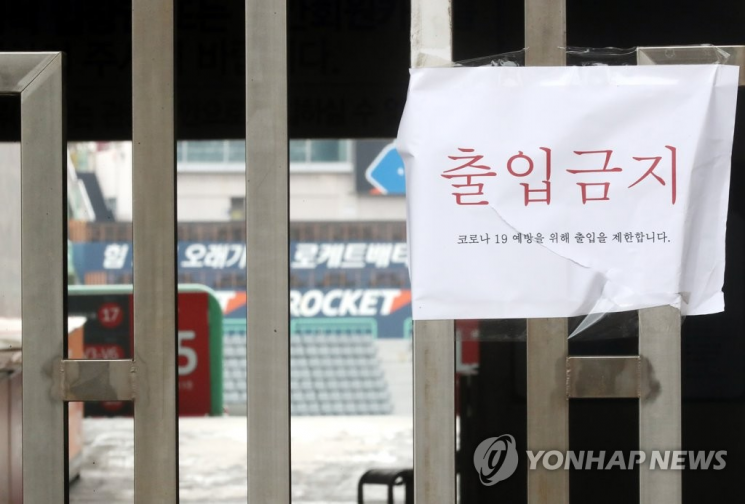 One employee of a partner company of the professional baseball team SK Wyverns was confirmed to have contracted the novel coronavirus infection. On March 17, the entrance to Incheon SK Happy Dream Park in Michuhol-gu, Incheon, was firmly closed.
 [Photo by Yonhap News]
Experts say that allowing spectators in professional sports is a measure to minimize economic and social damage, but from a quarantine perspective, maintaining social distancing is necessary.
Professor Eom Jung-sik, an infectious disease specialist at Gachon University Gil Medical Center, said, "The government says the current situation is manageable, so they probably judged that sports viewing is possible. Although there are concerns about allowing stadium entry with around 50 new cases, no one really knows because there is no objective benchmark for this number."
Professor Eom added, "Looking at the global situation, South Korea's number of confirmed cases is relatively low, but if you ask whether strong social distancing measures that other countries are not implementing can be sustained while bearing economic and social damage, the answer is no. However, to prevent a large-scale outbreak in South Korea, continuous social distancing must be maintained."
He continued, "From a quarantine perspective, strengthening social distancing further is the best way to delay or minimize a major outbreak. Indoor gathering facilities are necessary to maintain our social and economic system, but if not, is there really a need to allow entry?"
Meanwhile, if daily new confirmed cases exceed 50 for two consecutive weeks and the proportion of cases with unknown infection routes exceeds 5%, social distancing will be raised to level 2, and professional sports spectator attendance will be prohibited.
At social distancing level 2, administrative orders ban gatherings, meetings, and events with 50 or more people indoors and 100 or more outdoors, so professional sports games will be held without spectators.
© The Asia Business Daily(www.asiae.co.kr). All rights reserved.



















