Utilizing the Parliament Rooftop, Planting Various Crops such as Lettuce, Ssukgat, Auk, Blueberry, Daechu, Coriander, and Corn... Creating Green Spaces on the Parliament Rooftop to Establish a Rest Area for Communication with Visitors
[Asia Economy Reporter Park Jong-il] Recently, with growing concerns about health due to the novel coronavirus disease (COVID-19) and fine dust, the concept of ‘Eco Life in the City’ that allows people to experience nature within urban areas is gaining more attention.
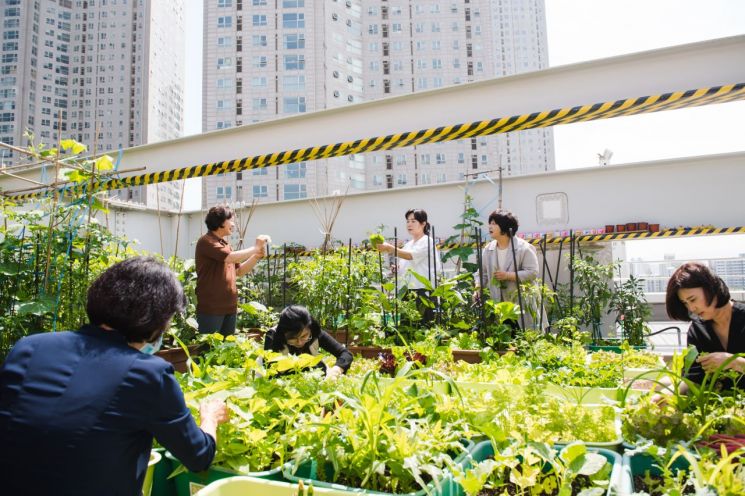
Amid the rapidly spreading green trend centered around idle spaces such as rooftops, the Gwangjin District Council has also joined the movement by creating rooftop gardens, establishing resting areas for visitors to the council, thereby lowering the threshold for public access to the council.
Since May of this year, a rooftop garden of about 160㎡ has been actively developed, featuring various crops such as Wasong (a type of lichen), mallow, blueberries, corn, tomatoes, cucumbers, and peppers, all planted and nurtured directly by the Gwangjin District Council members. Visitors can enjoy a variety of seasonal plants, and a deck rest area has been installed on one corner of the rooftop to provide relaxation for visitors.
Located in a densely populated apartment area, the Gwangjin District Council is expected to offer a green space that serves as a comfortable resting place amid tall buildings, helping to escape the urban desolation and allowing people to feel a bit closer to nature.
Depending on the stabilization of COVID-19 in the future, children visiting the council will have the opportunity to directly experience the growth process of crops, fostering an appreciation for nature and the value of life, while adults will be offered a nostalgic resting space within the city.
Goyangseok, Chairman of the Gwangjin District Council, stated, “In a city where it is difficult to secure space for growing crops, we hope that the rooftop garden will become a comfortable space for the residents of Gwangjin District.”
Additionally, since March of this year, the Gwangjin District Council has been conducting a traditional jang (fermented soybean paste) making project in the vacant space next to the rooftop garden to promote the excellence of our traditional foods and lead the spread of awareness about healthy eating. Furthermore, vegetables harvested from the garden will be used as ingredients for kimchi sharing events, practicing sharing with low-income families and neighbors in need within the district.
© The Asia Business Daily(www.asiae.co.kr). All rights reserved.

















