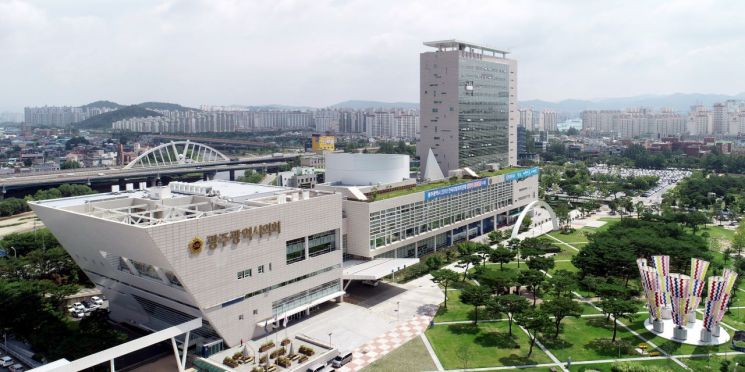
[Asia Economy Honam Reporting Headquarters Reporter Park Seon-gang] Gwangju Metropolitan City announced on the 15th that following the public recruitment of 342 electric vehicles (272 passenger cars, 70 cargo vehicles) and 86 electric two-wheelers in February, it has secured additional budget to hold another public recruitment for 262 electric passenger cars and 64 electric two-wheelers.
Electric cargo vehicles will be additionally announced for changes after the Ministry of Environment finalizes the internal review.
Eligibility criteria remain the same as in the first half of the year: residents of the Gwangju area for more than six months, companies and organizations with business sites located in the Gwangju area, with support provided on a first-come, first-served basis upon delivery.
Applications for electric passenger cars start from today, and for electric two-wheelers from the 17th.
The eligible electric vehicle models include 24 passenger car types and 4 ultra-compact passenger car types, totaling 28 models from 11 companies. For electric two-wheelers, there are 22 light models, 8 small models, and 11 large models, totaling 41 models from 24 companies.
Subsidies range from 6.5 million KRW to 14 million KRW per electric passenger car, and from 1.5 million KRW to 3.3 million KRW per electric two-wheeler, depending on type, matching the support levels of the first half's recruitment.
Twenty percent of the total quantity is preferentially allocated to vulnerable groups, families with multiple children, taxi drivers, and buyers replacing old diesel vehicles. Additionally, for those in the lower-income bracket purchasing electric vehicles, an extra 10% of the national subsidy amount, up to a maximum of 9 million KRW, will be provided.
Citizens wishing to purchase can check the supported vehicle models on the city’s website under notices and announcements, then visit the sales offices of electric vehicle manufacturers to sign a purchase contract and apply for the purchase subsidy through the sales office’s subsidy support system.
Recipients of the subsidy must comply with the mandatory two-year operation period stipulated in Article 79-3, Paragraph 1 of the Enforcement Rules of the Air Quality Preservation Act.
Jung Dong-hoon, head of the city’s Climate and Air Quality Division, said, “Replacing one gasoline vehicle with an electric vehicle has the effect of planting up to 350 pine trees,” adding, “We will continue to expand the distribution of electric vehicles to reduce fine dust and greenhouse gas emissions and protect the environment.”
© The Asia Business Daily(www.asiae.co.kr). All rights reserved.
![Clutching a Stolen Dior Bag, Saying "I Hate Being Poor but Real"... The Grotesque Con of a "Human Knockoff" [Slate]](https://cwcontent.asiae.co.kr/asiaresize/183/2026021902243444107_1771435474.jpg)
















