The old urban structure is well preserved and rich in historical and cultural resources... To maintain the area where residents do not leave and continue to live, 'historical and cultural regeneration' is being actively promoted to preserve its identity.
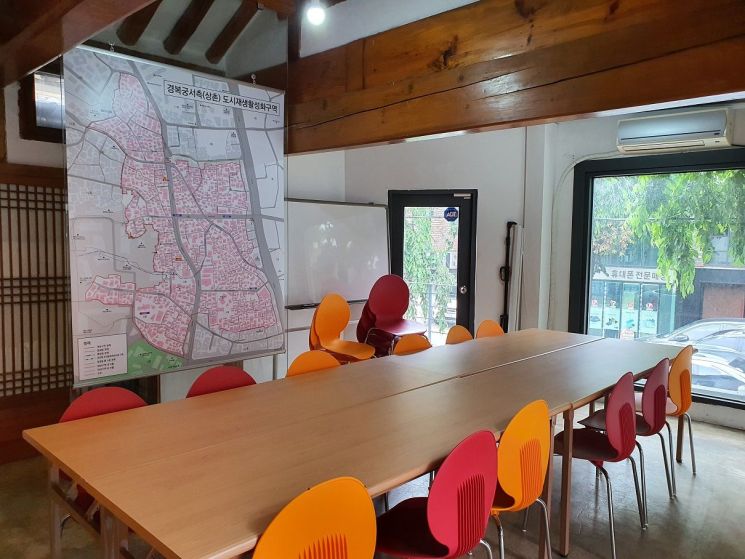
[Asia Economy Reporter Park Jong-il] Jongno-gu (Mayor Kim Young-jong) operates the 'Gyeongbokgung West Side (Sangchon) Urban Regeneration Support Center' (45 Pilwundaero), an open space for communication with residents of Cheongunhyoja-dong and Sajik-dong, in the Gyeongbokgung West Side (Sangchon) area, which was selected as a Seoul-type urban regeneration activation area in November last year.
The Gyeongbokgung West Side (Sangchon) area preserves the old form of the Joseon Dynasty urban organization formed along the water system and is a Hanok village with the largest number of residential Hanoks in Seoul.
It is also the birthplace of King Sejong the Great and possesses abundant historical and cultural assets such as Hangul, excellent architectural assets (Chebudong Seonggyeol Church, Hong Jong-mun House, Lee Sang's House, etc.), and future heritage.
In the 2010s, this area saw the emergence of new historical and cultural hubs such as Suseongdong Valley at the foot of Inwangsan Mountain, Park No-soo Art Museum, Sangchonjae, Yun Dong-ju Literature Museum, Cheongun Literature Library, and Tongin Market, but rapid commercialization has led to deteriorating residential environments.
Accordingly, the district plans to promote 'historical and cultural urban regeneration' to improve the living conditions of residents in Gyeongbokgung West Side (Sangchon) and preserve the appearance of the historic downtown residential area.
The center, which will comprehensively support the Gyeongbokgung West Side (Sangchon) urban regeneration project, opened in April this year.
Operating hours are from 9 a.m. to 6 p.m. on weekdays, and it is closed on weekends and public holidays. The center is staffed by a general coordinator, office manager, field coordinator, and Jongno-gu employees, who will lead urban regeneration projects and activate resident communities needed in the area.
Starting June 17, online resident briefings and small-scale visiting resident briefings will be held, and members of the resident council to jointly regenerate the area will be recruited. After July, various resident contest projects, resident capacity-building education, and community activities such as discovering regeneration projects will be supported.
Jongno-gu promoted the Nuha-Ogin managed residential environment improvement project in 2017 and conducted the urban regeneration hope site project in 2019, establishing governance for preserving and revitalizing regional identity through public-private cooperation. Following its selection as a Seoul urban regeneration activation area last year, it plans to invest 10 billion KRW over five years from 2020 to 2025.
In 2020, the direction of urban regeneration needed in the Gyeongbokgung West Side area, discovery of unit projects, and plans for activating resident communities will be established. Over the next four years, resident convenience facilities such as parking lots and garden villages will be improved, and various projects to strengthen historical and cultural identity such as Hangul and Hanok will be carried out.
Additionally, urban regeneration-related projects such as establishing a resident-based urban regeneration company will be actively pursued.
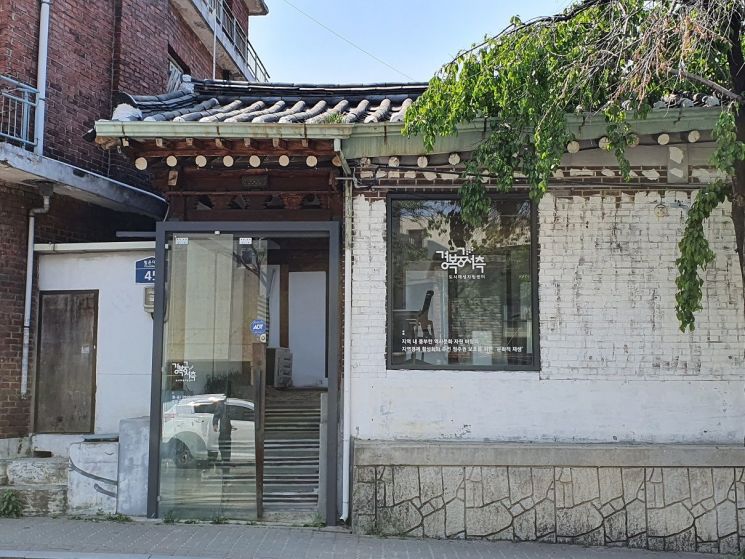
Mayor Kim Young-jong said, “The Gyeongbokgung West Side area is called Sangchon (上村), the upper village of Cheonggyecheon in terms of the water system. Located at the foot of Inwangsan Mountain and adjacent to Gyeongbokgung Palace, it has abundant historical and cultural assets such as Hangul and Hanok, and there are quite a few residents who have lived here for decades without leaving.” He added, “We are considering urban regeneration projects that wisely preserve and utilize the assets the area holds while allowing residents to continue living here. The center is an open space to discuss and communicate village matters with residents of Cheongunhyoja-dong and Sajik-dong. As it will lead the urban regeneration project in this area and function as a community hub for residents, we ask for your great interest.”
© The Asia Business Daily(www.asiae.co.kr). All rights reserved.
![Clutching a Stolen Dior Bag, Saying "I Hate Being Poor but Real"... The Grotesque Con of a "Human Knockoff" [Slate]](https://cwcontent.asiae.co.kr/asiaresize/183/2026021902243444107_1771435474.jpg)

















