8 Confirmed Cases at Chinese-Korean Shelter in Garibong-dong, Guro-gu, Seoul
Harsh Hate Speech Erupts After Confirmation of Chinese-Korean Identity
Earlier, Residents in Daerim-dong, Yeongdeungpo-gu Criticized as 'Unsanitary' and 'Germs'
Chinese-Korean Unity Association Appeals to Reduce Prejudice
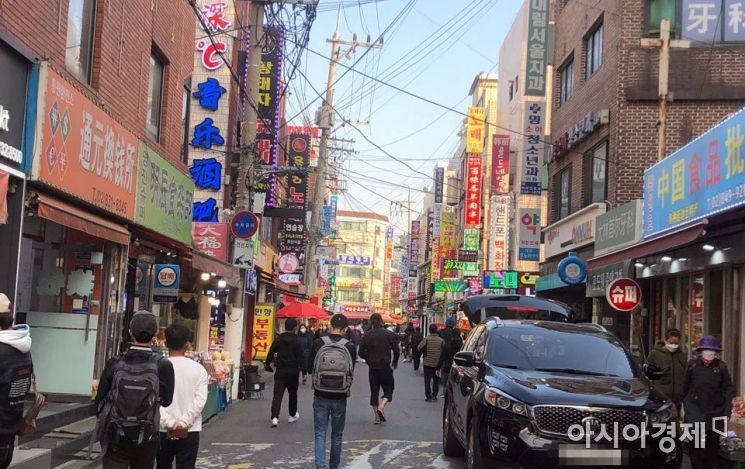 On the afternoon of April 27th, the Daerim Central Market area in Yeongdeungpo-gu, Seoul. Photo by Yeonju Kim, intern reporter yeonju1853@asiae.co.kr
[Asia Economy Reporter Han Seung-gon] Nine confirmed cases of the novel coronavirus infection (COVID-19) have emerged at a Chinese-Korean church shelter in Garibong-dong, Guro-gu, Seoul, sparking another wave of hateful remarks against them. Some have treated them as illegal immigrants and even demanded that they return to China in harsh responses.
On the 8th, the Guro District Office announced on its homepage, "It was confirmed that the residence of a 54-year-old man who tested positive for the coronavirus on the 7th after visiting the Richway health product sales company in Gwanak-gu was the Chinese-Korean church shelter." It added, "Subsequently, urgent specimen tests were conducted on 36 shelter residents and church officials, and eight shelter residents tested positive."
Health authorities believe the virus spread to the shelter through a person who had visited the door-to-door sales company in Gwanak-gu, Seoul, where confirmed cases occurred. The quarantine authorities have confirmed that no additional COVID-19 cases related to the shelter have been reported as of the previous day (the 9th).
However, separately, as it became known that the confirmed cases were Chinese-Koreans, hateful remarks against them have continued.
Netizens poured out harsh criticisms in the comments of related articles, saying things like "Joseonjok are Chinese," "They pretend to be Koreans, enjoy all kinds of benefits, but only cause harm to us," and "Do Joseonjok even consider the Republic of Korea their country?"
The hateful views toward Chinese-Koreans are not new. The market area around Daerim-dong, Yeongdeungpo-gu, Seoul, where many Chinese-Koreans reside, was once hit hard by hateful remarks amid baseless rumors that it was a COVID-19 hotspot.
At that time, residents complained that such remarks caused them great emotional distress and that the unfounded speculation about COVID-19 spreading led to a significant drop in sales in the Daerim-dong commercial district.
A man in his 50s who has been running a restaurant in Daerim-dong for eight years lamented, "It seems Korea considers Chinese-Koreans the easiest target. They think all Chinese-Koreans are gangsters and criminals."
A man in his 30s expressed frustration, saying, "The news made it seem like the epidemic started in Daerim-dong. We are not monsters, are we?"
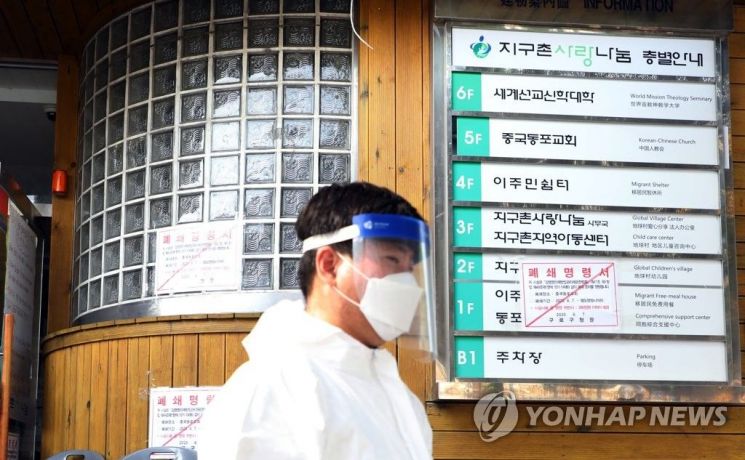 On the 8th, a district official was preparing tests at the Guro-gu Chinese Community Church Shelter, where a COVID-19 confirmed case had occurred. Guro-gu secured a list of about 150 Chinese community church members, including shelter residents, and is conducting tests at a temporary screening clinic set up on-site at the church.
Amid the flood of speculation and criticism against Chinese-Koreans, as COVID-19 spread worldwide, a study also revealed a sharp increase in hateful remarks targeting China and Chinese people on social networking services (SNS) such as Twitter and Facebook.
On March 27, the Israel-based startup 'L1ght' reported that hateful remarks directed at China and Chinese people increased by 900% since the initial outbreak of COVID-19 in China.
The report explained, "A significant portion of hateful remarks and insults were not only aimed at China and Chinese people but also directly targeted Asians worldwide."
It added, "These harmful tweets used explicit expressions blaming Asians as carriers of the COVID-19 virus and accused Asian people of spreading the virus."
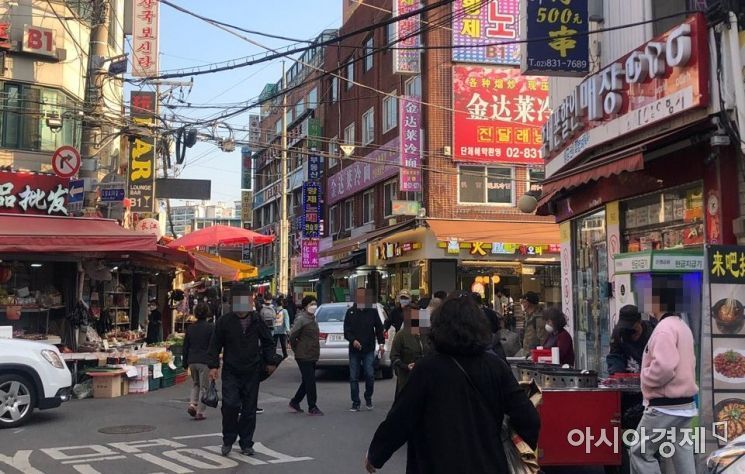 On the afternoon of April 27, the area around Daerim Central Market in Yeongdeungpo-gu, Seoul, was bustling with people visiting the market. Photo by Yeonju Kim, intern reporter yeonju1853@asiae.co.kr
As a result, a generalized fear of China, known as 'sinophobia,' has emerged.
Sinophobia is a compound word from the Latin 'Sino,' meaning China, and 'phobia,' meaning pathological fear. It refers to the phenomenon of hatred encompassing all things related to China, including hatred toward the Chinese ethnicity and the country itself.
When hateful remarks against Chinese-Koreans pour out, they suffer significant emotional wounds. Kim Yong-seon, Honorary President of the Chinese-Korean Hanmaeum Association, lamented, "It has been revealed that Daerim-dong and Chinese-Koreans were not the cause of the epidemic spread, but the situation remains unchanged." He continued, "During the COVID-19 outbreak, anti-Chinese sentiment exploded," and appealed, "We are compatriots. I hope the prejudice of seeing us as foreigners can be reduced."
Meanwhile, the Guro District Office stated, "Epidemiological investigations confirmed that residents of the Chinese-Korean shelter rarely went out and that their worship spaces were separate from those of general church members." It added, "Considering the initial negative test results and epidemiological findings, the possibility of a large-scale regional infection spreading seems low."
© The Asia Business Daily(www.asiae.co.kr). All rights reserved.



















