Busan Daedong Hospital Regional Emergency Medical Center Releases Outdoor Playground Safety Guidelines
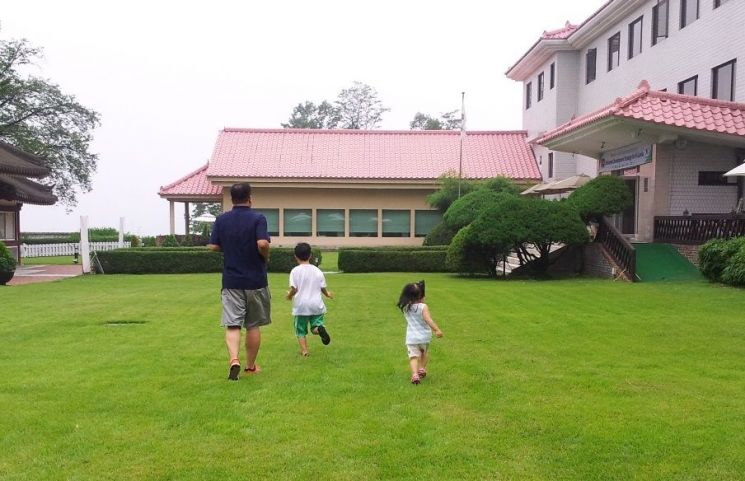
[Asia Economy Yeongnam Reporting Headquarters, Reporter Kim Yong-woo] As children who had been staying indoors in Bangkok rush outside, concerns about safety accidents are growing.
With infants and children accustomed to indoor life for over four months due to the novel coronavirus infection (COVID-19) situation starting to attend school, there is a need to prepare for safety accidents.
On the 5th, Busan Daedong Hospital, which operates a 24-hour emergency medical center as a regional base hospital in the Dongbusan area, launched prevention education and campaigns for seasonal safety accidents.
The hospital stated that since school attendance for infants, as well as elementary, middle, and high school students, began on the 3rd, and with the weather getting warmer leading to increased outdoor activities, accidents involving children?who have less attention span than adults?are expected to rise, and they have proposed countermeasures accordingly.
First, during outdoor activities, children should wear simple clothes such as pants and sneakers, and avoid wearing accessories, necklaces, hooded clothes, clothes with long strings or string decorations, and slippers.
Second, parents should check whether the playground where their child plays is safe. They are advised to verify that sand is spread at least 30cm from the ground, check for broken or damaged playground equipment, look for broken glass shards or sharp edges, inspect for damaged facilities, and confirm whether the playground has undergone safety inspections.
Third, to ensure children play safely at playgrounds, they should be guided not to pass in front of moving swings, not to play roughly on high playground equipment such as slides, and to ride bicycles and kickboards only in designated areas.
According to data from the Korea Disease Control and Prevention Agency investigating hospitalized patients from 2011 to 2015, among 10,379 patients aged 14 and under hospitalized due to physical injuries, 36.5% were due to falls or drops. Among these, male children (67.5%) accounted for about 2.1 times more than female children (32.5%), with the highest incidence occurring in May (10.6%) and June (10.6%), which are seasons favorable for outdoor activities. Moreover, this year, due to delayed school attendance caused by COVID-19, this period is expected to extend until July.
The injury sites of patients aged 14 and under hospitalized due to falls or drops were traumatic brain injuries (42.5%) for ages 0?4, shoulder and upper arm (34.4%) for ages 5?9, and knee and lower leg (24.7%) for ages 10?14.
Dr. Kim Do-hoon, head of the Joint Center at Daedong Hospital (Orthopedic Specialist), said, “Body parts prone to injury from falls include hip fractures caused by falling to one side or wrist fractures caused by reflexively putting hands down when falling.” He advised, “If joints such as the hip, wrist, or ankle are injured, minimize movement, apply cold compresses using ice packs, immobilize the injured area with a compression bandage, and promptly visit a medical institution.”
Dr. Kim Mi-ran, director of the Regional Emergency Medical Center at Daedong Hospital (Emergency Medicine Specialist), stated, “If a child exhibits symptoms such as vomiting, convulsions, seizures, decreased consciousness, bumps on the head, blackening around the eyes or under the ears, or if there was a loud noise when falling from a height, they must visit the emergency room.” She added, “Even if there are no symptoms, infants under one year old or those who fell on a hard surface should be examined at a hospital.”
© The Asia Business Daily(www.asiae.co.kr). All rights reserved.

















