[Asia Economy Reporter Moon Chaeseok] Following South Korea's trade authorities' WTO complaint against Japan and the court's announcement of the sale of seized assets of forced labor companies in Korea, tensions are rising in Korea-Japan diplomatic and trade relations. Even within Japan, opinions are emerging that lifting export restrictions on South Korea would be reasonable.
According to related ministries on the 6th, on the 2nd, the Ministry of Trade, Industry and Energy decided to resume the WTO complaint procedure regarding Japan's export restrictions. On the 3rd, the Blue House stated that the Korea-Japan General Security of Military Information Agreement (GSOMIA) termination card could be taken out at any time.
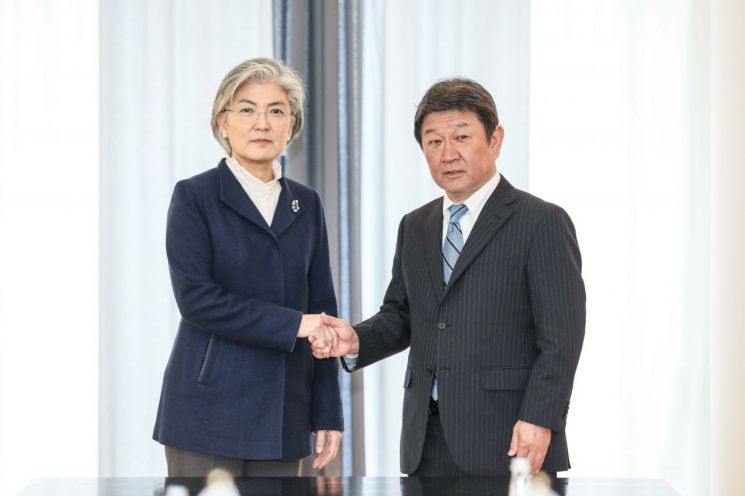
In response, on the 3rd, Japanese Foreign Minister Motegi Toshimitsu expressed regret to Foreign Minister Kang Kyung-hwa over South Korea's resumption of the WTO complaint, and on the 4th, Japanese media reported that if a Korean court sells the assets of Japanese companies related to forced labor lawsuits, bilateral relations would worsen.
Earlier, the Daegu District Court Pohang Branch confirmed on the 1st that it decided to publicly notify Shinil Steel (currently Nippon Steel) regarding asset seizure documents. The liquidation process could effectively begin after midnight on August 4.
Meanwhile, opinions have emerged within Japan that export restrictions on South Korea should be reconsidered.
On the 4th, the Tokyo Shimbun editorial titled "Seize the Opportunity to Reconsider Export Restrictions Against South Korea" stated, "As the economy is expected to decline globally due to the novel coronavirus disease (COVID-19) disaster, trade restrictions should be avoided," and added, "Isn't now a good opportunity to reconsider?"
While there are views that resuming the WTO complaint procedure in South Korea may not have a significant effect, even within Japan, there are calls to calmly assess the interests with South Korea.
Due to variables such as U.S. opposition to the GSOMIA termination card, the reorganization of global value chains (GVC) worldwide, and the formation of international consultative bodies centered on the Group of Seven (G7), the need for "progressive" trade negotiations between the two countries is increasing.
There is analysis that easing regulations on three items?EUV resist, fluorinated polyimide, and hydrogen fluoride?would be easier than removing South Korea from the whitelist (security-favored export screening countries).
Both were agendas presented when the South Korean government urged Japan on the 12th of last month to "restore export regulations" by the end of last month as a deadline.
A government official said, "Even if we proceed with the WTO complaint procedure, we will continue dialogue with Japan through various channels."
© The Asia Business Daily(www.asiae.co.kr). All rights reserved.

















