Inha University College of Medicine, 91 Undergraduates Involved in 'Mass Cheating'
Students Say "It Was Already Foreseen... School Was Complacent"
University States "Monitoring Communities Impossible... Will Prepare Measures to Prevent Recurrence"
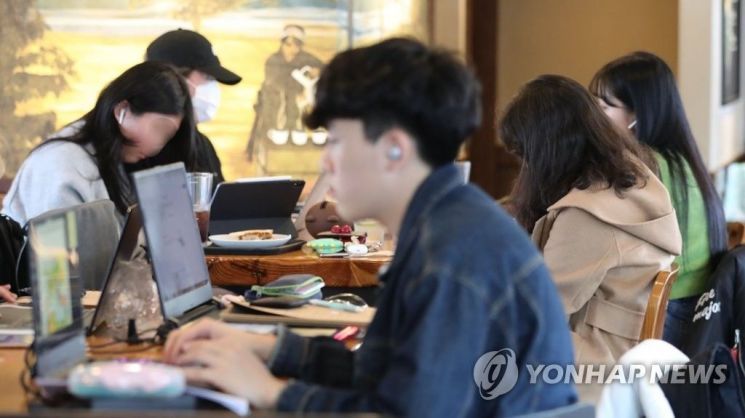 Amid the COVID-19 pandemic, as universities conducted midterm exams and other tests online, a case of 'mass cheating' occurred at one university. Students pointed out that the 'mass cheating' incident had been anticipated for a long time. The photo is unrelated to specific expressions in the article. Photo by Yonhap News.
[Asia Economy Reporter Han Seung-gon, Intern Reporter Kim Seul-gi] "How bad must it be for students to say, 'If you don't cheat, you're a fool'?"
Inha University College of Medicine students caused controversy by collectively cheating on unit evaluation exams conducted online amid the COVID-19 pandemic. University students pointed out that the 'mass cheating' incident had been anticipated for a long time. There were also criticisms that the school's inadequate response and complacent handling exacerbated the situation.
Inha University announced on the 1st that it had caught a total of 91 medical students cheating in exams held in March and April, including 50 first-year and 41 second-year students.
According to the school, 50 first-year students were found to have cheated on the midterm exam of one subject (Introduction to Basic Medicine) held online on April 11.
Forty-one second-year students were confirmed to have cheated on unit evaluations for two medical subjects (Musculoskeletal System and Endocrine System) conducted online on March 12 and 22, and April 18.
The students reportedly formed groups of 2 to 9 people, solving problems together at one location or sharing answers via phone or SNS, the school said.
Inha University stated, "We take this matter seriously regardless of the type of exam. We will continue to do our best to prevent cheating in the future."
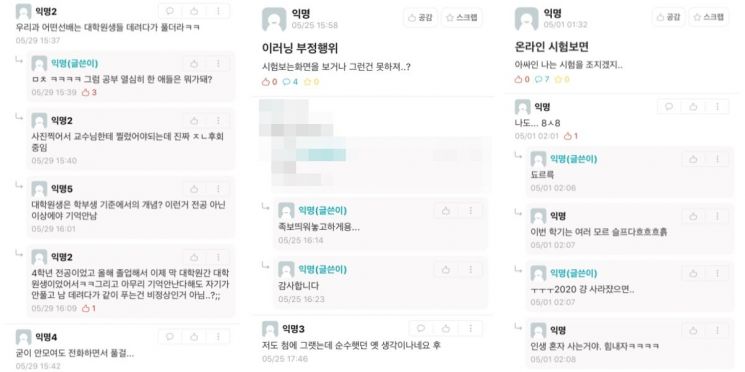 On the university anonymous community 'Everytime,' there are several posts where students have witnessed cheating or seem to be hinting at cheating./Photo by university anonymous community 'Everytime'
However, students claimed that the university did not prepare proper measures for online exams. They pointed out that cheating and other misconduct during online exams had been anticipated for some time, but the school did not make efforts to prevent it in advance.
University student A (24) said, "On school communities or 'Everytime' (a university anonymous community), posts looking for people to take exams together or share answers are posted several times a day. If the school had done some monitoring or prepared anti-cheating measures, this situation would not have happened."
As the controversy spread, an Inha University official told Asia Economy in a phone interview that the criticism about not making efforts to prevent cheating in advance, such as community monitoring, was because "the school does not have the authority to monitor."
The official explained, "Only current students and alumni can access student communities, so we do not have the authority to monitor them. After this incident, we plan to diversify exam types and limit exam times to minimize cheating."
Another university official said, "Exams are all conducted at the discretion of professors. Those caught cheating are dealt with according to school regulations, but there are no separate countermeasures specifically for cheating in online exams."
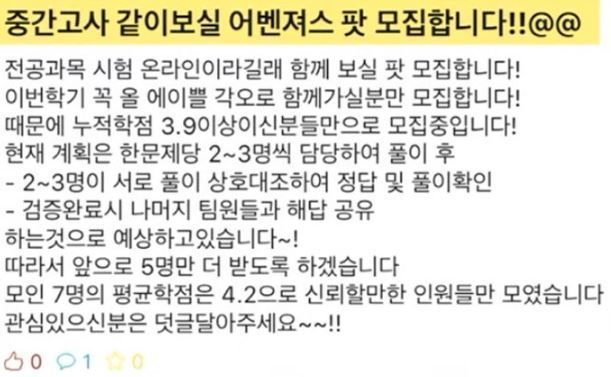 Last April, a post titled "Recruiting Avengers Squad (Group) to Take Midterms Together" was uploaded on the community of a private university. Photo by Anonymous University Student Community 'Everytime'
Movements toward collective cheating on exams had appeared before. On the 31st of last month, a post titled "Looking for people to share answers for Professor OOO's midterm quiz" was uploaded on a private university's community.
Also, in April, another community openly posted a message titled "Recruiting Avengers squad to take the midterm together," implying cheating. The author said, "The current plan is for 2-3 people to be responsible for each question, solve it, then 2-3 people cross-check the solutions, and once answers and solutions are verified, share them with the rest of the team."
University student B (26) said, "After taking online classes all semester without refunding tuition, now we can't even get proper grades. After infringement on the right to education, now we can't even receive credits fairly. Among students, if you say don't cheat, you get called 'Jinjichung' (a mocking term for serious people). Does this make any sense?" expressing frustration.
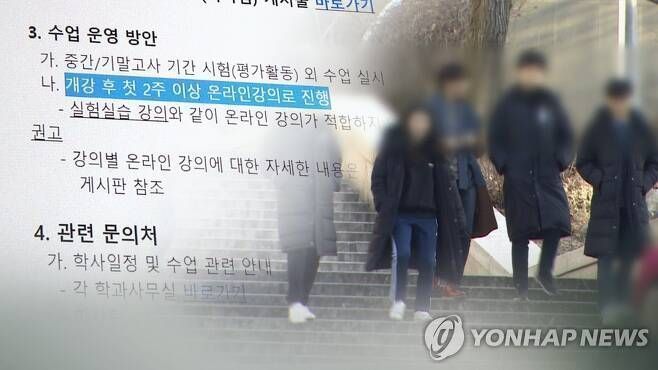
Given the situation, some universities have prepared measures for online exams in advance. Konkuk University stated, "All courses offered in the first semester of 2020 will be graded on a pass/fail basis," adding, "Online lectures are insufficient for comparatively evaluating students' learning outcomes."
Ewha Womans University also said, "Midterm and final exams are conducted at professors' discretion. If face-to-face exams are held, they will be conducted within the school's established quarantine guidelines."
However, it seems difficult to manage cheating incidents across all universities uniformly. The Korea Council for University Education said, "Exams are autonomously managed according to each university's academic calendar," adding, "If the Ministry of Education or others issue recommendations or guidelines on cheating, we can provide guidance, but the council itself cannot issue separate recommendations."
© The Asia Business Daily(www.asiae.co.kr). All rights reserved.



















