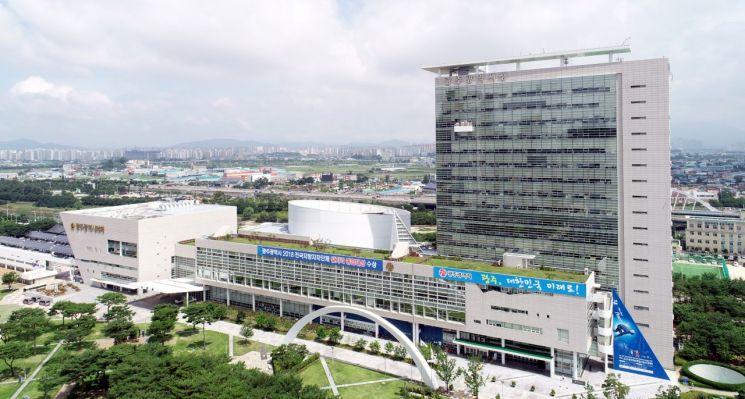
[Asia Economy Honam Reporting Headquarters Reporter Park Seon-gang] Gwangju Metropolitan City announced on the 29th that it will partially amend the "Gwangju Metropolitan City Urban Planning Ordinance" to reflect the amendments to the "National Land Planning and Utilization Act" and deficiencies in urban planning operations, and will implement it from the 1st of next month.
The amendment includes ▲ posting planning drawings related to urban management plans on the website, minor changes and additions to detailed facilities within urban planning facilities, and relaxation of location requirements for international conference facilities ▲ regarding development activities, any cutting or filling for farming exceeding 1m in height will require permission, prohibition of development permits and measures for illegal tree damage sites ▲ relaxation of building regulations for neighborhood living facilities within specialized landscape districts, and adjustment of authority regarding floor area ratio reduction for multi-family housing and officetels in quasi-residential and quasi-industrial areas.
First, to expand MICE (Meetings, Incentives, Conferences, and Exhibitions) public infrastructure and strengthen competitiveness with other regions, international conference facilities and exhibition halls, which are urban planning facilities, can be established in general residential areas and natural green areas if a 30m road is secured.
Also, to resolve issues such as land flooding due to poor drainage, accidents caused by soil erosion, complaints and property damage due to the use of inappropriate filling materials like waste construction materials, even cutting or filling for farming exceeding 1m in height must be reviewed for appropriateness by the district development permit department and receive permission.
Regarding the newly designated specialized landscape district within 100m from the river boundary to protect the waterfront scenery of the Yeongsan River and Hwangryong River, some neighborhood living facilities that have less impact on the landscape are allowed to be built. On the other hand, funeral facilities have been newly included as regulated targets.
In addition, multi-family housing and officetels in quasi-residential and quasi-industrial areas have applied a floor area ratio of 400%, but considering various social and urban problems such as excessive residential complex formation, landscape issues, and lack of infrastructure, the floor area ratio has been lowered to 250%, which is the level of the third-class general residential area.
However, other facilities that are not multi-family housing or officetels can be built within the floor area ratio limit of 400%.
The detailed contents of this amendment can be checked from the 1st of next month on the National Law Information Center and the Local Ordinance Information System.
Kim Nam-gyun, head of the city’s urban planning division, said, “This urban planning ordinance amendment contains many contents in the fields of urban management planning, development permit, and building activities as part of creating a city that is truly Gwangju. We will do our best to ensure that Gwangju achieves more systematic and planned urban planning, minimizing citizen inconvenience and resolving various urban and social problems.”
© The Asia Business Daily(www.asiae.co.kr). All rights reserved.