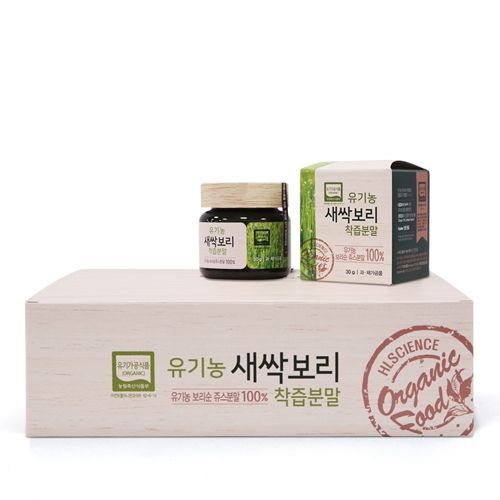
HL Science (CEO Lee Ha-yeon) announced that it has achieved sales of approximately 85 billion KRW, and its popular “Organic Barley Sprout Juice Powder” is a highly safe and differentiated product that has passed rigorous safety inspections.
The Organic Barley Sprout Juice Powder is a differentiated organic product made with HL Science’s strict raw material standards and meticulous quality control, combined with cutting-edge technology. The raw materials are cultivated using organic farming methods and manufactured through advanced juicing and instant drying technology (BioActive Dehydration). The barley sprout raw materials are certified organic by both the Republic of Korea and the United States Department of Agriculture (USDA), and are gluten-free and kosher certified.
During raw material production in the United States, safety inspections including residual pesticide testing are conducted for each lot by a US-accredited testing agency. HL Science secures multiple layers of safety by conducting tests for 473 types of residual pesticides and nutritional content every time the raw materials are imported into Korea. This process includes mandatory government-required tests for metallic foreign substances (metal shavings), E. coli, and tar dyes, as well as additional tests based on internal quality standards for total aflatoxins (mold toxins), lead, cadmium, Salmonella, Listeria, and radioactivity (iodine, cesium).
To produce 1kg of Organic Barley Sprout Juice Powder, 21kg of barley sprouts raw material is required. It is manufactured through a 2,100% juicing, concentration, and instant drying process based on advanced scientific methods that minimize nutrient destruction. In particular, it provides fresh nutrition and texture as if juiced and consumed immediately, along with a natural blue-green color.
According to test results from an accredited certification agency, the finished “Organic Barley Sprout Juice Powder” contains a total of 45 rich nutrients including vitamins, minerals, and amino acids. Notably, the chlorophyll content, known as the plant’s blood due to its structure similar to human blood, is approximately 985mg per 100g. Additionally, the saponarin content is about 1,085mg, and the policosanol content is about 526mg.
A company representative stated, “From raw material selection to product manufacturing, we prioritize consumer health through thorough safety inspections at every stage of the barley sprout process.”
© The Asia Business Daily(www.asiae.co.kr). All rights reserved.

















