Investigation of GP Shooting Incident: "Both South and North Violated the Armistice Agreement"
Concerns Over DMZ Access Rights Lead to Repeated Conflicts with Government
Deadlock in Defense Cost-Sharing Talks Seen as Pressure to Surface
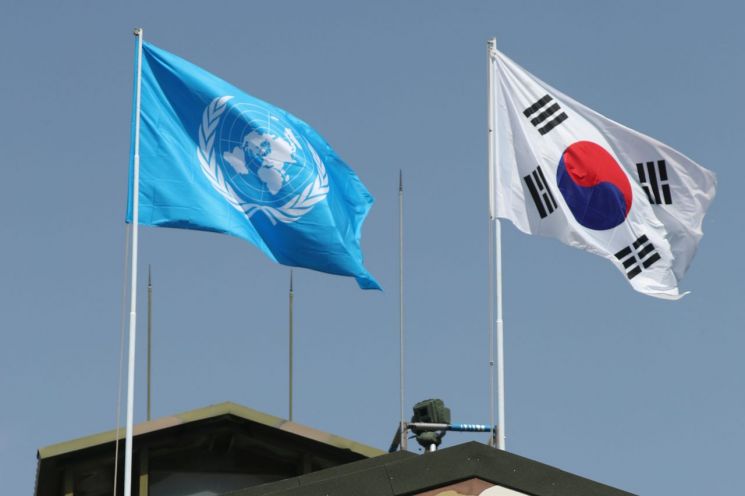
[Asia Economy Reporters Yang Nak-gyu and Lim Cheol-young] Concerns are emerging that conflicts may continue in the future regarding the transfer of wartime operational control between our military and the United Nations (UN) Command. The UN Command's unprecedented announcement of investigation results on the shooting incident at the Central Front Guard Post (GP), which differed from those of our military, is said to be merely a prelude to further conflicts.
The UN multinational investigation team conducted an on-site inspection on the 4th, the day after the GP shooting incident, together with Swedish and Swiss personnel from the Neutral Nations Supervisory Commission. The North Korean military did not participate in the investigation, resulting in a partial inspection. On the afternoon of the 26th, 22 days after the investigation, the UN Command issued a press release concluding that "both South and North Korean sides violated the armistice agreement in the investigation of the shooting incident at the guard posts within the Demilitarized Zone (DMZ)." Regardless of whether the shots were intentional or accidental, the fact that bullets crossed the Military Demarcation Line for any reason constitutes a violation of the armistice agreement.
In particular, the UN Command explained that it "could not definitively determine whether the four shots fired by the North Korean military at the South Korean GP were intentional or accidental." Previously, the South Korean Joint Chiefs of Staff had judged the incident as an accidental shooting by the North Korean military based on overall information. This also contrasts with U.S. Secretary of State Mike Pompeo's statement calling the shooting "accidental," drawing attention. Our military expressed regret over the UN Command's announcement, stating, "We regret the announcement made without any substantive measures." This is the first time our military has expressed regret over the UN Command's investigation results.
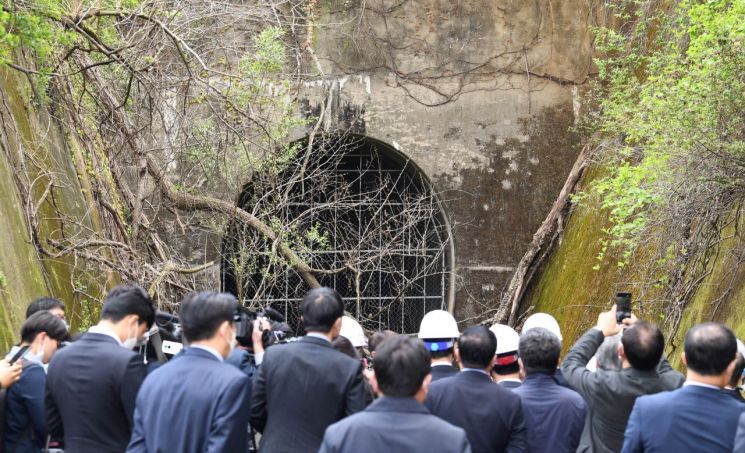
This has been interpreted as the accumulated resentment between our military and the UN Command coming to the surface. The UN Command, which has authority over DMZ access and passage through the Military Demarcation Line, has repeatedly intervened in inter-Korean relations, causing friction and dissatisfaction from our government.
In August 2018, the UN Command denied passage of South Korean personnel, materials, and equipment through the MDL, causing the joint inter-Korean railway survey to collapse. The official reason was the failure to apply 48 hours in advance. In October last year, Minister of Unification Kim Yeon-chul indirectly expressed dissatisfaction with the UN Command's authority over access control in the National Assembly, stating, "There should be institutional improvements regarding non-military access to the DMZ." Former Presidential Chief of Staff Lim Jong-seok openly criticized the UN Command in a 2020 summer issue interview of 'Changjakgwa Bipyeong' on the 20th anniversary of the June 15 Joint Declaration, saying, "(The UN Command) is trying to exercise unreasonable overreach."
Moreover, some interpret this as an attempt to surface and pressure amid deepened conflicts caused by the deadlock in defense cost-sharing negotiations. The United States, which rejected the tentative Special Measures Agreement (SMA) on defense cost-sharing and is demanding more than a 50% increase, is now feared to be linking defense cost-sharing negotiations with wartime operational control. This raises concerns that the U.S. is leveraging President Moon Jae-in's pledge on operational control transfer to secure a significantly increased defense cost.
To complete the transfer of operational control within President Moon's term, combined South Korea-U.S. military exercises are essential. However, joint exercises to verify the South Korean military's Full Operational Capability (FOC) have been delayed due to COVID-19 and other factors. In response, the Blue House strongly denied any attempt by the U.S. to link defense cost-sharing negotiations with operational control transfer, stating, "This is completely untrue." A Blue House official explained, "South Korea and the U.S. are currently promoting the transfer of operational control under close cooperation based on the existing conditions plan."
 Photo by Asia Economy DB
© The Asia Business Daily(www.asiae.co.kr). All rights reserved.
![Clutching a Stolen Dior Bag, Saying "I Hate Being Poor but Real"... The Grotesque Con of a "Human Knockoff" [Slate]](https://cwcontent.asiae.co.kr/asiaresize/183/2026021902243444107_1771435474.jpg)

















