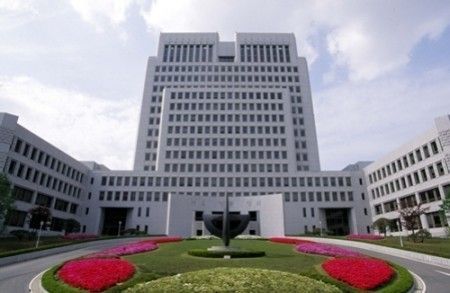
[Asia Economy Reporter Kim Hyung-min] When determining whether an adopted child who was separated from their adoptive parents during childhood and reunited with them as an adult is legally considered a biological child, the Supreme Court ruled that emotional bonds between parent and child should be prioritized over formal requirements such as cohabitation and caregiving periods.
The Supreme Court's Second Division (Presiding Justice Kim Sang-hwan) announced on the 27th that it overturned the lower court's ruling, which had decided that there was no biological relationship in a 'confirmation of non-existence of biological relationship' lawsuit filed by the deceased Mr. A's younger sibling against Mr. A's adopted daughter Ms. B, and remanded the case to the Jeonju District Court.
The court stated, "When judging the relationship between an adoptive mother and child who were separated during childhood and reunited as adults, and the child has married and established an independent livelihood while having children, it is difficult to use cohabitation and caregiving as the main criteria. Instead, more attention should be paid to the attitudes toward each other and the emotional bond."
It added, "Mr. A attended Ms. B's child's first birthday party and said, 'My maternal family only had daughters, but B gave birth to a son, so I am happy,' indicating that there was likely an emotional attachment typical of a mother-daughter relationship between them. It can be sufficiently seen that the status-based familial relationship as adoptive parent and child, which had been temporarily interrupted, was restored after their reunion in 2000," emphasizing this point.
Mr. A had no children for over three years after marriage, and in 1980, through a neighbor's introduction, he took in and raised Ms. B, who was born that year.
Although Mr. A did not give birth to Ms. B himself, he registered her birth as his own daughter. They lived together for about five years until 1985, when Mr. A divorced and they separated. Ms. B was raised by Mr. A's husband.
Afterward, Mr. A had no contact with Ms. B until around 2000, when she became an adult and they reconnected. Around that time, Mr. A visited a postpartum care center to meet Ms. B, who had given birth, and also attended the child's first birthday party.
However, when Mr. A passed away in 2015, Mr. A's younger sibling filed a lawsuit denying the biological relationship, arguing that Ms. B was neither Mr. A's actual child nor had they been in contact for nearly 30 years.
The first trial court ruled that Mr. A and Ms. B were legally in a biological parent-child relationship, but the second trial court judged, "For a false birth registration to be recognized as adoption, either the consent of Ms. B's biological parents is required or Ms. B must have tacitly acknowledged the adoption after turning 15 years old. Since these conditions were not met, it cannot be considered a biological parent-child relationship."
© The Asia Business Daily(www.asiae.co.kr). All rights reserved.

















