April Aviation Fuel Consumption Down 77.7% Year-on-Year
Diesel and Gasoline Down 16% and 6.8% Respectively
Refining Industry Faces Inevitable Losses in Q2
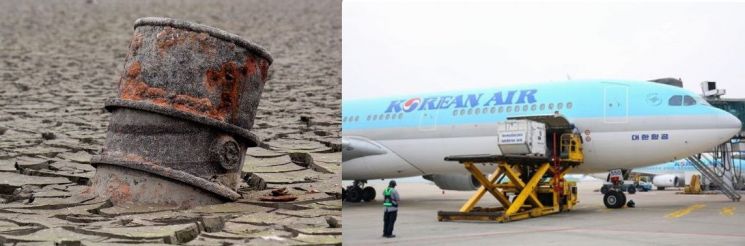
[Asia Economy Reporter Hwang Yoon-joo] Due to the impact of the novel coronavirus infection (COVID-19), domestic aviation fuel consumption last month recorded the lowest level since statistics began in 1997.
According to the Korea National Oil Corporation on the 26th, aviation fuel consumption in April was 730,000 barrels, a 77.7% decrease compared to the same period last year (3.27 million barrels). This figure is 2.7% lower than the 751,000 barrels recorded in November 2004, when aviation fuel consumption was at its lowest due to a more than 10% drop in domestic passenger demand following the opening of the KTX.
Monthly aviation fuel consumption had never fallen below 2.5 million barrels since 2014. This was because the launch of low-cost carriers (LCCs) in the mid-2000s increased domestic and international travelers, maintaining a certain scale of aviation fuel consumption.
However, this year, aviation fuel consumption has been on a downward trend: ▲3.414 million barrels (January) ▲2.787 million barrels (February) ▲1.138 million barrels (March). As the impact of COVID-19 intensified, consumption dropped to the 2 million barrel range in February and plummeted to the 1 million barrel range in March. Notably, the decrease last month was even greater than the 65.5% drop in March.
It is not only aviation fuel. Total petroleum product consumption in April also decreased by 8.8% to 69.372 million barrels compared to the same month last year (76.07 million barrels). Among the products, the decline in transportation fuels is prominent.
Diesel, which holds a large share, was 12.982 million barrels last month, down 16% from 15.461 million barrels in the same month last year. During the same period, gasoline (6.581 million barrels) and heavy oil (26,000 barrels) also decreased by 6.8% and 16.1%, respectively.
As petroleum product consumption plummeted, the Singapore complex refining margin, which gauges the profitability of refineries, has recorded negative figures for 10 consecutive weeks from the third week of March to the third week of May.
An official from the refining industry said, "Although the international oil price rose to around $30, reducing inventory valuation losses, the refining margin has been negative for two consecutive months, so the second quarter is also expected to be in the red. If international oil prices remain at the current level and petroleum consumption rebounds even for the month of June, we expect the deficit to narrow compared to the first quarter."
© The Asia Business Daily(www.asiae.co.kr). All rights reserved.

















